

Pick one or two priority goals, write them as SMART targets, and turn the first step into a micro-action you schedule within 48 hours using an if-then plan. This approach is backed by research on goal-setting interventions that shows specific goals outperform vague ones. The app is designed to help you plan, schedule, and track that first action in minutes.
TL;DR:
- Setting one or two micro-actions within 48 hours, linked to specific cues, significantly increases the likelihood of progressing toward goals.
- Writing goals as SMART targets and using if-then plans with contingent triggers enhances behavioral consistency and habit formation.
- Tracking micro-actions daily and reviewing progress weekly help identify obstacles and adjust strategies without discouragement.
- Focusing on one or two goals at a time improves repetition frequency and prevents burnout or distraction across multiple priorities.
- The Optiostation app supports this process by simplifying micro-action scheduling, reminder automation, and goal tracking.
Table of Contents
- A step-by-step routine to turn a goal into immediate progress
- How to write SMART goals and if-then plans that actually work
- Turn your actions into habits and plan for setbacks
- Low-effort tracking and a weekly review that keeps you honest
- How Optiostation supports each step of this plan
- Progress rarely moves in a straight line
- Try Optiostation to put this plan into action
- FAQ
- Sources
A step-by-step routine to turn a goal into immediate progress
Most goals stall because the first step is never defined clearly enough to act on. This routine fixes that by forcing a decision within the next two days.
- Choose one or two priority goals and write down the specific outcome and deadline you want.
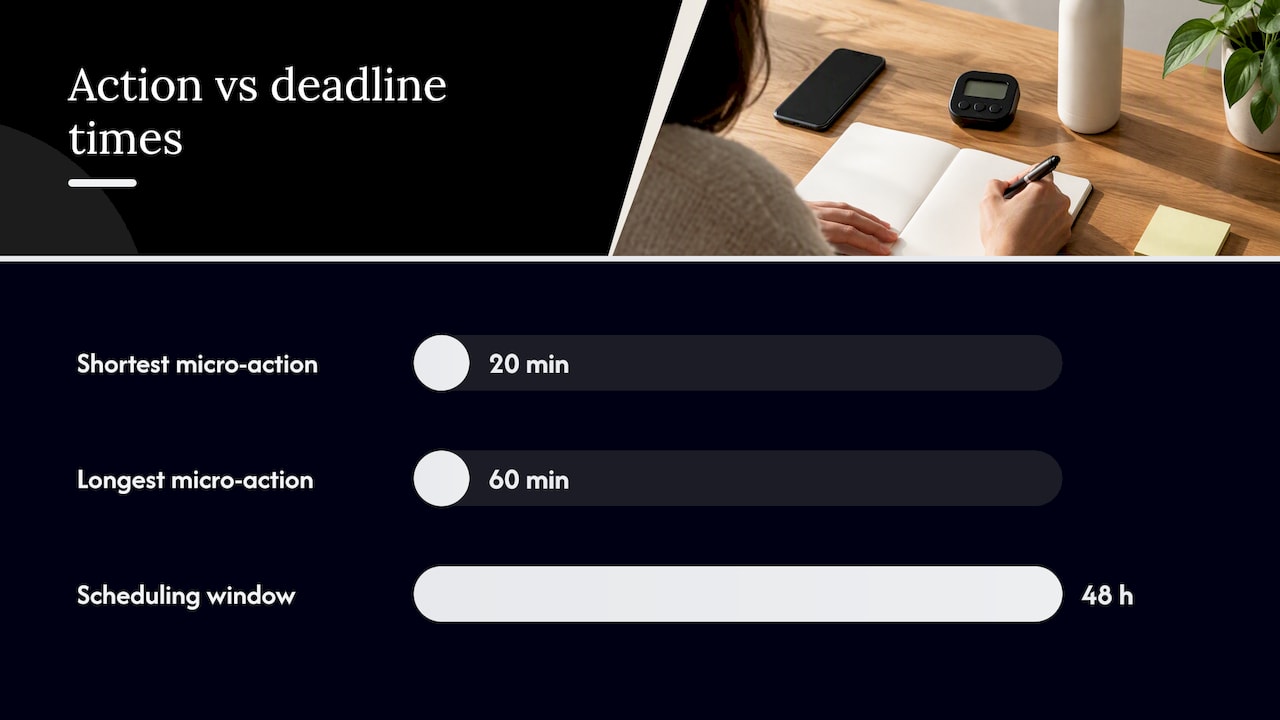
- Break the top goal into the single next micro-action you can finish in 20 to 60 minutes.
- Schedule that micro-action within 48 hours and attach an if-then trigger to it.
- Remove friction by prepping materials or your environment ahead of time, and place a visible cue where you will see it.
- Log a quick yes or no on whether you did it, then reward the small win.
This sequence works because it replaces an abstract intention with a concrete, time-bound task. A systematic review of goal-setting interventions found effects were strongest when goals were difficult but achievable and tracked consistently, not when they were left open-ended.
Pro Tip: Write your micro-action on your calendar the same way you’d write a meeting, with a start time and a specific task name, not just “work on goal.”
How to write SMART goals and if-then plans that actually work
A SMART goal turns “get fit” into “walk 30 minutes, four days a week, for the next month.” It names the outcome, the measure, and the deadline, which gives you something to check off instead of something to feel guilty about.
Implementation intentions go a step further. Instead of just scheduling a time, you link a specific cue to a specific response: “if X happens, then I will do Y.” This contingent format consistently beats plans that only specify when and where, because the if-then structure rehearses the exact moment you will act, not just the window it falls in.
Three templates to copy:
- Start: If it’s 7 AM, then I will open my notes and write the first paragraph.
- Obstacle: If I feel too tired to start, then I will do just five minutes and stop if I still want to.
- Habit trigger: If I finish lunch, then I will immediately review my task list for the day.
Implementation intentions show some of the most reliable effects in behavior-change research, with effect sizes between d = .27 and .66 across 642 independent tests, and stronger results when plans are rehearsed and written in contingent if-then form. This meta-analysis of implementation intentions also found that motivation and repetition strengthen the effect over time.
Turn your actions into habits and plan for setbacks
Habits run on cues, not willpower. If you want a new behavior to stick, change what triggers it: place your running shoes by the door, or delete the app that distracts you before your focus block. The American Psychological Association notes that habits are cue-driven and often continue even after motivation fades, which is exactly why a visible or easy cue matters more than a pep talk.
- Disrupt the cue for an unwanted habit, or add friction that slows it down.
- Simplify the cue for your desired action so it’s easier to start than to skip.
When you miss a day, don’t treat it as proof the plan failed. An iterative mindset built on assessing, adjusting, and practicing again correlates with stronger habit automaticity over time. Reassess what got in the way, adjust the plan, and try again the next day.
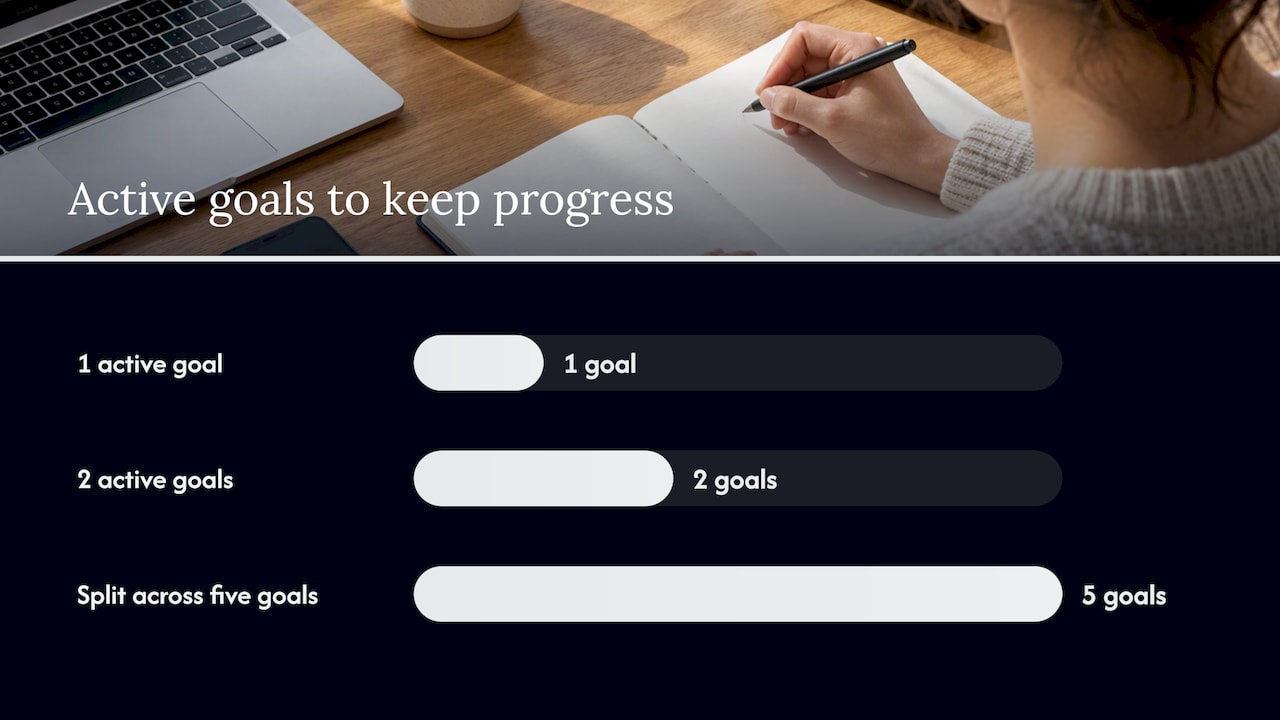
Pro Tip: Keep yourself to one or two active goals at a time; splitting focus across five goals usually means none of them get the repetition they need to become automatic.
Low-effort tracking and a weekly review that keeps you honest
Tracking doesn’t need to be elaborate to work. A short daily check and a slightly longer weekly review are enough to catch drift before it becomes a pattern.
- Each day, log a yes or no on whether you completed your micro-action, plus one short note on what helped or got in the way.
- Once a week, spend 10 to 15 minutes reviewing what worked, what didn’t, and what obstacle keeps showing up.
- Decide whether to scale up the goal (if you’re hitting it consistently) or pivot the approach (if you’re missing it most days).
- Write next week’s first micro-action before you close the review.
Example: a study goal review might read: “Wins: studied 4 of 5 planned days. Barrier: skipped Tuesday after a late class. Next micro-action: if class runs late, then I’ll study for just 15 minutes before bed instead of skipping.”
How Optiostation supports each step of this plan
The app addresses common gaps that cause goal plans to fall apart: no clear next step, no scheduled trigger, and no easy way to track whether you followed through.
- Micro-action scheduling lets you turn step two of the routine above into a calendar entry instead of a vague intention.
- Smart reminders act as your if-then trigger, so the cue shows up exactly when you planned it to.
- Color-coded life aspects help keep one or two priority goals visible without them getting buried under everything else on your plate.
- Hashtag-based search makes it easy to pull up your weekly review notes or past micro-actions when deciding what to adjust.
For ready-to-use SMART formats, our SMART goal template and academic goal-setting guide walk through examples you can adapt directly into your plan.
Progress rarely moves in a straight line
Most people expect goal progress to look like a steady climb, and then quit the first time it doesn’t. It won’t, and that’s not a sign you’re doing it wrong. A missed day is data, not a verdict on your character or your plan.
Small, repeated micro-actions add up in ways that feel invisible week to week but show up clearly over a month. Use your tracking log to notice that pattern instead of judging yourself by your worst day.
— Optiostation
Try Optiostation to put this plan into action
The app is designed so you can go from “I should start that goal” to a scheduled micro-action quickly, with an if-then reminder attached so you don’t have to remember it yourself.
- Schedule your next micro-action and set a reminder tied to a specific cue, not just a time.
- Keep one or two priority goals visible with color-coded tracking instead of a cluttered list.
- Review your week in minutes using tagged notes you can search later.
For focused, single-task planning, visit Prioritization Station and set up your first micro-action today. If you’re also managing goals alongside coursework or a job, our guide to managing tasks effectively covers how to fit this routine around a full schedule.
FAQ
What will I do to meet my goals starting today?
Pick one or two priority goals, write a SMART version of each, and schedule a single micro-action within the next 48 hours using an if-then trigger. This sequence is grounded in implementation-intention research showing contingent plans outperform vague scheduling.
How many goals should I focus on at once?
Most guidance points to one or two active goals at a time, since splitting attention across several reduces the repetition each one needs to become a habit. A focused approach, as discussed in this piece on single-tasking, also reduces the wasted effort of switching between unrelated priorities.
What makes implementation intentions more effective than a schedule?
An if-then plan links a specific cue to a specific action, which rehearses the exact moment you’ll act rather than just naming a time window. This contingent format shows effect sizes between d = .27 and .66 across 642 independent tests, and rehearsing the plan strengthens the effect further.
How do I stay motivated after missing a goal deadline?
Treat a missed day as information rather than failure, then adjust your next micro-action instead of abandoning the plan. An iterative mindset of assessing, adjusting, and practicing again is linked to stronger habit formation over time.
Can breaking a large goal into small steps really work for language learning?
Yes. Dividing a large learning goal into small, scheduled sessions builds momentum the same way it does for other goals, as shown in this approach to Korean study scheduling. The same micro-action and if-then structure applies regardless of the subject.
Sources
- The when and how of planning: Meta-analysis of the scope and components of implementation intentions in 642 tests
- What Effect Do Goal Setting Interventions Have on Physical Activity and Psychological Outcomes in Insufficiently Active Adults? A Systematic Review and Meta-Analysis (2024)
- Unique effects of setting goals on behavior change: Systematic review and meta-analysis
- Iterative mindset and habit automaticity (2026)
