

TL;DR:
- Technical project manager training combines certifications like PMI’s PMP and AgilePM with hands-on technical experience. Building architectural literacy and embedded team experience are essential for effectively managing complex technical projects. Success depends on genuine curiosity about system interactions and continuous development of technical risk management skills.
Technical project manager training is the structured process of building both project leadership skills and technical literacy needed to run complex, cross-functional technical projects. It combines recognized credentials like the Project Management Professional (PMP) and AgilePM with hands-on experience inside development environments. The Project Management Institute (PMI) and the Agile Business Consortium set the standards most employers recognize. Professionals who complete this training can translate technical constraints into delivery decisions, manage risk at the architecture level, and lead engineers without losing credibility. This guide covers the certifications, skills, and career pathways that matter most.
What are the essential certifications for technical project manager training?
Certifications validate your competency at specific career stages. The three most recognized credentials are the PMP, the Certified Associate in Project Management (CAPM), and AgilePM. Each targets a different level of experience and a different type of project environment.
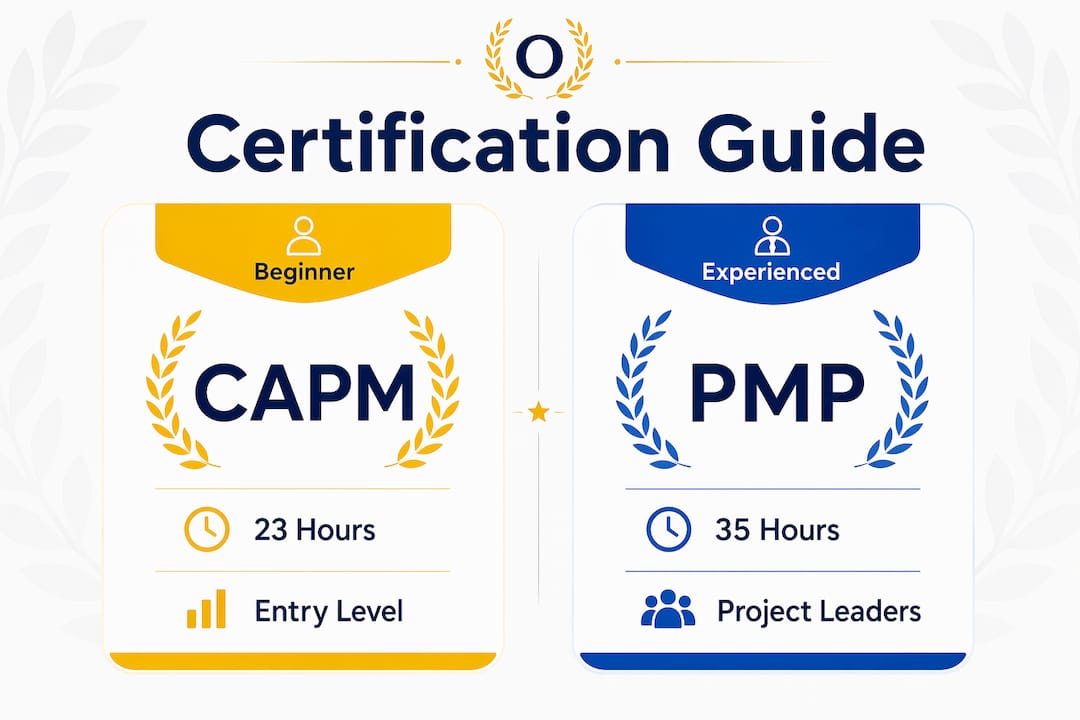
The CAPM suits beginners, requiring only 23 hours of education and a grounding in the PMBOK framework. It gives early-career professionals a structured foundation before they accumulate the project hours needed for the PMP. Think of it as the entry credential that proves you understand how projects are supposed to work before you prove you can run them.
The PMP is the industry benchmark for experienced project leaders. It requires 35 contact hours of formal education plus documented project leadership experience. Degree holders need 36 months of leadership experience; professionals without a bachelor’s degree need 60 months. The PMP exam tests critical thinking in realistic project scenarios, not rote memorization. That distinction matters because it means passing the PMP actually signals you can handle ambiguity on the job.
AgilePM targets professionals working in iterative delivery environments. The Foundation exam covers 50 questions in 40 minutes, while the Practitioner exam runs 2.5 hours with a 50% pass mark. It is governed by the Agile Business Consortium and pairs well with the PMP for professionals managing hybrid projects.
| Certification | Governing body | Experience required | Exam format | Best for |
|---|---|---|---|---|
| CAPM | PMI | 23 hours of education | 150 questions | Early career |
| PMP | PMI | 36–60 months leadership | 180 questions | Experienced PMs |
| AgilePM Foundation | Agile Business Consortium | None | 50 questions, 40 min | Agile environments |
| AgilePM Practitioner | Agile Business Consortium | Foundation pass | 2.5 hours | Agile delivery leads |
Pro Tip: Choose your first certification based on where you are, not where you want to be. If you have fewer than two years of project experience, start with CAPM. If you work in Agile teams, add AgilePM before or alongside PMP.
How do you develop the technical skills required for effective project management?
Certifications alone do not make a technical project manager. Architectural literacy is the ability to understand how system components interact, where integration points create risk, and how technical decisions affect delivery timelines. Without it, you are managing schedules without understanding what drives them.

The fastest way to build technical literacy is embedding yourself inside development teams. Attend sprint reviews, architecture review boards, and system design sessions even when you are not required to. Ask engineers to walk you through the decisions they made, not just the outcomes. That habit alone separates project managers who earn technical credibility from those who remain coordinators.
Technical risk management uncovers risks that non-technical managers miss entirely. API rate limits, data migration complexity, and third-party security vulnerabilities are invisible in a standard risk register unless you know to look for them. A technical project manager who can spot these risks early prevents the kind of late-stage surprises that derail delivery.
Best practices for building technical expertise:
- Sit in on architecture and code review sessions regularly, even as an observer
- Ask engineers to explain technical decisions in plain language, then repeat it back to confirm understanding
- Study the systems your team builds, including data flows, dependencies, and failure points
- Read post-mortems from past projects to understand what went wrong technically and why
- Take short, focused courses in areas like APIs, databases, or cloud infrastructure to build vocabulary
Pro Tip: Use cross-functional communication as a learning tool. When a developer explains a technical blocker, ask one follow-up question every time. Over six months, those questions compound into genuine technical fluency.
What are the typical career pathways for aspiring technical project managers?
Two routes lead to technical project management. The first starts inside a technical role. Engineers, developers, and systems analysts who move into project leadership bring built-in credibility with technical teams. The second route starts with a project management degree or certification, followed by deliberate exposure to technical environments. Both work. Neither works without genuine technical grounding.
Professionals who embed within development teams for at least three years before pursuing advanced certifications build the credibility and contextual knowledge that classroom training cannot replicate. Three years is the threshold where you stop asking basic questions and start anticipating problems before engineers raise them. That shift is what hiring managers and certification bodies look for.
The most common pitfall for aspiring technical project managers is taking on complex programs without genuine grounding in systems engineering concepts. Managing a software migration or a platform integration without understanding the underlying architecture leads to missed risks, poor estimates, and damaged team trust. Experience and credentials must develop together, not in isolation.
| Certification | Education required | Experience required | Recommended background |
|---|---|---|---|
| CAPM | High school diploma | 23 hours of PM education | Any background, early career |
| PMP (degree holder) | Bachelor’s degree | 36 months project leadership | Technical or PM background |
| PMP (non-degree) | No degree required | 60 months project leadership | Technical roles with PM exposure |
| AgilePM Practitioner | AgilePM Foundation | Foundation certification | Agile delivery environments |
Professionals transitioning from engineering into project management have a natural advantage in technical credibility. The gap they typically need to close is formal project governance, stakeholder communication, and structured risk management. Targeted training in those areas, combined with existing technical depth, produces the strongest technical project managers.
What methodologies and best practices are taught in technical PM training programs?
Technical project manager training programs teach a range of methodologies because no single approach fits every project. Agile, Scrum, hybrid, and traditional waterfall each appear in the curriculum of serious programs. The skill is knowing which to apply and when to blend them.
Agile project management training covers iterative delivery, sprint planning, and continuous feedback loops. Scrum adds defined roles, ceremonies, and artifacts. Waterfall suits projects with fixed requirements and regulatory constraints. Hybrid approaches combine iterative planning with milestone-based delivery, which is common in large technical programs where some workstreams are predictable and others are not.
Frameworks like MoSCoW prioritization, timeboxing, and iterative development appear across most training programs because they solve real problems in technical delivery. MoSCoW forces teams to separate must-have requirements from nice-to-haves before scope creep sets in. Timeboxing prevents analysis paralysis on technical decisions. Iterative development reduces the risk of building the wrong thing for months before anyone notices.
Effective training programs typically include these components:
- Foundational project governance: scope definition, scheduling, and budget management using PMI or PRINCE2 frameworks
- Agile and Scrum mechanics: sprint planning, retrospectives, velocity tracking, and backlog refinement
- Risk management specific to technical projects: identifying API dependencies, integration risks, and infrastructure constraints
- Stakeholder communication: translating technical status into business language for non-technical sponsors
- Tools training: hands-on practice with project tracking and task management software used in real delivery environments
- Leadership and team dynamics: conflict resolution, cross-functional coordination, and managing technical specialists
Risk management deserves special attention in technical training. Generic risk frameworks teach probability and impact scoring. Technical risk management goes deeper, requiring you to understand the architecture well enough to know which risks are real and which are theoretical. That depth comes from combining formal training with the hands-on technical exposure covered earlier.
Key Takeaways
Effective technical project manager training requires combining recognized certifications with at least three years of embedded technical experience and continuous architectural literacy development.
| Point | Details |
|---|---|
| Start with the right certification | CAPM suits beginners; PMP suits experienced leaders; AgilePM suits iterative delivery environments. |
| Build architectural literacy actively | Attend architecture reviews and ask engineers to explain decisions to develop real technical fluency. |
| Experience thresholds matter | PMP requires 36–60 months of documented project leadership before you qualify to sit the exam. |
| Technical risk management is a distinct skill | Identifying API limits, migration complexity, and security gaps requires deeper knowledge than standard risk frameworks provide. |
| Career path shapes training priorities | Engineers moving into PM roles should focus on governance and communication; career PMs should prioritize technical embedding. |
The honest truth about technical project manager training
Most people approach technical project manager training as a certification problem. They pick a credential, study for the exam, and expect the role to follow. That logic works for standard project management. It breaks down fast in technical environments.
The professionals I have seen succeed in technical project leadership share one trait: they are genuinely curious about how systems work. Not at a surface level. They want to understand why an API call fails under load, what makes a database migration risky, and how a cloud architecture decision made in week two affects delivery in week twelve. That curiosity cannot be taught in a classroom. It has to be practiced.
The training path that actually works looks like this: start with a foundational credential like CAPM to build your governance vocabulary, then spend two to three years embedded in technical delivery before pursuing PMP. Use that time to attend every architecture review you can, ask uncomfortable questions, and read the post-mortems when things go wrong. By the time you sit the PMP exam, the scenarios it tests will feel familiar because you have lived them.
The industry is also moving faster than most training programs acknowledge. Agile and hybrid delivery are now the norm, not the exception. A technical project manager who only knows waterfall is already behind. Pairing PMP with AgilePM or a PRINCE2 certification gives you the range to manage whatever environment you land in.
The biggest mistake I see is professionals who rush the technical grounding phase. They get certified, land a technical PM role, and then struggle because they cannot read the room in a technical conversation. Engineers notice immediately. Trust erodes fast. The fix is not more certifications. It is more time inside technical teams before you try to lead them.
— Optiostation
Optiostation: your second-in-command for technical project leadership
Managing technical projects means tracking dozens of moving parts at once. Optiostation is built for exactly that. As a mobile app designed for task, team, and time management, it gives aspiring technical project managers a practical tool to apply what they learn in training from day one.

Optiostation’s task prioritization features align directly with frameworks like MoSCoW, helping you separate critical deliverables from lower-priority work before deadlines force the decision. The team task management tools support cross-functional coordination across technical and non-technical contributors. For professionals building their skills, pairing structured training with a real task tracking system turns theory into practice faster than study alone. Optiostation calls itself your Optio, the second-in-command, so you can focus on leading your team.
FAQ
What is technical project manager training?
Technical project manager training is the structured combination of project management certifications, such as PMP or AgilePM, and hands-on technical experience that prepares professionals to lead complex technical projects and teams.
How long does it take to become a technical project manager?
The timeline varies by route. PMP certification alone requires 36–60 months of documented project leadership experience, and building genuine technical literacy through embedded team experience typically adds two to three years on top of formal study.
Do I need a technical degree to become a technical project manager?
A technical degree is not required. Three or more years of embedded experience working with development or technical teams builds the credibility and contextual knowledge most employers look for.
What is the best first certification for aspiring technical project managers?
CAPM is the best starting point for early-career professionals. It requires only 23 hours of education and covers the PMBOK framework, giving you a solid foundation before you accumulate the experience needed for PMP.
What technical risks should project managers know how to identify?
Technical project managers must identify risks like API rate limits, data migration complexity, and security vulnerabilities. These risks are invisible without architectural literacy and are not covered in standard risk management training.
Recommended
- Technical Project Manager: Skills and Career Guide – Optio Station: Best Project Management App for Prioritization
- Engineering project manager guide: frameworks and strategies – Optio Station: Best Project Management App for Prioritization
- Design project manager: master the skills and tools – Optio Station: Best Project Management App for Prioritization
- Command Log – Optio Station: Best Project Management App for Prioritization
