

TL;DR:
- Recognizing physical and mental signs of overload is essential for timely intervention.
- Effective task management involves tools, prioritization, breaking tasks into micro-steps, and regular review.
- Adaptability, self-awareness, and ongoing adjustment are key to maintaining sustainable productivity.
You have three assignments due Friday, a team project meeting at noon, and seventeen unread emails staring you down before 9 a.m. That feeling of being completely buried is not a personal failure. It is a structural problem, and it has a solution. Task overload is one of the most common struggles for college students and young professionals, but the good news is that prioritizing responsibilities and managing your time effectively is a learnable skill. This guide walks you through every stage, from recognizing when you are overwhelmed to building habits that keep you in control for the long haul.
Table of Contents
- Recognizing signs of task overload
- Preparing to regain control: What you need before tackling tasks
- Step-by-step strategies to prioritize and break down tasks
- Avoiding common mistakes and troubleshooting setbacks
- Verifying progress and sustaining balance
- Why sustainable task management is more than just a checklist
- Take charge with expert tools and guidance
- Frequently asked questions
Key Takeaways
| Point | Details |
|---|---|
| Recognize overload early | Identifying signs of overwhelm is the first step toward gaining control of your workload. |
| Prepare with the right tools | Using digital solutions and a supportive environment makes managing tasks much easier. |
| Prioritize and break down | Tackle overload by organizing, prioritizing, and sequencing tasks into manageable actions. |
| Review and adapt regularly | Track your progress and adjust your approach to ensure ongoing improvement and less stress. |
Recognizing signs of task overload
Before you can fix a problem, you need to see it clearly. Task overload does not always announce itself loudly. Sometimes it creeps in as a low-grade sense of dread every time you open your laptop, or a nagging feeling that you are forgetting something important.
The physical and mental signs are often the first to appear. You feel tired even after a full night of sleep. Anxiety spikes before you even start working. Small decisions feel exhausting. Your memory gets foggy, and you start missing details you would normally catch without effort.
In academic and workplace settings, overload shows up differently:
- Deadlines get missed or barely met with rushed, lower-quality work
- Tasks pile up unfinished because starting feels too overwhelming
- You constantly switch between tasks without completing any of them
- You feel guilty during downtime instead of actually resting
- Requests from teammates or professors go unanswered longer than they should
“Many young professionals report decreased productivity and stress when overwhelmed by too many simultaneous tasks.”
The most important thing to understand here is that self-awareness is the starting point for every fix. If you do not recognize overload for what it is, you will keep pushing harder instead of working smarter. Learning about prioritizing assignments effectively is one of the fastest ways to shift from reactive scrambling to intentional action. The task prioritization benefits go well beyond just finishing work on time. They include lower stress, better output quality, and more mental energy left over at the end of the day.
Preparing to regain control: What you need before tackling tasks
Once you recognize the symptoms of overload, the next step is preparing your environment and attitudes for positive change. Jumping straight into a to-do list without the right setup is like trying to cook a meal in a messy kitchen. You will waste time and get frustrated before you even start.
The first shift is mental. Accept that not everything can or should be done at once. This is not giving up. It is strategy. When you try to do everything simultaneously, nothing gets your full attention, and everything suffers as a result.
Next, get your tools in order. Here is a quick comparison of setup options:
| Tool type | Best for | Example |
|---|---|---|
| Paper planner | Visual learners, offline focus | Weekly layout notebooks |
| To-do list app | Quick capture, reminders | Mobile task apps |
| Cloud-based tracker | Team collaboration, shared deadlines | Project boards |
| Calendar blocking | Time-based scheduling | Digital calendars |
Exploring the right student organization tools can make a real difference. Using digital tools can increase student productivity by up to 40%, which is a significant edge when you are managing a packed schedule. Setting up a proper assignment tracker is one of the first concrete steps worth taking.
Your physical and digital workspace also matters more than most people realize. Clutter competes for your attention even when you are not consciously looking at it. Close unused browser tabs, silence non-essential notifications, and designate a specific spot for focused work. For tools for collaboration, choosing platforms that keep communication centralized reduces the mental load of tracking multiple channels.

Pro Tip: Batch your email and message checks into two or three set windows per day instead of responding the moment notifications arrive. This single habit can recover hours of deep focus time each week.
Step-by-step strategies to prioritize and break down tasks
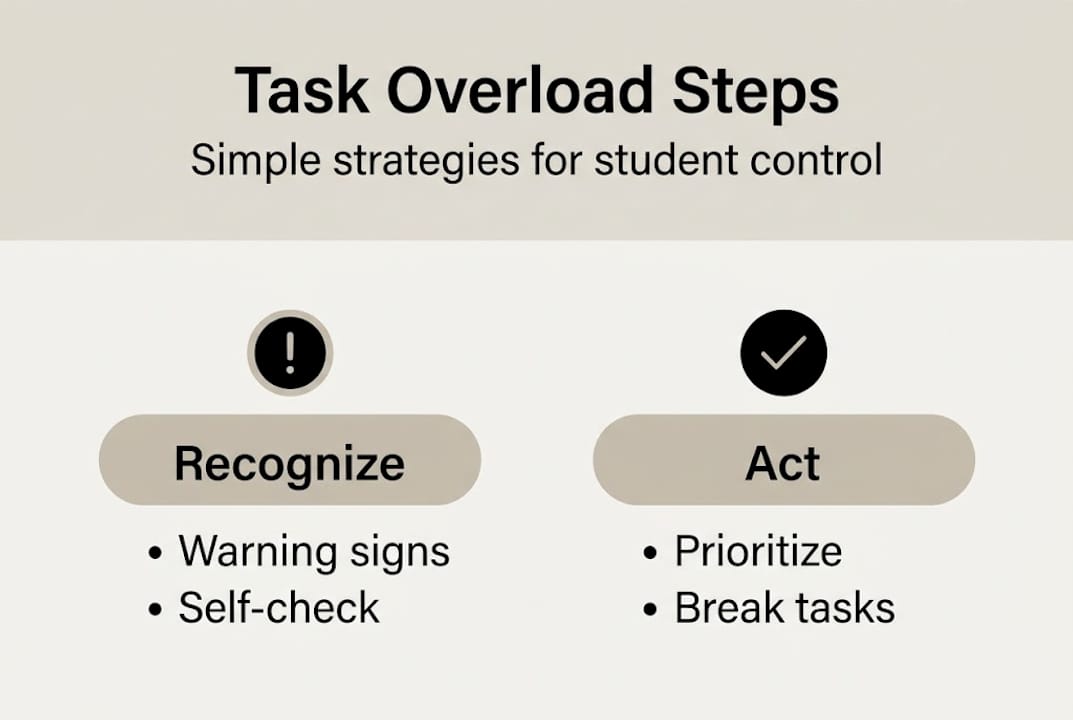
With tools and readiness in place, you can now move systematically from overwhelmed to organized using proven prioritization methods.
- Do a full brain dump. Write every single task down, no matter how small. Get it out of your head and onto paper or a screen. This alone reduces anxiety because your brain stops trying to hold everything at once.
- Triage by urgency and importance. Separate tasks into what needs to happen today, what can wait until later this week, and what can be scheduled further out or delegated.
- Break large projects into micro-tasks. A project called “write research paper” is paralyzing. “Find three sources on climate policy” is actionable. Smaller steps build momentum.
- Assign time limits. Give each task a realistic time slot. Open-ended tasks expand to fill whatever time you give them.
- Identify your next physical action. For every task on your list, define the very next step you need to take. Vague tasks stall. Specific actions move.
The Eisenhower Matrix and SMART goals are proven frameworks that help you decide what to act on, schedule, delegate, or drop entirely. Pair that with strong to-do list habits and you have a system that scales with your workload.
Here is a quick comparison of popular prioritization frameworks:
| Framework | Core idea | Best use case |
|---|---|---|
| Eisenhower Matrix | Urgent vs. important grid | Daily and weekly planning |
| ABCDE Method | Letter-rank each task by consequence | Large task lists |
| Time blocking | Schedule tasks in calendar slots | Structured workdays |
| Two-Minute Rule | Do it now if it takes under 2 minutes | Quick task clearing |
For office productivity, combining a prioritization framework with time blocking is one of the highest-impact moves you can make.
Pro Tip: If a task takes less than two minutes, do it immediately instead of adding it to your list. Logging tiny tasks often takes more effort than just completing them.
Avoiding common mistakes and troubleshooting setbacks
Even with the best system, obstacles can arise. Here is how to spot and overcome the most frequent challenges to staying on track.
One of the biggest traps is overplanning. You spend so much time organizing your tasks that you never actually start them. A beautiful color-coded system means nothing if the work is not getting done. Keep your planning sessions short and purposeful.
Multitasking is another productivity myth that catches a lot of students and young professionals off guard. Switching between tasks rapidly does not make you faster. It makes each task take longer and increases error rates. Single-tasking, where you commit fully to one thing before moving to the next, consistently outperforms juggling.
Common pitfalls to watch for:
- Failing to review and update your task list regularly, causing it to become outdated and useless
- Letting your phone sit face-up during focus sessions, which invites constant interruption
- Setting unrealistic daily goals that guarantee you end each day feeling behind
- Skipping breaks, which leads to diminishing returns on focus and quality
“Distractions are among the leading causes of productivity loss for college students.”
Using student time management tools that include distraction-blocking features can make a measurable difference. For broader context on managing complex workloads, this digital projects guide covers strategies that apply well beyond the classroom.
If you fall behind, do not spiral. Stop, reset, and reprioritize. Ask yourself what the single most important task is right now, and start there. Progress beats perfection every time.
Verifying progress and sustaining balance
After putting these strategies into practice, it is important to make sure your system is working and to refine it along the way.
A weekly review is the engine that keeps everything running. Block fifteen minutes at the end of each week to answer these questions:
- Which tasks did I complete this week?
- Which tasks got pushed back, and why?
- Did my stress levels feel manageable?
- What one adjustment would make next week better?
Tracking your completion rates over time gives you real data on what is working. Here is a simple framework for weekly self-review:
| Review area | What to check | Frequency |
|---|---|---|
| Task completion | Percentage of planned tasks finished | Weekly |
| Stress level | Self-rated score from 1 to 10 | Weekly |
| Tool effectiveness | Is your system still serving you? | Monthly |
| Goal alignment | Are your tasks moving you forward? | Monthly |
Regular self-review and adjustment increase success rates in time management habits significantly. The task management software guide at Optio Station is a great resource for finding tools that support this kind of ongoing evaluation.
Celebrating small wins matters too. Finished a chapter? Acknowledge it. Submitted early? Give yourself credit. Positive reinforcement builds the habit loop that makes consistent productivity feel natural rather than forced.
Why sustainable task management is more than just a checklist
Here is something most productivity guides will not tell you: the system is not the solution. You are.
Checklists, apps, and frameworks are genuinely useful, but they are tools, not transformations. We have seen Centurions load up on every productivity app available, color-code their entire semester, and still feel overwhelmed by week three. Why? Because they were using tools as a substitute for self-reflection instead of a support for it.
The uncomfortable truth is that rigid productivity rules often backfire under real pressure. When life gets chaotic, and it will, the person who adapts their system wins. The person who abandons their system because it is not “working perfectly” loses momentum entirely.
Lasting improvement comes from treating your task management approach like a living strategy, not a fixed rulebook. Adjust it when your workload shifts. Simplify it during high-stress periods. Rebuild it when a semester ends. Understanding why managing tasks matters at a deeper level helps you stay committed even when motivation dips. Focus on progress, not perfection. That mindset shift is what separates Centurions who thrive from those who just survive.
Take charge with expert tools and guidance
For those ready to implement these solutions, the right digital support can make all the difference.
Optio Station is your second-in-command, built specifically for students and young professionals who need more than a basic to-do list. As a Centurion, you deserve tools that match your pace and your ambition.
Explore the best task management software comparison guide to find the right fit for your workflow and goals. Whether you are starting fresh or refining an existing system, the resources at Optio Station are designed to help you manage tasks effectively and stay ahead of the pressure. Start with one tool, build the habit, and let the results speak for themselves. Learn how to manage tasks effectively and take your first step toward real, lasting control.
Frequently asked questions
What is the fastest way to reduce task overload?
Write down every task you are carrying, then apply prioritization frameworks like the Eisenhower Matrix to immediately identify what needs your attention first and what can wait.
How can I avoid burnout from too many tasks?
Break your work into stages, set realistic daily goals, and schedule genuine rest periods. Incremental goals and scheduled breaks reduce both stress and long-term fatigue.
Are digital apps really helpful for task overload?
Absolutely. Digital tools can increase productivity by up to 40% by providing structure, reminders, and a centralized place to track everything you are managing.
What if I keep falling behind despite planning?
Reassess your list and cut it down to the essentials. Regular self-review and adjustment help you identify what is slipping and course-correct before small setbacks turn into bigger ones.
Recommended
- 7 Best Time Management Goals Examples for Centurions – Optio Station: Best Project Management App for Prioritization
- How to Manage Daily Tasks Effectively for Success – Optio Station: Best Project Management App for Prioritization
- How to Prioritize Assignments Effectively for Success – Optio Station: Best Project Management App for Prioritization
- How to Manage Multiple Tasks Easily for Better Results – Optio Station: Best Project Management App for Prioritization
- Prioritize Tasks: Boost Productivity 25% in 2026
