

TL;DR:
- Construction project managers oversee all project phases, from planning to closeout, managing budgets, schedules, and communication. They focus on contract interpretation, risk management, and stakeholder coordination to ensure project success. Effective closeout and proactive dispute resolution are critical to maintain reputation and financial stability.
A construction project manager is responsible for overseeing every phase of a construction project, from the first planning meeting through final closeout. The role covers budgeting, scheduling, contract administration, subcontractor coordination, safety compliance, and stakeholder communication. Construction project manager responsibilities are broader than most aspiring managers expect. You are not just running a job site. You are running a business within a business, and the financial and legal stakes are high from day one.
What are the core construction project manager responsibilities?
Construction project managers oversee the entire project lifecycle, including budget, schedule, and safety compliance from groundbreaking through closeout. That scope means your duties shift significantly depending on which phase the project is in.
Preconstruction
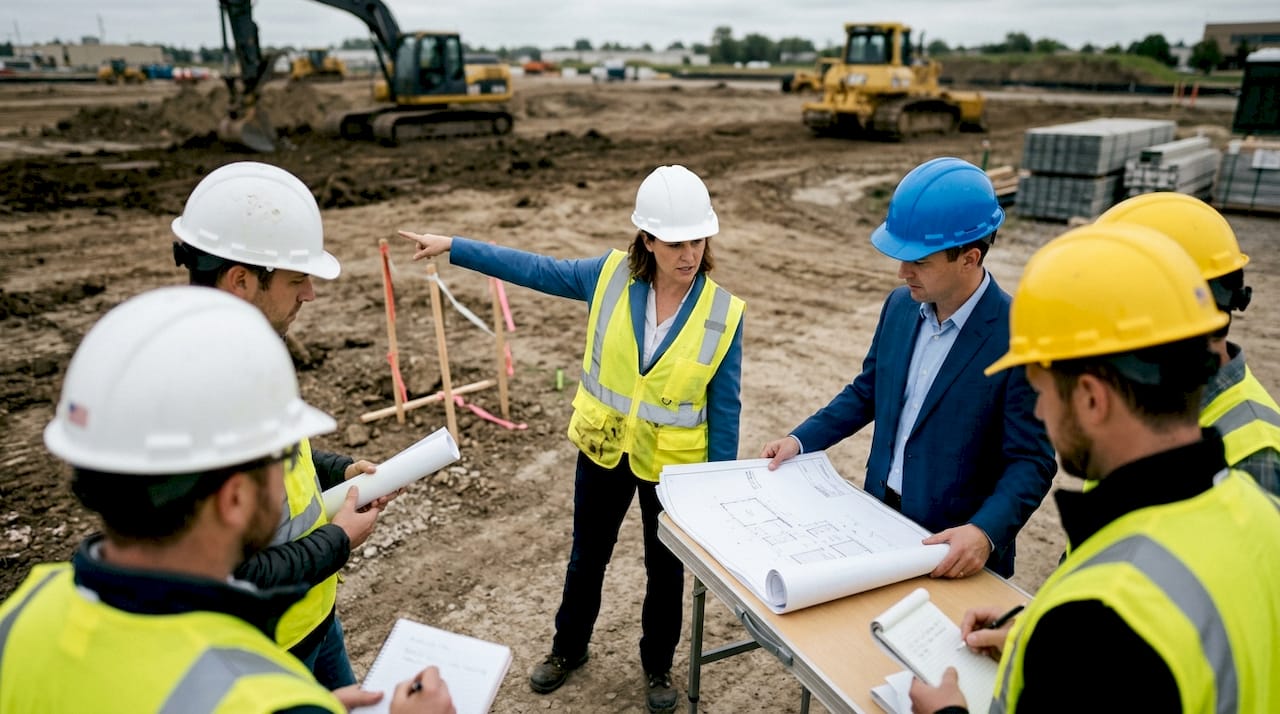
The preconstruction phase sets the foundation for everything that follows. Your job is to define the project scope clearly, build a realistic budget, and create a schedule that accounts for lead times, permit delays, and weather risk. Ambiguity at this stage is the leading cause of costly change orders later. A well-defined scope in preconstruction is the single most effective tool for protecting project margins.
Procurement and contract administration
During procurement, you negotiate and execute subcontract agreements, review bid packages, and confirm that every trade contractor understands the scope and schedule. You also manage purchase orders for long-lead materials like structural steel or custom glazing systems. This phase requires you to read contracts carefully, not just your own. Understanding contractual obligations of all parties, including notice requirements and liquidated damages provisions, is a defining skill at this level.
Construction phase duties
- Track schedule progress weekly using Critical Path Method (CPM) scheduling software
- Coordinate daily between subcontractors, the site superintendent, and the owner’s representative
- Review and respond to Requests for Information (RFIs) within contractually required timeframes
- Issue and log change orders to prevent scope creep
- Monitor safety compliance and enforce site-specific safety plans
- Hold weekly project meetings, distribute meeting minutes, and track open action items
Pro Tip: Keep a running RFI log with response deadlines. A missed RFI response is a missed chance to document a delay, and that documentation becomes critical if a dispute arises.
Closeout
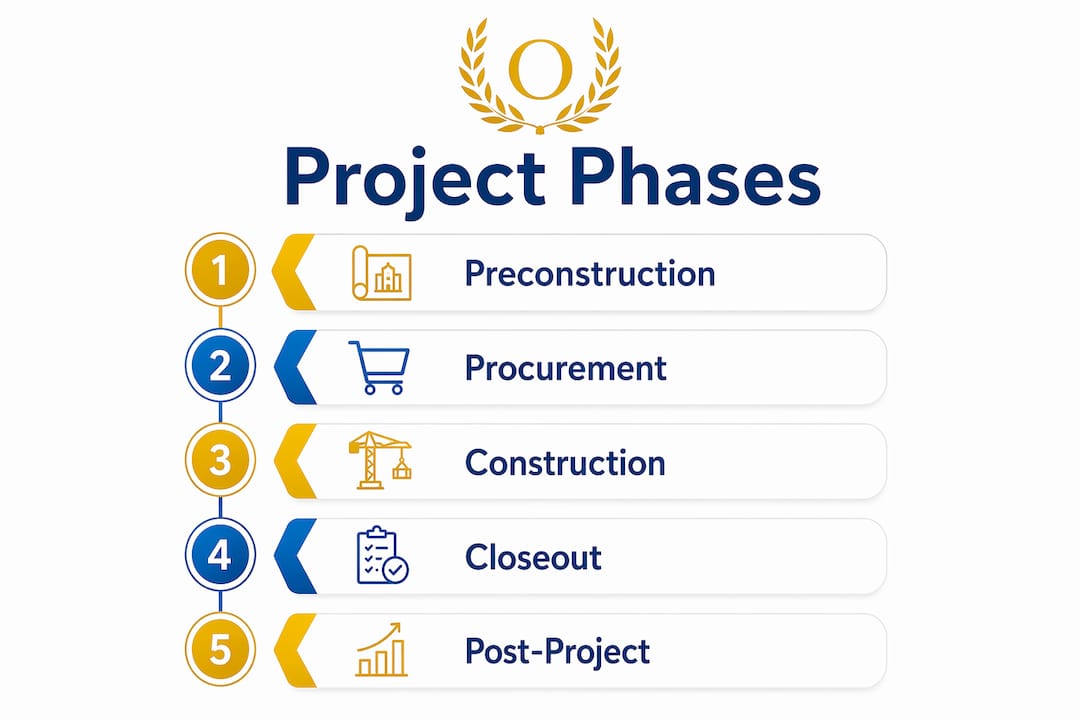
Closeout is where many project managers lose money and reputation. You must complete the punch list, obtain the certificate of occupancy, collect all warranty documents, and submit final billing. Skipping steps here leads directly to withheld payments and damaged client relationships.
How does a construction project manager handle scheduling and budget control?
Schedule and budget control are the two areas where project managers create or destroy project value. Both require daily attention, not weekly reviews.
CPM scheduling and float management
CPM scheduling identifies the critical path, which is the sequence of tasks that determines the project’s earliest possible completion date. Any delay on a critical path task delays the entire project. Float, or slack, is the amount of time a non-critical task can slip before it affects the critical path. Knowing which activities have float and which do not lets you make informed decisions about resource allocation.
- Build the baseline schedule before mobilization and get owner sign-off
- Update the schedule weekly with actual progress and revised durations
- Identify critical path shifts early and notify the owner in writing
- Use schedule recovery plans, such as overtime or added crews, before delays compound
- Document all owner-caused delays with dated correspondence to protect your claims
Budget tracking and cost forecasting
Successful project managers forecast final project costs and protect margins against delays and overruns. That means tracking committed costs, actual costs, and projected costs simultaneously. The metric that matters most is the Cost at Completion (CAC), which tells you whether the project will finish over or under budget before it actually does.
A construction project manager acts as a financial controller and risk assessor under significant pressure. That framing matters because it changes how you approach every financial decision. You are not just approving invoices. You are protecting the company’s margin on every line item.
Pro Tip: Run a monthly cost-to-complete review with your project accountant. Catching a $50,000 overrun in month three is fixable. Catching it in month ten is not.
What skills are essential for a construction project manager?
The skills that separate good project managers from great ones are not technical. They are contractual, financial, and interpersonal.
- Contract literacy: You must interpret and apply legal contract clauses across all parties simultaneously. This includes AIA contract forms, subcontract agreements, and owner-imposed special conditions. Project managers must interpret contract clauses across multiple agreements at once, which requires both legal awareness and practical judgment.
- Stakeholder communication: Clear, consistent communication prevents most disputes before they start. Holding weekly meetings to track RFIs, distribute minutes, and document change orders is an industry best practice, not optional.
- Conflict resolution: Subcontractor disputes are inevitable. Neglecting disputes early can extend resolution time sixfold. Addressing a payment disagreement in week two takes a phone call. Addressing it in month six takes a lawyer.
- Risk management: Identify risks before they become problems. This means reviewing the schedule for float erosion, watching subcontractor cash flow, and flagging design gaps before they hit the field.
- Leadership: You coordinate people who do not report directly to you. Subcontractors, inspectors, and owner representatives all have their own priorities. Your job is to align them without authority over their payroll.
Pro Tip: Learn the notice provisions in your contract before the project starts. Missing a written notice deadline for a delay claim can void your right to a time extension, even if the delay was clearly the owner’s fault.
For a deeper look at the skills for contractor project managers, the full breakdown covers both technical and soft skill requirements in detail.
How does a construction project manager differ from a superintendent or general contractor?
These three roles share a job site but carry very different responsibilities. Confusing them leads to gaps in accountability and real financial exposure.
| Role | Primary Focus | Contractual Authority | Key Risk |
|---|---|---|---|
| Construction project manager | Business, contracts, finances, and communication | Coordinates but often does not sign subcontracts | Schedule and cost overruns |
| Site superintendent | Physical work, daily field operations, and quality | Directs field crews on site | Safety incidents and rework |
| General contractor | Executes the work and holds owner contract | Signs all subcontract agreements | Full contractual liability |
General contractors assume direct contractual responsibility while project managers often coordinate without signing subcontract agreements. That distinction matters enormously for liability. A project manager who oversteps into the general contractor’s contractual role without authority creates legal exposure for their employer.
The division of responsibility between a general contractor and project manager directly shapes how risk is allocated across the project. Aspiring project managers should clarify this boundary with their employer before taking on a new project.
Understanding commercial construction reporting is also part of the project manager’s lane, not the superintendent’s. Financial and progress reports flow through the project manager to the owner and executive team.
What does effective project closeout look like?
Closeout is the final phase of construction project oversight, and it is the one most often rushed. A poor closeout costs money, damages relationships, and delays final payment.
Efficient project closeout requires completing punch lists, obtaining occupancy certificates, and delivering warranty documentation. Skipping any of these steps gives the owner grounds to withhold retainage.
The core closeout tasks are:
- Complete all punch list items and get written owner sign-off on each
- Obtain the certificate of occupancy from the authority having jurisdiction
- Collect operation and maintenance manuals from every subcontractor and equipment supplier
- Submit all warranty documents with correct start dates and contact information
- Issue the final application for payment and confirm retainage release terms
- Conduct a lessons-learned meeting with your project team before demobilizing
The lessons-learned meeting is the step most teams skip. It is also the step that makes your next project run better. Document what went wrong, what went right, and what you would do differently. That institutional knowledge is worth more than any software tool.
Key Takeaways
Construction project management requires equal command of contracts, finances, scheduling, and communication to deliver projects on time and within budget.
| Point | Details |
|---|---|
| Lifecycle ownership | Project managers own every phase from preconstruction planning through final closeout. |
| Budget and schedule control | Forecast cost at completion monthly and update CPM schedules weekly to catch problems early. |
| Contract literacy | Know notice requirements and liquidated damages clauses before the project starts, not after a dispute. |
| Role clarity | Project managers focus on business and communication; general contractors hold direct contractual liability. |
| Closeout discipline | Punch list sign-off, occupancy certificates, and warranty docs must be complete before requesting final payment. |
What I’ve learned about managing construction projects
The biggest mistake aspiring project managers make is treating the job as a field management role. The field is the superintendent’s domain. Your domain is the business of the project: the contracts, the money, the schedule, and the relationships.
Early in a career, it is tempting to spend time on the job site because it feels productive. Walking the site is useful, but it cannot replace reviewing the cost report, responding to RFIs on time, or resolving a subcontractor payment dispute before it becomes a formal claim. The project manager who masters the business side of construction is the one who gets promoted and trusted with larger projects.
One insight that took years to internalize: proactive communication is cheaper than reactive damage control. A five-minute phone call to a subcontractor about a payment concern costs nothing. Waiting until that concern becomes a lien costs thousands in legal fees and weeks of distraction. Senior project managers with experience on projects exceeding $10 million understand this instinctively because they have paid the price of learning it the hard way.
Pursue certification through recognized programs and keep learning contract law. The construction industry rewards project managers who can read a contract as fluently as they can read a schedule.
— Optiostation
Tools that support construction project management
Managing construction project responsibilities across multiple phases, teams, and deadlines requires more than memory and spreadsheets.
Optiostation is built for exactly this kind of multi-layered work. As your second-in-command, it helps you track tasks, delegate to your team, and monitor deadlines across every project phase. The best task management software guide on Optiostation covers the tools that fit construction workflows, from preconstruction planning through closeout. You can also use Optiostation’s task delegation framework to assign responsibilities clearly across subcontractors, coordinators, and field staff. For aspiring project managers building their systems from the ground up, Optiostation gives you the structure to stay ahead of every deadline.
FAQ
What are the main construction project manager responsibilities?
A construction project manager oversees budgeting, scheduling, contract administration, subcontractor coordination, safety compliance, and project closeout. The role spans the full project lifecycle from preconstruction through turnover.
What does a project manager do differently from a site superintendent?
A project manager handles contracts, finances, and stakeholder communication, while a site superintendent manages daily field operations and physical construction work. The two roles are complementary but distinct in authority and focus.
How much experience do senior construction project managers need?
Senior project manager roles typically require 5+ years of experience on projects often exceeding $10 million in value. That threshold reflects the complexity of managing large budgets, multiple subcontractors, and high-stakes contracts.
Why is contract knowledge so critical for construction project managers?
Contract knowledge determines whether you can protect your company’s rights in a dispute. Missing a notice deadline or misreading a liquidated damages clause can cost more than the original contract value in penalties and lost claims.
How does early dispute resolution affect a construction project?
Delaying subcontractor conflict resolution can increase resolution time by 300%, which directly extends the project timeline and inflates costs. Addressing disputes within days of their emergence is always faster and cheaper than formal resolution.
Recommended
- Contractor Project Manager: Roles, Skills, and Strategies – Optio Station: Best Project Management App for Prioritization
- Engineering project manager guide: frameworks and strategies – Optio Station: Best Project Management App for Prioritization
- Best Construction Management Software: 2026 Guide – Optio Station: Best Project Management App for Prioritization
- Technical Project Manager: Skills and Career Guide – Optio Station: Best Project Management App for Prioritization
