

Struggling to keep your student group or project team motivated can feel overwhelming, especially when everyone has different styles and goals. For college students and early-career professionals, finding the right way to organize team workflows matters because motivation directly shapes how teams perform and connect. By adopting systematic structures that naturally inspire and empower, you can encourage open communication, professional autonomy, and stronger results while using tools like the Optio app.
Table of Contents
- Defining Workflow For Team Motivation
- Types Of Team Motivation Techniques
- Key Features Of Effective Workflows
- Role Of Optio App For Student Teams
- Common Pitfalls And How To Avoid Them
- Actionable Strategies To Inspire Motivation
Key Takeaways
| Point | Details |
|---|---|
| Effective Team Workflow | Establishing clear communication and aligning individual goals with team objectives enhances motivation and performance. |
| Motivation Techniques | Both intrinsic and extrinsic motivation strategies are essential; leaders should apply a mix to meet diverse team needs. |
| Workflow Design Principles | Clear roles, defined processes, and adaptability are critical for creating effective workflows that maximize productivity. |
| Proactive Problem Solving | Regular check-ins and transparent feedback mechanisms can help mitigate communication breakdowns and maintain team cohesion. |
Defining Workflow for Team Motivation
Workflow for team motivation represents a strategic approach to organizing collaborative processes that enhance both individual performance and collective achievement. At its core, this concept focuses on creating systematic structures that naturally inspire and empower team members to deliver their best work. Team workflow dynamics are critically dependent on understanding how different elements interconnect to drive engagement and productivity.
Successful team workflows incorporate several key elements that transform traditional work approaches:
- Clear Communication: Establishing transparent channels for sharing information and expectations
- Collective Goal Alignment: Ensuring individual tasks connect to broader team objectives
- Professional Autonomy: Providing team members meaningful decision-making opportunities
- Performance Tracking: Implementing robust mechanisms for monitoring progress and recognizing achievements
Motivation within team workflows isn’t about rigid control, but creating an environment where professionals feel genuinely invested in their collective mission. Research indicates that teams with strong motivational frameworks demonstrate significantly higher performance levels, with emotional intelligence and leadership playing pivotal roles in cultivating these dynamic work environments.
Team Flow Foundations involve understanding that motivation isn’t a one-size-fits-all concept. Different team members will respond to varied motivational triggers, requiring leaders to develop nuanced, adaptive strategies that respect individual preferences while maintaining cohesive group dynamics.
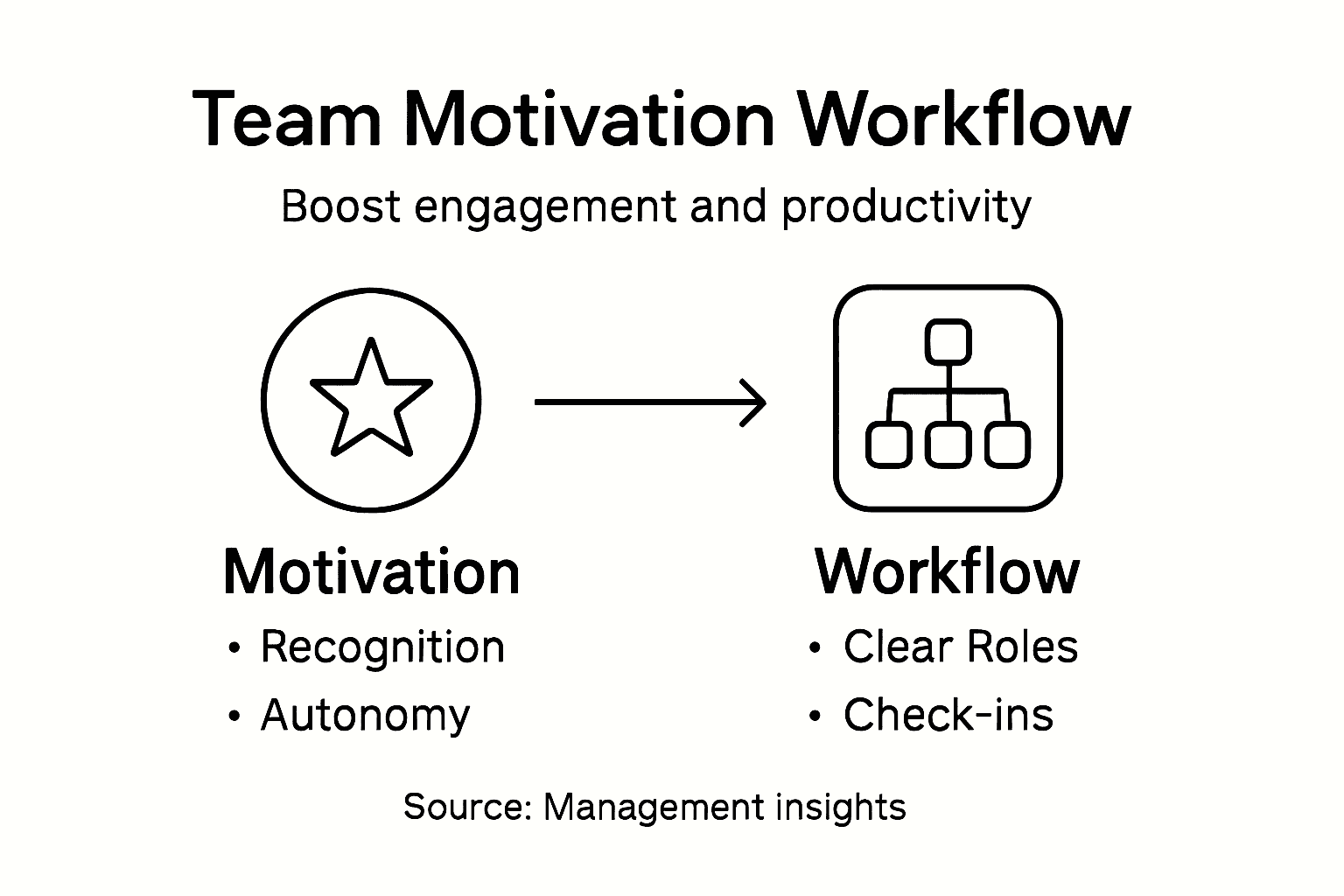
Pro tip: Design your team workflow with flexibility, allowing space for individual creativity while maintaining clear, collaborative structures.
Types of Team Motivation Techniques
Team motivation encompasses a spectrum of strategic approaches designed to inspire and energize collaborative groups. Team development interventions provide systematic frameworks for enhancing team performance and engagement across diverse professional environments.
Two primary categories of team motivation techniques emerge from contemporary research:
-
Intrinsic Motivation Techniques:
- Personal growth opportunities
- Meaningful work assignments
- Professional skill development
- Autonomy in decision-making
-
Extrinsic Motivation Techniques:
- Performance-based recognition
- Financial incentives
- Career advancement opportunities
- Public acknowledgment of achievements
Leadership plays a critical role in implementing these motivational strategies. Ambidextrous leadership models that blend transformational and transactional elements can significantly influence team behavior and performance. These approaches create dynamic work environments that balance individual needs with collective goals.
Here’s how intrinsic and extrinsic motivation techniques differ in approach and impact:
| Aspect | Intrinsic Motivation Focus | Extrinsic Motivation Focus |
|---|---|---|
| Primary Driver | Internal satisfaction | External rewards |
| Best For | Long-term engagement | Short-term performance boosts |
| Measured By | Personal fulfillment, growth | Tangible outcomes, recognition |
| Potential Limitation | Hard to quantify progress | May weaken intrinsic interest |
Team Motivation Framework requires understanding that motivation is not uniform across all team members. Effective leaders must develop nuanced strategies that respect individual differences while maintaining overall team cohesion and alignment.
Pro tip: Implement a personalized motivation approach that balances individual preferences with team objectives to maximize engagement and productivity.
Key Features of Effective Workflows
Systematic workflow design represents a strategic approach to organizing work processes that maximize efficiency and productivity. Effective workflows transform complex tasks into manageable, reproducible sequences that enable teams to achieve consistent and high-quality outcomes.
Critical features of robust workflows include:
-
Structural Components:
- Clear task sequencing
- Defined roles and responsibilities
- Transparent communication channels
- Predictable progression points
-
Performance Optimization Elements:
- Measurable progress indicators
- Adaptive problem-solving mechanisms
- Continuous feedback loops
- Efficiency tracking systems
Workflow effectiveness depends on understanding both technological capabilities and human dynamics. Successful workflows balance structured processes with flexibility, allowing teams to respond dynamically to changing operational demands. This approach ensures that workflow designs remain responsive and relevant across different project contexts.
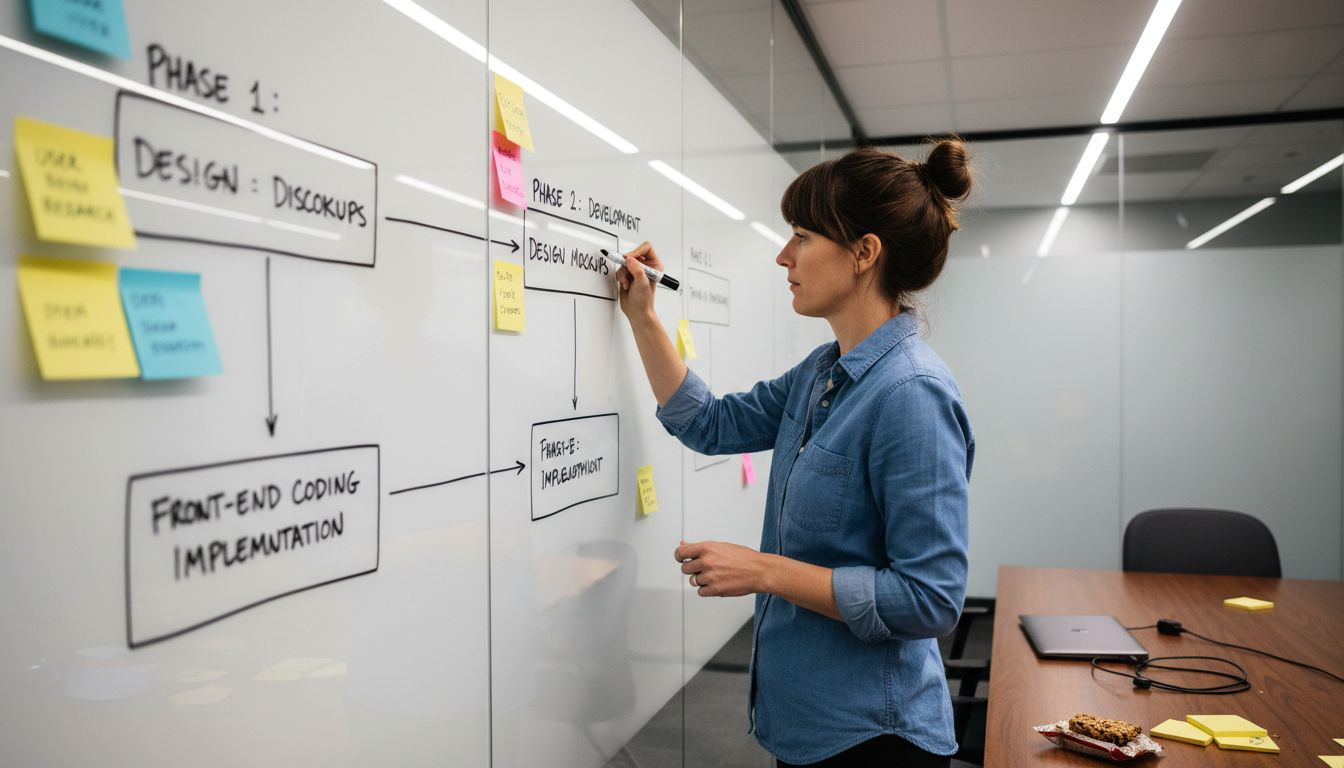
Workflow Adaptation Strategy requires leaders to develop nuanced systems that can scale and evolve with organizational needs. By incorporating systematic observation and continuous improvement techniques, teams can create workflows that are not just functional, but transformative.
Pro tip: Design workflows with built-in flexibility, allowing periodic reassessment and refinement to maintain optimal performance.
Role of Optio App for Student Teams
Top educational apps for student teams are designed to streamline collaborative efforts and enhance productivity in academic environments. The Optio app emerges as a powerful tool specifically engineered to address the unique challenges faced by student teams during project management and collaborative work.
Key features that distinguish Optio for student teams include:
-
Collaboration Tools:
- Real-time task assignment
- Shared project dashboards
- Progress tracking capabilities
- Integrated communication channels
-
Student-Specific Workflow Management:
- Deadline countdown timers
- Group project coordination
- Individual contribution tracking
- Academic goal alignment
The Optio app functions as a digital Second-in-Command for student teams, empowering Centurions (users) to navigate complex academic projects with precision and efficiency. Its Roman-themed interface provides an engaging approach to task management, transforming traditional project coordination into a strategic, motivational experience.
Unlike generic productivity tools, Optio understands the nuanced dynamics of student collaboration. The app adapts to various academic scenarios, from group research projects to team-based assignments, ensuring that each team member can contribute effectively while maintaining individual accountability.
Pro tip: Leverage Optio’s collaborative features by setting clear team expectations and using its tracking tools to maintain consistent communication and progress.
Common Pitfalls and How to Avoid Them
Teamwork challenges and solutions represent critical aspects of maintaining high-performance collaborative environments. Understanding these potential roadblocks allows teams to proactively develop strategies that prevent productivity decline and maintain positive group dynamics.
Common team motivation pitfalls include:
-
Communication Breakdowns:
- Unclear expectations
- Inconsistent messaging
- Lack of transparency
- Misinterpreted instructions
-
Motivation Inhibitors:
- Undefined team roles
- Unequal workload distribution
- Limited individual recognition
- Weak performance feedback
Successful teams recognize that preventing these pitfalls requires consistent effort and strategic intervention. Leadership plays a crucial role in establishing frameworks that promote open dialogue, mutual accountability, and collective achievement. By creating environments that value individual contributions while emphasizing shared goals, teams can effectively mitigate potential motivational challenges.
The following table outlines typical workflow pitfalls and corresponding solutions:
| Pitfall Type | Common Challenge | Preventative Solution |
|---|---|---|
| Communication Issues | Mixed or unclear directions | Standardize messaging and feedback |
| Motivation Barriers | Lack of recognition | Implement regular acknowledgment |
| Role Confusion | Overlapping responsibilities | Define roles and distribute tasks |
| Progress Stagnation | Missed milestones | Use tracking tools and periodic checks |
Proactive Intervention Strategies demand continuous monitoring and adaptive management. Teams must develop mechanisms for early conflict detection, create safe spaces for honest communication, and implement transparent performance evaluation processes that recognize both individual and collective achievements.
Pro tip: Schedule regular team check-ins to address potential issues before they escalate and create a culture of open, constructive feedback.
Actionable Strategies to Inspire Motivation
Leadership approaches for team inspiration represent sophisticated methods of transforming group dynamics and individual performance. Understanding these strategies allows teams to create environments that naturally foster engagement, productivity, and collective achievement.
Key actionable strategies for inspiring motivation include:
-
Personal Alignment Techniques:
- Define individual purpose
- Connect personal goals to team objectives
- Create meaningful work narratives
- Recognize unique contribution potential
-
Engagement Enhancement Methods:
- Implement regular feedback mechanisms
- Provide autonomy and decision-making opportunities
- Celebrate incremental achievements
- Support continuous learning pathways
Successful motivation requires understanding that each team member has unique drivers and aspirations. Leaders must develop nuanced approaches that respect individual differences while maintaining collective momentum. This involves creating flexible frameworks that allow personal growth within structured team environments.
Motivation Cultivation Framework demands ongoing commitment to understanding team dynamics. By developing adaptive strategies that balance individual needs with collective goals, teams can create sustainable motivation models that transcend traditional performance management approaches.
Pro tip: Design personalized motivation strategies that integrate individual aspirations with team objectives, creating a sense of shared purpose and collective achievement.
Elevate Your Team Motivation with Optio’s Workflow Solutions
Struggling to keep your team motivated while managing complex workflows is a common challenge faced by students and young professionals. This article highlights the importance of clear communication, flexible structures, and tailored motivation techniques to boost productivity and engagement. Optio addresses these pain points by acting as your trusted “Second-in-Command,” helping you organize tasks, align individual goals with team objectives, and maintain transparent progress tracking within a uniquely engaging Roman-themed interface.
Discover how Optio can transform your team workflows with tools designed to support collaboration, task assignment, and real-time progress monitoring. Whether you want to explore practical motivation strategies or seek tips to master task management, our CenturionTips and ProductivityThoughts categories offer valuable insights. Take control of your team’s success today by visiting https://optiostation.com and experience firsthand how Optio empowers Centurions like you to lead with confidence and purpose.
Frequently Asked Questions
What are effective techniques for team motivation?
Team motivation techniques can be categorized into intrinsic and extrinsic strategies. Intrinsic techniques include providing personal growth opportunities and meaningful work assignments, while extrinsic methods include performance-based recognition and financial incentives.
How can workflows enhance team motivation?
Effective workflows streamline tasks and establish clear communication, which prevents confusion and promotes accountability. By creating structures that align individual goals with team objectives, workflows can significantly enhance motivation and engagement.
What are common pitfalls in team motivation?
Common pitfalls include communication breakdowns, undefined roles, and unequal workload distribution. Recognizing these issues early and implementing solutions, such as standardized messaging and clear task delegation, can prevent motivational challenges.
How does the Optio app support student teams in enhancing productivity?
The Optio app offers collaboration tools like real-time task assignment, shared project dashboards, and integrated communication channels, which are specifically designed to help student teams manage their projects more efficiently and stay on track.
Recommended
- How to Improve Teamwork for Success in College and Work – Optio Station: Best Project Management App for Prioritization
- Understanding Collaboration Workflow for Teams – Optio Station: Best Project Management App for Prioritization
- How to Increase Motivation: Achieve Your Goals Effectively – Optio Station: Best Project Management App for Prioritization
- How to Manage Team Tasks Effectively for Success – Optio Station: Best Project Management App for Prioritization
