

Balancing a packed schedule can leave even the most driven students and young professionals feeling overwhelmed. Juggling classes, deadlines, and personal life often leads to rushing through days without real satisfaction. Prioritizing your responsibilities each week and establishing clear boundaries are proven strategies for reducing stress and creating more space for what matters most. This guide gives you practical steps and digital tools to help build a healthier, more rewarding work-life balance.
Table of Contents
- Step 1: Identify Key Priorities For Your Week
- Step 2: Set Boundaries For Work And Personal Time
- Step 3: Organize Tasks Using Optio App Features
- Step 4: Establish Daily Routines And Reminders
- Step 5: Track Your Progress And Adjust As Needed
Quick Summary
| Key Insight | Explanation |
|---|---|
| 1. Identify your weekly priorities | Create a list of professional and personal tasks, categorizing them as urgent, important, or optional for better focus. |
| 2. Set clear work-life boundaries | Define specific work hours and communicate them, ensuring personal time is protected from work intrusions. |
| 3. Utilize the Optio app effectively | Use Optio’s features like tagging and time blocking to organize tasks and maintain a balance between work and personal life. |
| 4. Establish consistent daily routines | Design morning and evening routines that include self-care and preparation activities, while using reminders to stay accountable. |
| 5. Regularly track your progress | Monitor your work-life balance through weekly reviews, making adjustments based on your needs and stress levels. |
Step 1: Identify key priorities for your week
Successful work-life balance starts with strategic weekly prioritization. By understanding what truly matters, you can allocate your time and energy more effectively, reducing stress and increasing overall satisfaction.
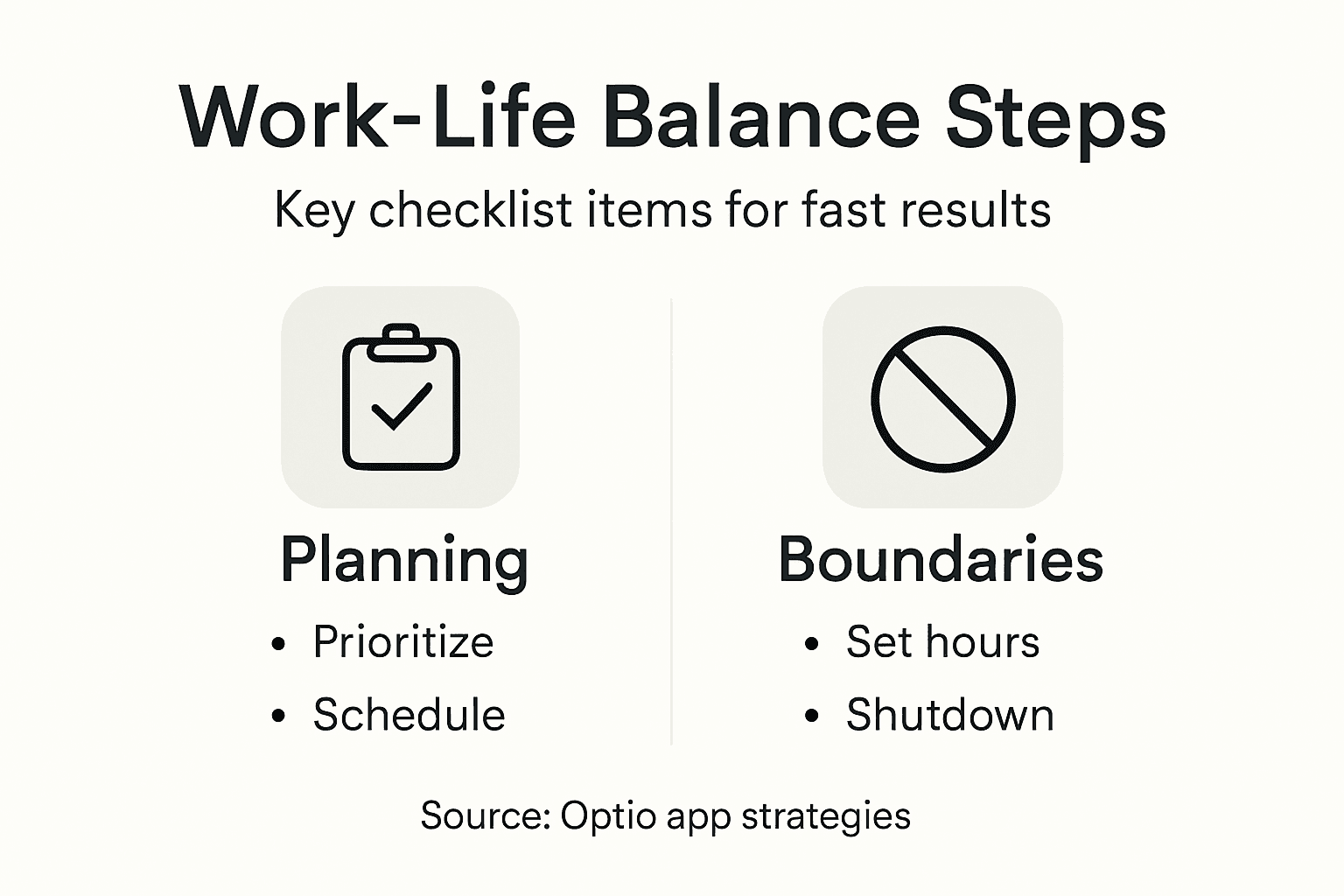
Begin by creating a comprehensive list of both professional and personal responsibilities. Identifying core priorities involves categorizing tasks into urgent, important, and optional groups. Use a simple matrix or digital tool to rank activities based on their potential impact. Professional commitments like project deadlines and client meetings should be balanced against personal needs such as family time, exercise, and self-care.
Consider your energy levels and peak performance times when scheduling tasks. Some people are most productive in the morning, while others hit their stride later in the day. Align your most challenging work with your highest energy periods to maximize efficiency. Remember that prioritization is not about doing everything, but about doing the right things at the right time.
Pro tip: Create a visual priority board or digital dashboard where you can quickly assess and adjust your weekly goals, helping you stay focused and adaptable.
Step 2: Set boundaries for work and personal time
Creating clear boundaries between work and personal life is crucial for maintaining your mental health and overall well-being. Establishing these limits helps prevent burnout and ensures you can fully engage in both professional and personal spheres.
Setting effective work boundaries requires intentional strategies and consistent practice. Start by defining specific work hours and communicating these clearly to colleagues and supervisors. This might mean turning off work notifications after a certain time, creating a dedicated workspace, and resisting the temptation to check emails during personal time. Consider implementing soft and hard boundaries where some limits are flexible while others remain non negotiable. For example, you might allow occasional urgent work communications but block out family dinner time as completely sacred.
Technology can be both a help and a hindrance in maintaining boundaries. Use tools like separate work and personal phone numbers, email accounts, and digital calendars to create physical and digital separation. Be proactive in managing expectations with your team about your availability, and practice saying no to requests that would intrude on your personal time.
Pro tip: Create a shutdown ritual at the end of your workday that signals a mental transition from professional to personal mode, such as closing your laptop, tidying your workspace, or taking a short walk.
Here’s how different boundary-setting strategies impact work-life balance:
| Strategy Type | Practical Example | Potential Benefit |
|---|---|---|
| Hard Boundary | No work emails after 6 p.m. | Lower stress, better rest |
| Soft Boundary | Take urgent calls when necessary | Flexibility, less disruption |
| Digital Separation | Separate work and personal devices | Clear mental division |
| Communication Policy | Inform team of set work hours | Fewer interruptions |
Step 3: Organize tasks using Optio app features
Transforming your work-life balance starts with strategic task management. The Optio app provides powerful tools to help you streamline your daily responsibilities and maximize productivity while maintaining personal boundaries.
Technology can enhance workflow efficiency by reducing administrative overhead and minimizing stress. Begin by categorizing your tasks within the Optio app using its intuitive tagging and priority system. Separate professional commitments from personal goals, color code different types of activities, and set realistic time estimates for each task. The app allows you to create nested task lists, enabling you to break down complex projects into manageable subtasks that feel less overwhelming.
Leverage Optio’s time blocking and notification features to create clear boundaries between work and personal time. Set specific work hours in the app, configure do not disturb settings, and use the scheduling tools to allocate dedicated time for focused work, breaks, and personal activities. By visualizing your entire week at a glance, you can ensure a balanced approach to your professional and personal commitments.
Pro tip: Experiment with Optio’s task view modes to find the organizational style that matches your natural workflow and helps you feel most in control.
This table summarizes how to use Optio app features for better task management and work-life balance:
| Optio Feature | How It Helps | Business Impact |
|---|---|---|
| Task Tagging | Distinguish work vs. personal | Prioritize effectively |
| Time Blocking | Schedule focused work periods | Boosts productivity |
| Nested Task Lists | Break down big projects | Reduces overwhelm |
| Notification Controls | Limit distractions | Protects personal time |
Step 4: Establish daily routines and reminders
Building consistent daily routines is your secret weapon for maintaining work-life balance and reducing overall stress. By creating structured habits, you can transform how you manage time and energy throughout your day.

Consistent daily routines support cognitive function and help prevent burnout. Start by designing a morning and evening routine that includes key activities for personal and professional preparation. This might involve setting specific wake-up times, dedicating 15 minutes to meditation or exercise, preparing your workspace, and establishing clear transition rituals between work and personal time. Use Optio’s reminder features to schedule these routine activities, ensuring you stay accountable and consistent.
Think of your daily routine as a personalized operating system that helps you navigate different responsibilities smoothly. Configure reminders for critical tasks, breaks, and personal commitments. Include buffer times between activities to prevent feeling rushed, and create gentle transition cues that signal mental shifts from one type of task to another. Remember that routines are not about rigid perfection, but about creating a supportive framework that adapts to your changing needs.
Pro tip: Review and adjust your daily routine every month to ensure it continues serving your evolving work-life balance goals.
Step 5: Track your progress and adjust as needed
Maintaining a successful work-life balance is an ongoing process that requires consistent monitoring and intentional adjustments. This step is about creating a system to regularly evaluate your progress and make meaningful changes.
Regularly tracking personal progress helps you identify potential stressors and areas needing improvement. Use Optio’s tracking features to log your weekly accomplishments, stress levels, and time allocation across different life domains. Set aside time every week for a personal review session where you honestly assess what is working and what needs modification. Pay attention to your energy levels, mood, and overall satisfaction as key indicators of your work-life balance health.
Be prepared to experiment and adapt your strategies. Some weeks you might need more work focus, while other periods might require more personal time. The goal is not perfection but continuous improvement and responsiveness to your changing life circumstances. Use visual tracking tools, journaling, or Optio’s progress metrics to gain insights into your patterns and make informed adjustments.
Pro tip: Create a monthly reflection ritual where you review your work-life balance goals and celebrate small wins while identifying areas for gentle improvement.
Take Command of Your Work-Life Balance with Optio
The challenge of achieving an optimal work-life balance requires clear priorities, strict boundaries, and effective daily routines—just like the article “Work-Life Balance Checklist: Achieve Optimal Balance Fast” outlines. If you often feel overwhelmed by competing demands on your time and energy, you are not alone. The article emphasizes the importance of strategic task management and tracking progress to prevent burnout and maintain focus.
Step into the role of the Centurion in your own life by using the Optio app, designed as your trusted second-in-command for task, team, and time management. With powerful features that allow you to prioritize tasks, set clear boundaries, and create daily routines, Optio empowers students and young professionals to move from overwhelm to control. Discover practical strategies in our ProductivityThoughts and explore real solutions in the Uncategorized category tailored to help you win the battle for balance. Visit Optio Station today and start commanding your time with confidence.
Frequently Asked Questions
How can I identify key priorities for my work-life balance?
To identify key priorities, create a comprehensive list of your professional and personal responsibilities. Categorize tasks into urgent, important, and optional groups to focus your time on activities that truly matter.
What are effective strategies for setting boundaries between work and personal life?
Effective strategies include defining specific work hours and clearly communicating them to others. Turn off work notifications during personal time and create a dedicated workspace to strengthen these boundaries.
How can I use task management tools to improve my work-life balance?
Utilize task management tools to categorize tasks, set priorities, and schedule work sessions. Break down bigger projects into manageable subtasks to reduce overwhelm and increase productivity.
What daily routines can help maintain my work-life balance?
Establish morning and evening routines that include essential activities for both personal and professional preparation. Incorporate reminders for these routines to ensure consistency and accountability throughout your day.
How often should I track my progress towards work-life balance?
Regularly tracking your progress on a weekly basis is recommended. Set aside time each week to evaluate what is working well and what might need adjustment, looking for patterns in your energy levels and overall satisfaction.
What steps can I take to adjust my work-life balance strategies?
To adjust your strategies, be open to experimenting with changes based on your weekly evaluations. Aim to incorporate feedback from your assessments to refine your approaches, with the goal of continuous improvement over time.
Recommended
- Work‑Life Balance: Complete Guide for Students & Young Pros – Optio Station: Best Project Management App for Prioritization
- 7 Essential Organization Tips for Busy Professionals – Optio Station: Best Project Management App for Prioritization
- How to Manage Daily Tasks Effectively for Success – Optio Station: Best Project Management App for Prioritization
- 7 Essential Types of Schedules for Students and Professionals – Optio Station: Best Project Management App for Prioritization
