

Balancing class schedules, deadlines, and job shifts can quickly feel overwhelming for college students and young professionals juggling academic and work commitments. Finding ways to stay organized matters because the right scheduling strategy transforms chaos into clear, achievable steps. By using schedule planning to map out responsibilities, you create a structured system that minimizes stress and supports consistent progress. Discover how effective schedule planning builds productivity, reduces anxiety, and shapes lasting time management skills for both study and life.
Table of Contents
- What Is Schedule Planning And Why It Matters
- Types Of Scheduling: Digital, Analog, And Hybrid
- Core Benefits For Students And Professionals
- Common Pitfalls And How To Avoid Them
- Building Lifelong Habits And Transferable Skills
Key Takeaways
| Point | Details |
|---|---|
| Importance of Schedule Planning | It organizes tasks into actionable timelines to reduce stress and improve productivity. |
| Types of Scheduling | Digital, analog, and hybrid methods cater to different learning styles and preferences. |
| Core Benefits | It enhances academic performance, personal growth, and professional readiness through structured time management. |
| Avoiding Pitfalls | Realistic goal setting and flexibility are crucial to overcoming common scheduling challenges. |
What Is Schedule Planning and Why It Matters
Schedule planning is a strategic process of organizing and mapping out tasks, activities, and commitments within a specified timeframe. At its core, schedule planning transforms abstract goals into concrete, actionable timelines that guide students toward academic success. By systematically breaking down larger objectives into manageable segments, students can transform overwhelming workloads into structured, achievable milestones.
In academic contexts, scheduling involves detailed activity sequencing that helps learners allocate resources, estimate task durations, and coordinate complex workflows. The primary objectives of effective schedule planning include:
- Reducing stress by providing a clear roadmap of responsibilities
- Improving time management and productivity
- Enabling better prioritization of academic and personal commitments
- Creating accountability through visual task tracking
- Minimizing last-minute cramming and rushed assignments
Successful schedule planning goes beyond simply listing tasks. It requires a nuanced understanding of personal energy levels, learning styles, and realistic time estimation. Students who master this skill can transform chaotic academic environments into structured, predictable systems that support consistent progress.
Unlike generic time management approaches, effective schedule planning adapts to individual student needs. Some learners might prefer digital tools with granular tracking, while others might excel with analog planners that offer more tactile engagement. The key is finding a system that aligns with your personal workflow and learning preferences.
Pro tip: Start by creating a master schedule that includes all major academic deadlines, then work backward to create weekly and daily task breakdowns.
Types of Scheduling: Digital, Analog, and Hybrid
Scheduling strategies have evolved dramatically, offering students multiple approaches to organizing their academic and personal commitments. The three primary scheduling methods – digital, analog, and hybrid – each provide unique advantages for managing time and tasks effectively.
University course timetabling demonstrates hybrid scheduling’s flexibility, blending different organizational techniques to accommodate diverse student needs. The primary scheduling types break down as follows:
-
Digital Scheduling
- Uses mobile apps and online platforms
- Enables real-time updates and synchronization
- Offers automatic reminders and notifications
- Supports cloud-based accessibility
-
Analog Scheduling
- Traditional physical planners and notebooks
- Provides tactile engagement with tasks
- Allows creative customization
- Minimizes digital distractions
-
Hybrid Scheduling
- Combines digital and analog approaches
- Leverages strengths of both methods
- Personalizes time management strategy
- Adapts to individual learning styles
Digital scheduling methods significantly reduce time investment compared to manual approaches. These technological solutions offer unprecedented efficiency, allowing students to track assignments, set priorities, and monitor progress with minimal administrative overhead.
Choosing the right scheduling approach depends on personal preferences, technological comfort, and specific academic requirements. Some students thrive with detailed digital tracking, while others prefer the sensory experience of handwritten planners. The key is experimenting to find a system that feels natural and motivating.
Here’s how the main scheduling types compare on key attributes:
| Attribute | Digital Scheduling | Analog Scheduling | Hybrid Scheduling |
|---|---|---|---|
| Accessibility | Cloud and mobile access | Physical location only | Both digital and physical tools |
| Customization | App features, integrations | Handwritten, creative layouts | Personalized mix of both |
| Distraction level | Prone to notifications | Minimizes screen distractions | Balanced depending on approach |
| Adaptability | Easy to sync and edit | Flexible but manual changes | Highly adaptable, flexible |
| Learning support | Reminders, resource links | Encourages retention, tactile | Supports multiple learning styles |
Pro tip: Test multiple scheduling methods for one month to determine which approach best matches your personal productivity style and learning preferences.
Core Benefits for Students and Professionals
Schedule planning offers transformative advantages that extend far beyond simple time management. Effective course scheduling directly promotes student success by creating structured pathways to academic and professional achievement.
The core benefits of systematic scheduling can be categorized into several key areas:
-
Academic Performance
- Reduces academic stress
- Improves overall study efficiency
- Creates clear academic roadmaps
- Enables consistent progress tracking
-
Personal Development
- Enhances self-discipline
- Builds time management skills
- Promotes proactive goal setting
- Develops long-term planning capabilities
-
Professional Readiness
- Simulates workplace time management
- Prepares for professional accountability
- Demonstrates organizational competence
- Creates transferable productivity skills
Stress Reduction and Mental Health represent critical benefits of effective scheduling. Creating an effective study schedule minimizes anxiety by providing predictability and control over academic workloads. Students who implement structured scheduling report significantly lower stress levels and improved mental well-being.

Professionals and students alike discover that scheduling is not just about managing time, but about creating intentional spaces for growth, learning, and personal development. The most successful individuals understand that a well-designed schedule is a strategic tool for achieving complex, multifaceted goals.
Pro tip: Design your schedule with 20% buffer time to accommodate unexpected challenges and maintain flexibility.
Common Pitfalls and How to Avoid Them
Schedule planning seems straightforward, but numerous hidden challenges can derail even the most well-intentioned organizational efforts. Common scheduling mistakes can significantly impact productivity, making awareness and proactive strategy critical for success.
The most frequent scheduling pitfalls students and professionals encounter include:
-
Overbooking
- Attempting to schedule every minute
- Neglecting personal recovery time
- Ignoring natural energy fluctuations
- Creating unrealistic daily expectations
-
Rigid Time Blocking
- Eliminating all flexibility
- Failing to account for unexpected events
- Creating stress through inflexible planning
- Reducing adaptability
-
Procrastination Traps
- Postponing challenging tasks
- Creating false sense of productivity
- Generating unnecessary last-minute stress
- Undermining long-term goals
Realistic Goal Setting becomes paramount in avoiding scheduling disasters. Scheduling strategies must include contingency buffers to accommodate unexpected challenges. Successful schedulers understand that perfect plans rarely exist, and flexibility is the key to maintaining momentum.
Most scheduling failures stem from psychological barriers rather than technical limitations. Students and professionals often struggle with overestimating their capacity, underestimating task complexity, and failing to recognize personal limitations. Effective scheduling requires brutal honesty about one’s actual capabilities and willingness to adjust plans dynamically.
Pro tip: Conduct a weekly schedule audit, removing or restructuring tasks that consistently remain uncompleted.
Building Lifelong Habits and Transferable Skills
Schedule planning transcends mere time management, emerging as a powerful mechanism for developing critical life skills that extend far beyond academic and professional boundaries. Habit stacking transforms scheduling into a sustainable personal development strategy, enabling individuals to create robust, adaptive capabilities.
The transferable skills developed through consistent schedule planning include:
-
Cognitive Skills
- Enhanced decision-making abilities
- Improved strategic thinking
- Better problem-solving techniques
- Increased mental flexibility
-
Emotional Intelligence
- Developing self-awareness
- Managing personal expectations
- Reducing stress through structured approaches
- Building resilience and adaptability
-
Professional Competencies
- Time management expertise
- Prioritization techniques
- Self-regulation capabilities
- Proactive planning mindset
Strategic Skill Development fundamentally transforms academic time management into lifelong learning strategies. By embedding scheduling practices into daily routines, students and professionals create neural pathways that support continuous personal growth and adaptability.
The most successful individuals view schedule planning not as a restrictive tool, but as a dynamic framework for personal transformation. Each scheduled task becomes an opportunity to refine skills, build discipline, and cultivate a proactive approach to personal and professional challenges.
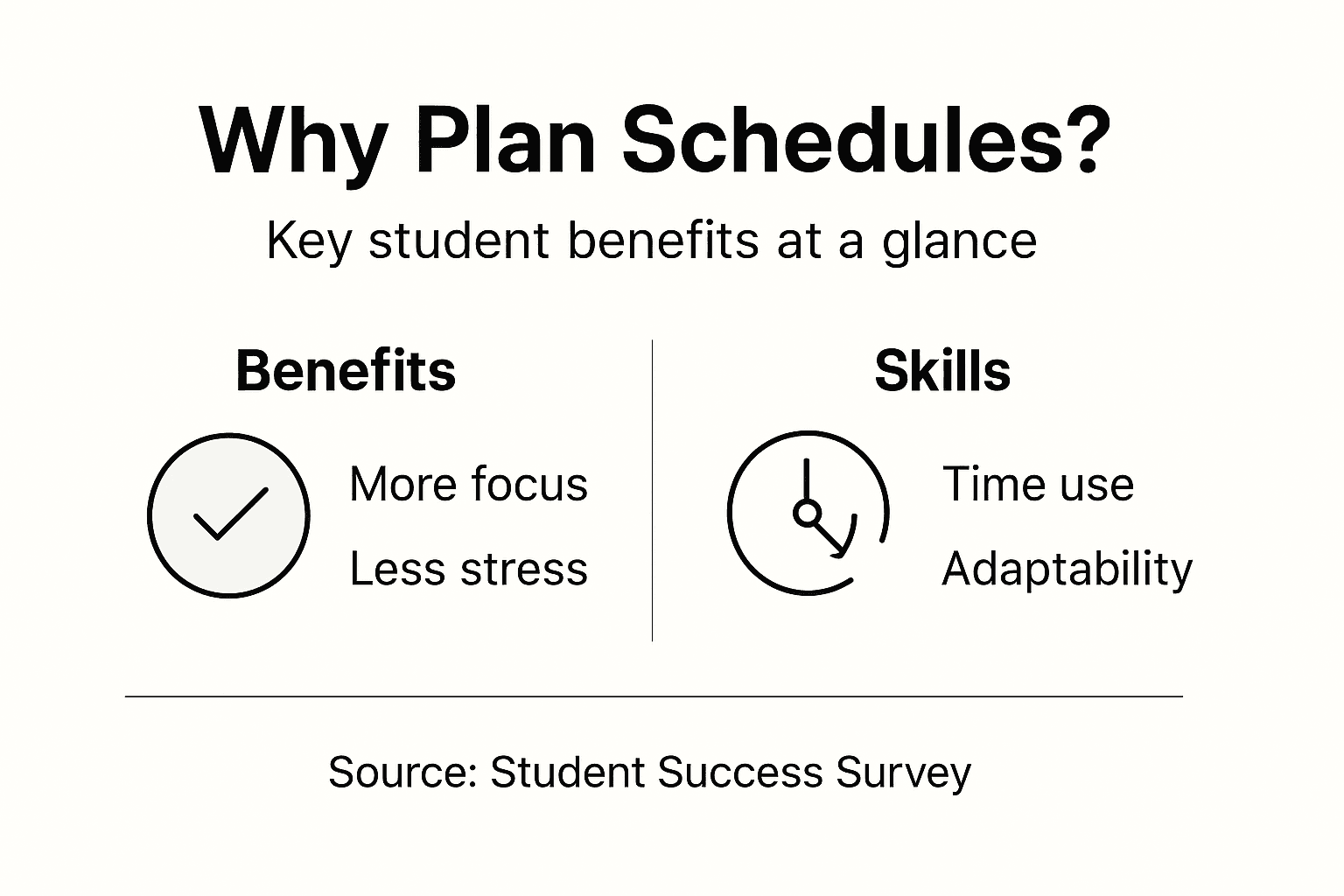
Here is a summary of advanced skills enhanced by consistent schedule planning:
| Skill Area | Example Development | Long-Term Benefit |
|---|---|---|
| Decision-Making | Prioritizing complex tasks | Better choices under pressure |
| Self-Regulation | Sticking to routines | Increased personal discipline |
| Adaptability | Adjusting plans for surprises | Resilient in changing contexts |
| Strategic Planning | Mapping goals to action steps | Sustained success and growth |
Pro tip: Practice habit stacking by linking new scheduling behaviors to existing daily routines, making skill development feel natural and effortless.
Take Control of Your Academic Success with Optio Station
The challenge of turning overwhelming academic goals into manageable, actionable schedules is a common struggle for students seeking success. This article highlights the importance of strategic schedule planning to reduce stress, improve discipline, and maintain consistent progress. If you relate to the difficulty of creating realistic timelines that fit your energy and learning style, Optio Station is designed to be your reliable second-in-command. It empowers Centurions like you to conquer procrastination traps, avoid overbooking, and build lifelong time management skills through a mobile app built especially for task, team, and time management.

Discover a powerful solution that blends the structure and flexibility needed to master your schedule. Visit Uncategorized – Optio Station: Best Project Management App for Prioritization to explore how Optio Station can help you transition from chaos to clarity. Take the first step today by heading to https://optiostation.com and become the Centurion of your own academic journey.
Frequently Asked Questions
What is schedule planning and why is it important for students?
Schedule planning is the process of organizing tasks and commitments within a specific timeframe. It helps students transform abstract goals into actionable timelines, reducing stress and improving time management and productivity, which are crucial for academic success.
What are the different types of scheduling methods?
There are three primary scheduling methods: digital, analog, and hybrid. Digital scheduling uses apps for real-time updates, analog involves physical planners for tactile engagement, and hybrid combines both approaches to cater to individual preferences and enhance productivity.
How can effective schedule planning reduce stress for students?
Effective schedule planning provides a clear roadmap for responsibilities and tasks, minimizing the feeling of being overwhelmed. It allows students to track their progress, helping to manage workloads in a predictable manner and thereby lowering overall stress levels.
What common mistakes should students avoid when planning their schedules?
Common pitfalls include overbooking, rigid time blocking, and procrastination traps. Students should set realistic goals, allow for flexibility in their schedules, and acknowledge personal limitations to create more effective and manageable plans.
Recommended
- Understanding Class Schedule Management: A Complete Guide – Optio Station: Best Project Management App for Prioritization
- 7 Essential Types of Schedules for Students and Professionals – Optio Station: Best Project Management App for Prioritization
- Schedule Management Plan Template: Boosting Productivity – Optio Station: Best Project Management App for Prioritization
- Effective Goal Setting for Students: Achieve Your Dreams – Optio Station: Best Project Management App for Prioritization
- Transfer Credit Evaluation Software | DegreeSight
- Making Learning Fun: Engaging Activities for Your Kids – The Zoofamily
- blog | siift | 7 Innovative Business Ideas for Students to Start Now
