

Managing daily tasks might seem simple at first, since everyone creates to-do lists or jots reminders. Yet the reality is, only 17 percent of people actually track their tasks systematically and follow through with completion. Most believe productivity is about working harder or cramming more into every hour. Oddly enough, the biggest gains come from mastering task management—not by doing more, but by doing less with much greater intention.
Table of Contents
- What Is Task Management And Its Importance
- Why Effective Task Management Matters In Daily Life
- How Task Management Improves Personal Productivity
- Key Concepts Behind Successful Task Management Strategies
Quick Summary
| Takeaway | Explanation |
|---|---|
| Effective task management enhances productivity. | Systematically organizing tasks leads to improved focus and efficiency. |
| Prioritize tasks by urgency and importance. | Distinguish tasks to allocate time and resources effectively. |
| Structured task management reduces stress. | Organized approaches help minimize feelings of overwhelm and anxiety. |
| Balance work and personal life strategically. | Allocate time for self-care and social activities to prevent burnout. |
| Regularly reassess task relevance. | Continually evaluate tasks to ensure optimal time and energy investment. |
What is Task Management and Its Importance
Task management is a systematic approach to planning, organizing, tracking, and completing work activities effectively and efficiently. At its core, task management transforms abstract goals into concrete, actionable steps that individuals and teams can execute strategically.
Understanding the Core Concept
Task management goes beyond simply creating a list of tasks. It involves a comprehensive process of identifying work requirements, prioritizing activities, and monitoring progress towards specific objectives. According to Coursera, effective task management integrates critical skills like communication, critical thinking, and strategic planning.
Key characteristics of robust task management include:
- Breaking complex projects into manageable work units
- Establishing clear timelines and deadlines
- Allocating resources and responsibilities appropriately
- Tracking performance and progress
The Strategic Importance of Task Management
Research from GeeksforGeeks highlights that task management is crucial for several reasons. It enables professionals to maximize productivity, reduce stress, and create a structured approach to achieving personal and professional goals.
The strategic benefits extend beyond individual performance. Task management helps teams:
- Improve overall project coordination
- Enhance communication and collaboration
- Identify potential bottlenecks early
- Ensure timely project completion
By implementing systematic task management techniques, individuals and organizations can transform potential chaos into organized, purposeful action. The process allows for better decision making, more efficient resource allocation, and a clear pathway to success.
Below is a table summarizing the key characteristics and strategic benefits of effective task management to provide a clear overview of its major components and organizational value.
| Aspect | Description |
|---|---|
| Breaking Complex Projects | Dividing larger projects into manageable work units |
| Establishing Timelines | Setting clear deadlines and milestones |
| Allocating Resources | Assigning the right resources and responsibilities |
| Tracking Progress | Monitoring ongoing performance and completion |
| Improving Coordination | Enhancing collaboration and teamwork |
| Identifying Bottlenecks | Spotting and addressing project slowdowns early |
| Supporting Decision Making | Providing structure for choices regarding time and resources |
| Ensuring Timely Completion | Meeting deadlines more consistently through systematic planning |
Why Effective Task Management Matters in Daily Life
Task management transcends professional environments and becomes a critical skill for navigating personal and academic challenges. Understanding its significance helps individuals create structured approaches to achieving goals and maintaining personal well-being.
Reducing Stress and Increasing Productivity
According to the University of South Carolina, time management is a powerful tool that provides structure in life. Effective task management directly correlates with reduced stress levels and enhanced personal productivity. By organizing tasks systematically, individuals can minimize overwhelming feelings and create a sense of control over their daily responsibilities.
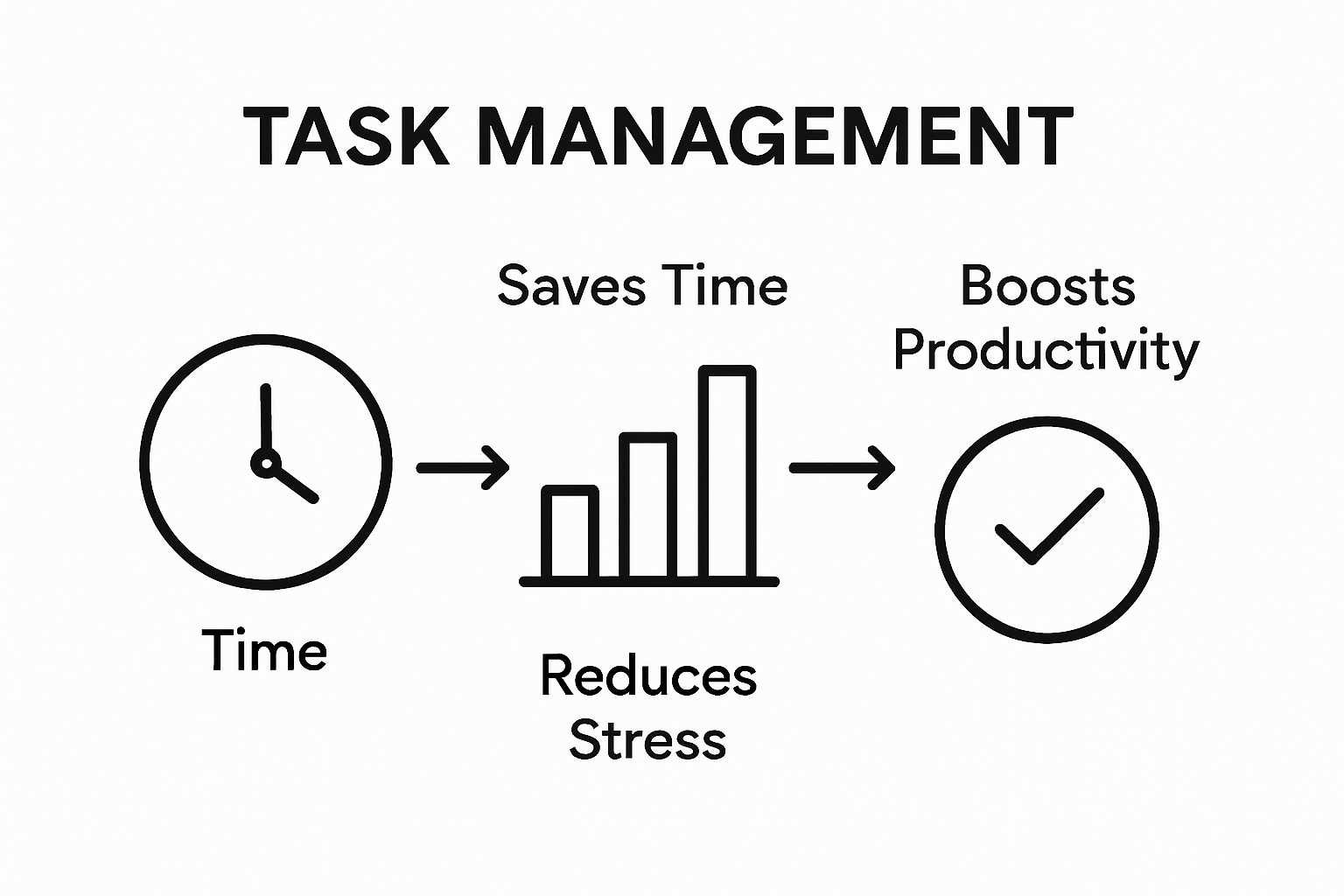
Key psychological benefits of strong task management include:
- Decreasing anxiety about pending work
- Creating a clear roadmap for daily achievements
- Improving mental clarity and focus
- Establishing predictable work patterns
Personal and Professional Balance
Research from McLean Hospital reveals that better time management significantly reduces burnout risks. This approach ensures individuals have adequate time for work, personal development, relaxation, and social interactions. By strategically allocating time and energy, people can prevent mental and emotional exhaustion.
Task management enables individuals to:
- Prioritize important personal and professional commitments
- Create boundaries between work and personal life
- Allocate sufficient time for self-care and recreation
- Maintain consistent progress towards long-term goals
Ultimately, effective task management is not about completing more tasks but about creating a balanced, intentional approach to daily living. It empowers individuals to make conscious choices, reduce unnecessary stress, and maintain a sense of accomplishment and well-being.

How Task Management Improves Personal Productivity
Task management serves as a strategic approach to enhancing individual performance and achieving more meaningful outcomes. By implementing systematic methods, individuals can transform their productivity and create more intentional work patterns.
Cognitive Performance and Mental Clarity
Research from the National Library of Medicine demonstrates that effective time management significantly impacts mental well-being and cognitive performance. Structured task management helps individuals reduce cognitive load by providing clear frameworks for organizing work and personal responsibilities.
Key cognitive benefits include:
- Reducing mental fatigue
- Decreasing decision-making overwhelm
- Creating mental space for creative thinking
- Improving overall concentration and focus
Strategic Resource Allocation
Effective task management enables individuals to allocate their energy and time more strategically. By understanding personal energy rhythms and prioritizing tasks accordingly, people can optimize their productivity. Read more about productivity strategies to gain deeper insights into maximizing personal performance.
Strategic resource allocation involves:
- Matching high-complexity tasks with peak energy periods
- Creating realistic timelines for project completion
- Identifying and minimizing time-wasting activities
- Establishing clear boundaries between work and personal time
Ultimately, task management is not about working harder but working smarter. By developing systematic approaches to managing tasks, individuals can achieve more significant results with less stress and greater personal satisfaction.
The following table compares the cognitive and strategic resource allocation benefits brought by effective task management, highlighting their specific impacts on personal productivity.
| Benefit Type | Key Advantages | Impact on Productivity |
|---|---|---|
| Cognitive Performance | Reduces mental fatigue, increases clarity, enables creative thinking | Improves focus and concentration |
| Strategic Resource Allocation | Aligns tasks with energy levels, minimizes time-wasting, clarifies boundaries | Achieves more with less stress |
| Mental Clarity | Decreases decision overload, clarifies daily objectives | Facilitates goal achievement |
| Time Management | Creates realistic timelines, balances work and personal life | Sustains long-term performance |
Key Concepts Behind Successful Task Management Strategies
Task management strategies are not one-size-fits-all approaches but nuanced frameworks that require understanding core principles of personal productivity and organizational effectiveness. Developing robust task management skills involves mastering specific conceptual foundations that transform how individuals approach work and personal responsibilities.
Prioritization and Strategic Decision Making
According to Cal Poly’s Academic Skills Center, effective task management hinges on understanding task hierarchy and strategic prioritization. Categorizing tasks becomes crucial in determining where to invest time and energy.
Key prioritization strategies include:
- Distinguishing between urgent and important tasks
- Allocating resources proportionally to task complexity
- Creating flexible yet structured work plans
- Regularly reassessing task relevance and impact
Methodological Frameworks for Task Organization
Research exploring productivity methodologies reveals multiple systematic approaches to task management. The ‘Getting Things Done’ (GTD) methodology demonstrates how breaking down tasks across different decision-making timescales can significantly enhance personal productivity.
Critical organizational principles encompass:
- Establishing clear, measurable objectives
- Creating comprehensive yet adaptable tracking systems
- Implementing consistent review and reflection processes
- Developing personal accountability mechanisms
Successful task management transcends mere task completion. It represents a holistic approach to personal effectiveness, integrating strategic thinking, emotional intelligence, and continuous self-improvement. By understanding and applying these foundational concepts, individuals can transform their approach to work and personal development.
Ready to Take Control Over Your Productivity?
You just explored how task management reduces stress and sharpens your daily focus, but building this habit on your own can be tough. Many students and young professionals struggle to break complex projects into manageable steps or maintain mental clarity amidst growing demands. If you want to transform these proven strategies into real, sustainable results, ProductivityThoughts – Optio Station delivers simple frameworks and expert insights tailored for achieving intentional productivity.

Why let important tasks slip through the cracks or let overwhelm dictate your progress? Start making purposeful progress today. Download your second-in-command for effective team, task, and time management at Optio Station and explore more hands-on tips for everyday success at CenturionTips – Optio Station. Small strategic changes start now – let Optio guide you from intention to achievement.
Frequently Asked Questions
What is task management?
Task management is a systematic approach to planning, organizing, tracking, and completing work activities effectively. It involves breaking down complex projects into manageable tasks and monitoring progress towards specific objectives.
Why is effective task management important for productivity?
Effective task management enables individuals to maximize productivity by reducing stress and providing a structured approach to achieving both personal and professional goals. It enhances overall project coordination and improves communication among team members.
How can task management reduce stress?
By organizing tasks systematically, effective task management minimizes overwhelming feelings and helps individuals gain control over their daily responsibilities. This approach leads to decreased anxiety and improved mental clarity.
What are some key strategies for successful task management?
Key strategies include prioritizing tasks based on urgency and importance, using methodologies like ‘Getting Things Done’ (GTD), and creating flexible yet structured work plans. Regularly reassessing task relevance and establishing accountability helps improve effectiveness.
