

Endless notifications and work assignments compete for your attention as your phone buzzes with yet another update. For college students and young professionals worldwide, balancing digital demands with personal productivity feels harder than ever. The difference between productive, educational screen time and unproductive scrolling can shape your academic success, mental health, and work effectiveness. Understanding the true definition of screen time and what counts toward productive digital use is the first step toward regaining control and making your devices work for you.
Table of Contents
- Defining Screen Time And Key Concepts
- Types Of Screen Time And Their Impact
- How Excessive Screen Time Affects Productivity
- Screen Time’s Role In Mental And Physical Health
- Common Pitfalls Of Poor Screen Management
- Strategies To Balance Screen Time Effectively
Key Takeaways
| Point | Details |
|---|---|
| Screen Time Quality Matters | Not all screen time is equal; interactive and purposeful engagement enhances cognitive skills, while passive consumption can harm mental health and productivity. |
| Balance Is Key | Implement strategies like setting time limits, creating tech-free zones, and scheduling digital detoxes to promote healthier screen usage. |
| Track Your Usage | Regular auditing of screen time categories helps identify unproductive habits and encourages more meaningful digital interactions. |
| Mental and Physical Health Impacts | Excessive screen time can lead to cognitive fatigue, reduced productivity, and various mental and physical health challenges, emphasizing the need for mindful consumption. |
Defining Screen Time and Key Concepts
Screen time represents the total duration an individual spends interacting with digital devices like smartphones, computers, tablets, and televisions. Electronic device usage encompasses both professional and recreational activities, ranging from work tasks to entertainment and social media engagement.
The concept of screen time is multifaceted and involves more than simple clock measurements. Modern definitions recognize that the quality of digital interactions matters as much as the quantity. The American Academy of Pediatrics highlights that screen time is not just about duration but includes:
- Educational content consumption
- Social media interactions
- Entertainment activities
- Professional work-related screen use
- Creative digital experiences
Research indicates that screen time’s impact varies significantly based on several critical factors. Screen time effects depend on developmental stages, content type, and individual context. Young professionals and students must recognize that not all screen time is equivalent – interactive, purposeful digital engagement differs substantially from mindless scrolling.
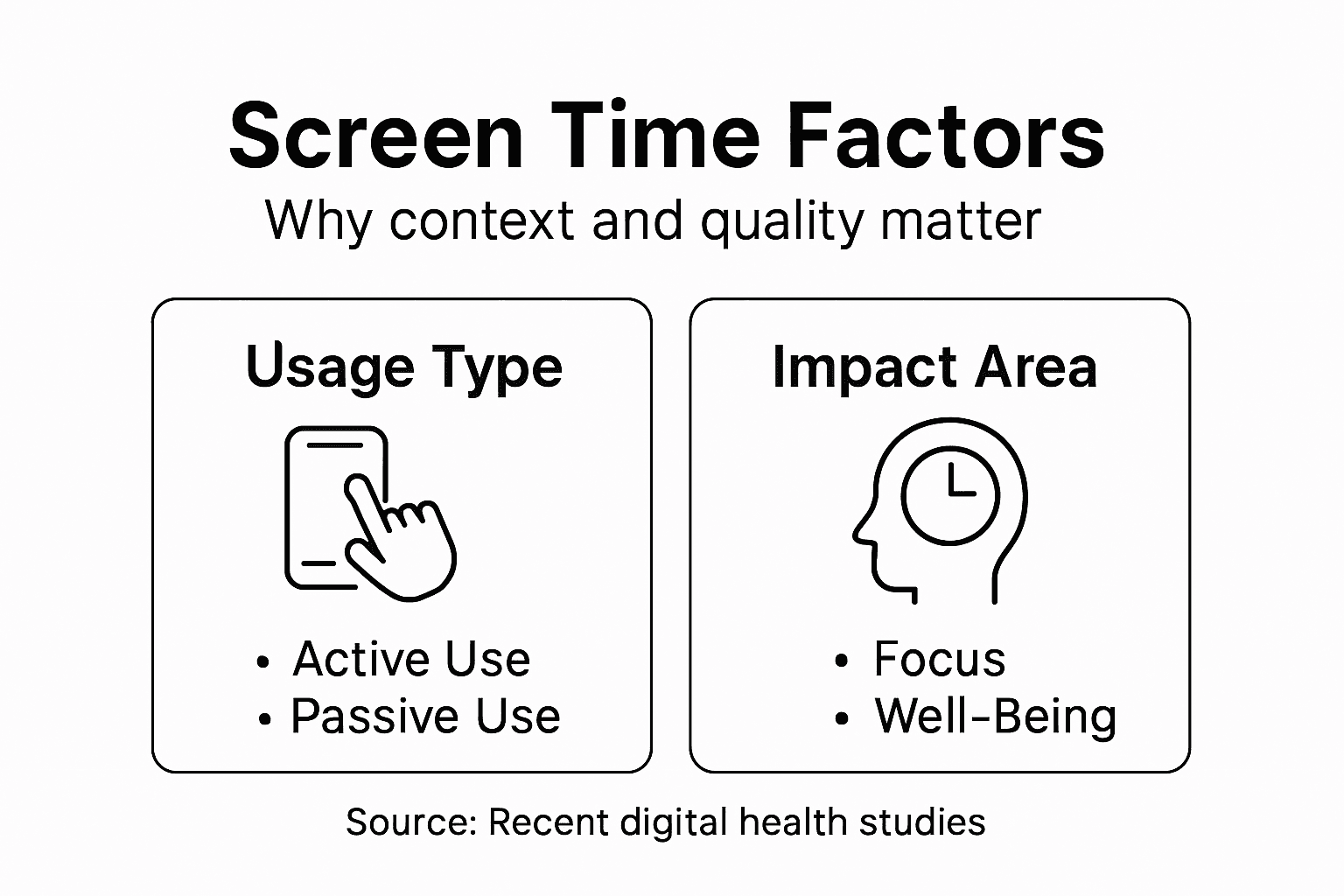
Context Matters: Screen time’s influence extends beyond simple duration, encompassing the nature of digital interactions and their psychological and physiological implications. Different devices, platforms, and content types produce varying outcomes for mental focus and overall well-being.
Pro Tip: Track your screen time intentionally using built-in device tools to gain insights into your digital consumption patterns and identify opportunities for more meaningful engagement.
Types of Screen Time and Their Impact
Screen time is not a monolithic concept but a complex spectrum of digital interactions with varying impacts on mental and physical well-being. Different screen time types significantly influence cognitive development, learning outcomes, and overall health across different age groups.
Researchers categorize screen time into several distinct types:
- Educational Screen Time: Interactive learning platforms, online courses, research activities
- Professional Screen Time: Work-related tasks, virtual meetings, digital collaboration
- Entertainment Screen Time: Video streaming, gaming, social media browsing
- Creative Screen Time: Digital art, music production, content creation
- Passive Consumption Screen Time: Mindless scrolling, background media consumption
Impact Variations: Not all screen time produces identical outcomes. Screen use consequences differ dramatically based on content quality, interaction level, and individual engagement. Interactive and purposeful digital experiences can enhance cognitive skills, while passive consumption may lead to reduced physical activity and potential mental health challenges.
Understanding these nuanced differences allows young professionals and students to make intentional choices about their digital engagement. Recognizing that screen time quality matters more than raw duration empowers individuals to transform potentially unproductive digital interactions into meaningful, growth-oriented experiences.
Here is a summary comparing the different types of screen time and their typical effects:
| Screen Time Type | Typical Examples | Positive Effects | Potential Drawbacks |
|---|---|---|---|
| Educational | Online courses, research | Enhanced learning, skill growth | Eye strain, distraction risk |
| Professional | Work tasks, virtual meetings | Increased productivity, collaboration | Burnout, multitasking fatigue |
| Entertainment | Video streaming, gaming | Relaxation, social bonding | Reduced activity, procrastination |
| Creative | Digital art, content creation | Skill development, self-expression | Perfectionism, overuse |
| Passive Consumption | Mindless scrolling | Quick information, background noise | Lost time, decreased focus |
Pro Tip: Audit your weekly screen time by categorizing each digital interaction as educational, professional, creative, or passive to identify opportunities for more intentional digital engagement.
How Excessive Screen Time Affects Productivity
Excessive screen time represents a critical challenge for modern professionals and students, directly impacting cognitive performance and work efficiency. Screen time consequences reveal significant productivity challenges that emerge when digital engagement becomes uncontrolled and prolonged.
Research highlights several key productivity disruptions caused by excessive screen time:
- Cognitive Fatigue: Reduced mental clarity and decision-making capacity
- Attention Fragmentation: Decreased ability to focus on complex tasks
- Workflow Interruptions: Constant notifications and digital distractions
- Reduced Deep Work Potential: Diminished capacity for sustained concentration
- Mental Exhaustion: Increased stress and psychological burnout
Academic performance impacts demonstrate that excessive screen time can fundamentally compromise learning outcomes and professional effectiveness. The constant digital stimulation creates a state of perpetual partial attention, preventing individuals from achieving deep, meaningful work.

Professionals and students must recognize that screen time is not just about duration, but about the quality of digital engagement. Mindless scrolling and constant task-switching dramatically reduce overall productivity, creating an illusion of busyness without substantial achievement.
Pro Tip: Implement a “digital sunset” routine by setting a firm daily cutoff time for non-essential screen activities to protect your cognitive resources and maintain peak productivity.
Screen Time’s Role in Mental and Physical Health
The relationship between digital device usage and overall well-being is complex and multifaceted, with significant implications for mental and physical health. Teenage screen time risks reveal alarming connections between prolonged digital engagement and comprehensive health challenges.
Research highlights several critical health impacts associated with excessive screen time:
-
Mental Health Risks:
- Increased symptoms of depression
- Higher anxiety levels
- Reduced emotional resilience
- Diminished social connection quality
-
Physical Health Consequences:
- Reduced physical activity
- Irregular sleep patterns
- Potential weight management issues
- Increased sedentary behavior
Mental health implications demonstrate that screen time is not just a digital phenomenon but a significant health determinant. The quality and purpose of screen interactions play crucial roles in determining their psychological impact, with recreational use posing greater risks than purposeful, work-related digital engagement.
Young professionals and students must recognize that digital consumption is a nuanced health factor. Mindful screen time management involves understanding individual usage patterns, setting intentional boundaries, and prioritizing high-quality, meaningful digital interactions over passive consumption.
Pro Tip: Create a personalized screen time wellness plan by tracking your daily digital interactions and intentionally scheduling tech-free periods for physical activity and genuine social connections.
Common Pitfalls of Poor Screen Management
Screen management failures create significant challenges for productivity and personal well-being. Screen time displacement effects demonstrate how uncontrolled digital consumption can systematically undermine personal and professional development.
Key pitfalls of poor screen management include:
-
Productivity Disruption:
- Constant social media interruptions
- Reduced concentration spans
- Increased task-switching
- Chronic procrastination
-
Psychological Consequences:
- Heightened stress levels
- Diminished emotional regulation
- Increased feelings of inadequacy
- Social comparison anxiety
Social media distraction challenges reveal that unstructured digital interactions can create a cascade of negative outcomes. Students and young professionals often find themselves trapped in cycles of reactive digital consumption, where notifications and endless scrolling replace intentional, goal-oriented work.
Understanding these pitfalls requires recognizing that screen management is not about complete elimination but about creating strategic, purposeful digital boundaries. Effective screen time control involves developing self-awareness, setting clear technological limits, and cultivating environments that support focused, meaningful engagement.
Pro Tip: Create digital boundaries by implementing device-free zones in your living and working spaces, allowing yourself dedicated periods of uninterrupted focus and genuine human connection.
Strategies to Balance Screen Time Effectively
Digital wellness requires intentional and strategic approaches to screen management. Digital screen time strategies emphasize the importance of creating purposeful, goal-oriented digital interactions that support personal and professional growth.
Key strategies for effective screen time balance include:
-
Goal-Oriented Digital Engagement:
- Set clear objectives for screen use
- Define specific outcomes for digital interactions
- Prioritize educational and productive content
- Limit passive consumption
-
Structured Screen Management:
- Implement daily time limits
- Create designated tech-free zones
- Schedule regular digital detox periods
- Use productivity tracking tools
Healthy screen use principles reveal that balance is not about total elimination but about mindful, intentional digital consumption. Young professionals must develop digital resilience by understanding the qualitative aspects of their screen interactions.
Successful screen time management involves continuous self-assessment and adaptive strategies. This means regularly evaluating digital habits, understanding personal triggers for excessive screen use, and creating personalized systems that promote focused, meaningful engagement while protecting mental and physical well-being.
To further clarify, here’s a quick reference on strategies for healthy screen time balance:
| Strategy | How It Works | Core Benefit |
|---|---|---|
| Goal Setting | Define purpose for each session | Increases focus and productivity |
| Time Limits | Set daily usage caps | Prevents overuse and fatigue |
| Tech-Free Zones | Keep devices out of certain areas | Protects sleep and real-life bonds |
| Digital Detox | Schedule regular unplugged breaks | Reduces stress and restores attention |
| Usage Audits | Review and categorize weekly use | Identifies habits to improve |
Pro Tip: Implement a weekly digital audit by tracking your screen time categories and consciously reallocating time from passive to purposeful digital activities.
Take Control of Your Screen Time to Boost Focus and Well-Being
Managing screen time is more than tracking hours. It means overcoming distractions, reducing cognitive fatigue, and reclaiming mental clarity to enhance productivity and mental health. This article highlights how excessive and unstructured digital use can fracture attention and increase stress. If you are a student or young professional aiming to transform your screen habits into purposeful, focused interactions consider a solution designed to support your journey.

Optio Station acts as your second-in-command offering powerful task, team, and time management tools tailored for Centurions ready to prioritize effectively. Discover practical insights and strategies with CenturionTips while gaining motivation from proven productivity advice in our ProductivityThoughts category. Start gaining control today at Optio Station and take the first step toward digital wellness that empowers meaningful focus and balanced screen engagement.
Frequently Asked Questions
What is considered excessive screen time?
Excessive screen time generally refers to prolonged digital engagement that disrupts cognitive performance and well-being, often characterized by mindless scrolling or constant task-switching without productive outcomes.
How can I track my screen time effectively?
You can track screen time using built-in device tools or apps that categorize each interaction, helping you gain insights into your digital consumption and identify areas for improvement.
What are some strategies for managing screen time?
Effective strategies for managing screen time include setting clear goals for digital engagement, implementing daily time limits, creating tech-free zones, scheduling regular digital detox periods, and conducting usage audits to mirror habits.
How does screen time impact mental health?
Excessive screen time can increase symptoms of depression and anxiety while reducing social connection quality. The nature of screen interactions—especially passive consumption—plays a crucial role in determining mental health impacts.
Recommended
- Understanding the Role of Time Management in Success – Optio Station: Best Project Management App for Prioritization
- Why Use Focus Apps: Elevate Productivity and Focus – Optio Station: Best Project Management App for Prioritization
- Understanding Time Management for Young Professionals – Optio Station: Best Project Management App for Prioritization
- Understanding Time Management Trends 2025 – Optio Station: Best Project Management App for Prioritization
- Tecniche concentrazione studio: migliora il rendimento online – Recupero Anni Scolastici e Diploma Online
