

Task lists shape how people organize their daily lives. Most folks use them to manage everything from work projects to grocery runs and cross off an impressive number of tasks each week. But here is the twist: checking off a single item can actually release dopamine in your brain and boost motivation. The real power of a task list is not just staying organized. It is how these lists change your brain and push you to get more done every day.
Table of Contents
- What Are Task Lists And Their Purpose?
- The Importance Of Task Lists In Everyday Life
- How Task Lists Enhance Productivity And Focus
- Key Concepts Around Effective Task List Creation
- Real-World Applications Of Task Lists In Academic And Professional Settings
Quick Summary
| Takeaway | Explanation |
|---|---|
| Task lists reduce cognitive load. | Writing tasks down frees mental energy, allowing focus on execution rather than memorization. |
| Prioritize tasks by importance and urgency. | Effective task management ensures that the most critical items get completed first, enhancing productivity. |
| Breaking tasks into smaller steps is essential. | Smaller, manageable tasks help overcome procrastination and create momentum towards larger objectives. |
| Task lists provide psychological benefits. | The act of checking off completed tasks boosts motivation and reduces anxiety about workloads. |
| Task lists improve goal alignment. | Structuring tasks helps link daily activities to broader personal and professional goals, enhancing overall effectiveness. |
What Are Task Lists and Their Purpose?
Task lists represent systematic organizational tools designed to help individuals and teams track, manage, and accomplish their work effectively. These structured documents or digital platforms allow people to capture all pending responsibilities, prioritize activities, and monitor progress toward specific goals.
Understanding the Core Concept
At their fundamental level, task lists function as external memory systems that transform abstract thoughts and responsibilities into concrete, actionable items. By writing down tasks, individuals offload cognitive burden and create a visual representation of their work.
The table below summarizes the key characteristics of effective task lists as discussed in the article, offering a clear reference for readers to evaluate or design their own lists.
| Characteristic | Description |
|---|---|
| Clear Task Descriptions | Each task is specifically defined to avoid ambiguity. |
| Realistic Timelines & Deadlines | Deadlines are attainable and based on actual work estimates. |
| Prioritization | Tasks are ordered by importance and urgency for efficiency. |
| Progress Tracking | The list allows items to be checked off or visually marked as complete. |
| Flexibility | Accommodates unexpected changes and shifting priorities as necessary. |
| Alignment with Goals | Tasks contribute directly to broader personal or professional objectives. |
Key characteristics of effective task lists include:
- Clear, specific descriptions of each task
- Realistic timelines and deadlines
- Prioritization of items based on importance and urgency
- Ability to track progress and mark completed items
Psychological Benefits of Task Management
Task lists do more than simply record work requirements. They provide psychological advantages that directly impact personal and professional productivity.
This table highlights and compares the psychological and practical benefits of using task lists as explained in the article, helping readers understand their multi-dimensional value.
| Benefit Type | Description of Benefit |
|---|---|
| Reduced Anxiety | Listing tasks provides a sense of control and predictability, easing stress. |
| Motivation Boost | Checking off tasks triggers dopamine release, reinforcing productive habits. |
| Overcoming Procrastination | Breaking down projects into small steps builds actionable momentum. |
| Enhanced Focus | Offloading tasks frees mental space for focused execution. |
| Improved Goal Alignment | Task lists clarify how daily actions connect to larger goals. |
By breaking larger projects into smaller, manageable steps, task lists help individuals overcome procrastination and build momentum. Learn more about effective task prioritization with strategies that transform overwhelming workloads into achievable objectives.
Ultimately, task lists serve as powerful tools that bridge the gap between intention and action, helping people transform potential into tangible accomplishments.
The Importance of Task Lists in Everyday Life
Task lists transcend simple organizational tools and become critical mechanisms for personal and professional success. They provide structure, clarity, and direction in a world overwhelmed by constant information and competing priorities.
Managing Personal and Professional Complexity
In modern life, individuals juggle multiple responsibilities across work, education, personal development, and relationships. Task lists help people navigate this complexity by transforming abstract goals into concrete, actionable steps. Research from Stanford University demonstrates that systematic task management significantly reduces cognitive overload and increases overall life satisfaction.
Key domains where task lists prove invaluable include:
- Academic performance and study planning
- Professional project management
- Personal health and wellness tracking
- Financial goal setting and management
- Home organization and household responsibilities
Psychological Impact of Structured Planning
Beyond practical organization, task lists deliver profound psychological benefits. They create a sense of control and predictability in an unpredictable world. By breaking larger objectives into smaller, manageable tasks, individuals can overcome feelings of overwhelm and procrastination. Discover strategies for effective task prioritization that transform potential stress into productive momentum.
The act of recording and checking off tasks releases dopamine, a neurotransmitter associated with motivation and reward. This neurochemical response reinforces positive behavior patterns, encouraging continued productivity and personal growth. Task lists thus become more than mere documents they are powerful tools for personal transformation and achievement.
How Task Lists Enhance Productivity and Focus
Task lists function as precision instruments for optimizing personal performance, transforming scattered thoughts and intentions into structured, actionable strategies. They serve as cognitive tools that dramatically improve how individuals approach work and personal objectives.
Cognitive Load Reduction and Mental Clarity
Research from the University of California reveals that task lists significantly reduce cognitive load by externally storing information. When tasks are written down, the brain is freed from continuously remembering details, allowing more mental energy for creative problem solving and execution.
Key cognitive benefits include:
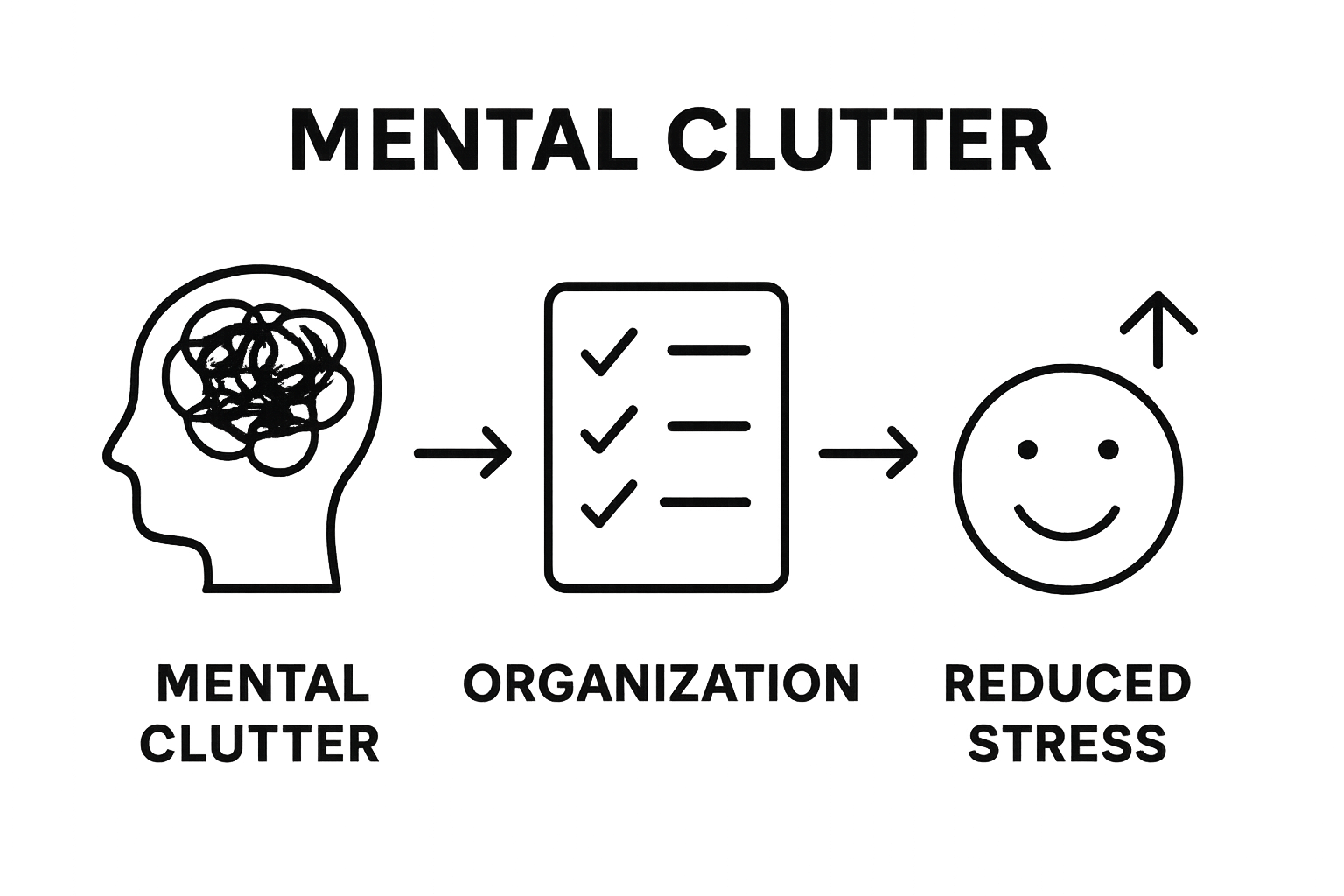
- Minimizing mental clutter and reducing stress
- Creating a clear roadmap for task completion
- Preventing important responsibilities from being forgotten
- Enabling strategic prioritization of activities
Strategic Performance Optimization
Effective task lists go beyond simple recording. They create a systematic approach to work management that strategically aligns daily activities with broader goals. By breaking complex projects into smaller, manageable steps, individuals can maintain consistent momentum and prevent overwhelming feelings.
Explore advanced time management techniques that complement task list strategies and maximize personal productivity. The process of listing tasks transforms abstract intentions into concrete action plans, bridging the gap between thinking and doing.
Task lists ultimately function as personal performance optimization tools. They provide structure, reduce psychological friction, and create a clear pathway toward achieving individual and professional objectives with greater efficiency and less mental strain.

Key Concepts Around Effective Task List Creation
Task list creation is a nuanced skill that requires strategic thinking and self-awareness. Successfully designing task lists involves understanding personal work patterns, cognitive capabilities, and realistic goal-setting approaches that transform intentions into actionable plans.
Fundamental Design Principles
Research from Harvard Business Review highlights that effective task lists are not merely collections of activities but carefully constructed frameworks for personal productivity. The design of a task list significantly influences its usability and potential for driving meaningful progress.
Critical design elements include:
- Clear and specific task descriptions
- Realistic time estimates for each activity
- Logical sequencing of tasks
- Flexibility for unexpected changes
- Alignment with broader personal or professional goals
Psychological Architecture of Task Lists
Successful task lists transcend simple recording mechanisms. They function as psychological contracts with oneself, creating accountability and providing a structured approach to goal achievement. By understanding the intrinsic motivational triggers embedded in task management, individuals can design lists that genuinely inspire action.
Learn advanced task management strategies that transform traditional to-do lists into powerful personal productivity systems. The most effective task lists are dynamic documents that adapt to changing priorities while maintaining a clear vision of desired outcomes.
Ultimately, task list creation is an iterative process of continuous refinement. By treating task lists as living documents that reflect personal growth and changing objectives, individuals can develop increasingly sophisticated approaches to personal and professional achievement.
Real-World Applications of Task Lists in Academic and Professional Settings
Task lists transform theoretical productivity concepts into concrete strategies across diverse professional and academic environments. They provide structured frameworks that enable individuals to navigate complex responsibilities with precision and clarity.
Academic Performance Enhancement
Research from Stanford University demonstrates that systematic task management significantly improves student performance. Academic task lists help learners break down complex assignments, manage research projects, and balance multiple course requirements simultaneously.
Critical academic applications include:
- Managing semester-long research projects
- Tracking assignment deadlines across multiple courses
- Organizing study schedules for comprehensive exam preparation
- Balancing academic work with extracurricular commitments
- Coordinating group project responsibilities
Professional Productivity Optimization
In professional settings, task lists serve as critical instruments for workflow management and strategic goal achievement. They enable professionals to track complex projects, manage competing priorities, and maintain accountability across different organizational contexts.
Explore advanced time management techniques that integrate seamlessly with task list strategies. Professionals across industries leverage these tools to transform potential into tangible outcomes, creating systematic approaches to work that reduce stress and increase overall performance.
Task lists ultimately bridge the gap between intention and execution, providing structured pathways for individuals to translate abstract goals into measurable achievements across academic and professional domains.
Ready to Turn Your Task List into Real Productivity Gains?
If you have ever struggled to organize your goals, prioritize tasks, or turn intention into consistent action, you are not alone. This article has shown how task lists can reduce mental strain, increase focus, and help you reach your potential. But reading about productivity is only the first step. What if you had a tool that brought these concepts to life—designed just for students and young professionals like you? Check out ProductivityThoughts for practical ways to transform your daily planning using clear, manageable lists.
Your journey from overwhelmed to in-control starts today. Join our community of Centurions at Optio Station and discover how smarter task lists, streamlined team management, and precise time tracking can make every day more productive. Do not wait. Harness the science behind successful planning and put it to work for you. Take the next step: Find out more now.
Frequently Asked Questions
What are task lists and how do they improve productivity?
Task lists are organized tools that help individuals and teams track and manage their responsibilities effectively. By providing a concrete representation of tasks, they reduce cognitive burden and enhance focus, leading to improved productivity.
Why is it important to prioritize tasks on a task list?
Prioritizing tasks helps individuals manage their time more effectively by focusing on the most important and urgent responsibilities first. This strategic approach prevents overwhelm and increases the likelihood of completing tasks successfully.
How can task lists reduce anxiety and improve mental clarity?
By transforming abstract goals into concrete actions, task lists help individuals offload mental clutter. This structured approach creates a sense of control and predictability, leading to reduced anxiety and improved mental clarity.
What are some key elements of an effective task list?
An effective task list includes clear and specific task descriptions, realistic time estimates, logical sequencing of tasks, flexibility for changes, and alignment with broader personal or professional goals.
