

Working remotely on group projects can seem simple until confusion, miscommunication, or slow progress slows everyone down. For college students and young professionals balancing coursework or freelance jobs from different time zones, remote teamwork brings unique challenges that often go unnoticed. Learning how to avoid common misconceptions, establish trust, and use the right digital tools can help turn online collaboration into a real strength for your academic or professional journey.
Table of Contents
- Remote Teamwork Core Definition And Misconceptions
- Types Of Remote Teamwork For Students And Professionals
- Key Features And How Remote Teamwork Works
- Essential Tools For Effective Remote Collaboration
- Roles And Responsibilities In Remote Teams
- Risks, Challenges, And Common Mistakes To Avoid
Key Takeaways
| Point | Details |
|---|---|
| Effective Communication is Essential | Clear communication protocols and regular check-ins are crucial for maintaining productivity and team cohesion in remote work settings. |
| Team Structure Matters | Smaller teams tend to experience better communication and collaboration, suggesting an optimal size of around five members for effective remote teamwork. |
| Build Trust and Relationships | Proactively creating opportunities for social interaction can help combat isolation and foster a sense of community among remote team members. |
| Select Appropriate Tools | Invest in reliable digital collaboration tools that support various communication styles to enhance team dynamics and project efficiency. |
Remote teamwork core definition and misconceptions
Remote teamwork represents a flexible collaborative approach where team members perform tasks and communicate from different physical locations, leveraging digital technologies to maintain productivity and connection. Understanding virtual team dynamics reveals that this modern work arrangement goes far beyond simply working from home.
Contrary to traditional workplace assumptions, remote teamwork is not just about geographic dispersion but involves strategic communication, technological integration, and intentional relationship building. The core characteristics of effective remote teams include:
- Clear digital communication protocols
- Robust project management systems
- Established trust and accountability mechanisms
- Consistent virtual interaction platforms
- Defined performance metrics
Many organizations harbor misconceptions about remote teamwork that can hinder successful implementation. Productivity myths suggest that employees working remotely are less engaged or effective, but research demonstrates the opposite. Teams with strong virtual collaboration skills can actually outperform traditional in-office groups by maximizing individual autonomy and reducing unnecessary workplace distractions.
Team size plays a critical role in remote collaboration effectiveness. Small virtual team structures typically achieve more consistent results, with teams of approximately five members showing optimal communication and coordination.
Pro tip: Establish clear communication expectations and invest in reliable digital collaboration tools to transform potential remote work challenges into strategic advantages.
Types of remote teamwork for students and professionals
Remote teamwork encompasses several distinct collaborative approaches that enable students and professionals to work effectively across different locations and disciplines. Teamwork collaboration formats reveal three primary models of remote interaction: multidisciplinary, interdisciplinary, and transdisciplinary teamwork, each offering unique advantages for digital collaboration.
In the multidisciplinary model, team members from different disciplines work independently toward a common goal, maintaining their specialized perspectives. This approach is particularly useful in scenarios requiring diverse expertise without deep integration. Characteristics include:
- Parallel work streams
- Limited cross-disciplinary communication
- Distinct professional boundaries
- Individual contributions to shared objectives
- Minimal direct interaction between specialized team members
Interdisciplinary teamwork represents a more integrated approach, where professionals actively collaborate and share knowledge across disciplinary boundaries. This model involves deeper communication, joint problem-solving, and mutual learning. Interprofessional remote collaboration has become especially prominent in fields like healthcare education, where complex challenges require holistic understanding.
The most advanced form, transdisciplinary teamwork, transcends traditional professional boundaries by creating a unified approach to problem-solving. In this model, team members develop shared conceptual frameworks that blend multiple perspectives, effectively breaking down disciplinary silos and generating innovative solutions.
Pro tip: Select your remote teamwork approach strategically based on project complexity, team expertise, and desired collaboration depth.
Here’s a comparison of multidisciplinary, interdisciplinary, and transdisciplinary teamwork models for remote teams:
| Teamwork Model | Collaboration Level | Knowledge Integration | Ideal Use Case |
|---|---|---|---|
| Multidisciplinary | Low; parallel work | Minimal; separate expertise | Gathering varied inputs efficiently |
| Interdisciplinary | Moderate; joint efforts | Shared; cross-learning | Complex problems needing diverse input |
| Transdisciplinary | High; unified approach | Full; blended frameworks | Innovative projects seeking new solutions |
Key features and how remote teamwork works
Remote teamwork operates through complex collaborative mechanisms that transcend traditional workplace boundaries. Navigating virtual team paradoxes reveals a sophisticated interplay of technological tools, communication strategies, and interpersonal dynamics that enable effective digital collaboration.
The fundamental features of successful remote teamwork include:
- Robust digital communication platforms
- Clear task allocation systems
- Flexible yet structured workflow management
- Comprehensive performance tracking mechanisms
- Strong trust-building protocols
- Regular synchronous and asynchronous interaction channels
Task allocation represents a critical component of remote teamwork effectiveness. Collaborative intelligence strategies demonstrate that successful teams strategically assign tasks based on individual member skills, ensuring optimal productivity and engagement. This approach requires deep understanding of each team member’s strengths and a dynamic approach to project management.
Building trust becomes paramount in remote environments where traditional face-to-face interactions are limited. Successful teams develop sophisticated communication strategies that compensate for physical distance, including regular video conferences, transparent progress reporting, and intentional social interactions that humanize digital connections.

Pro tip: Create explicit communication guidelines and invest in relationship-building activities to transform digital distance into a collaborative advantage.
Essential tools for effective remote collaboration
Effective remote collaboration requires a strategic approach to selecting and implementing digital communication technologies. Virtual teamwork communication principles emphasize the importance of choosing tools that seamlessly integrate synchronous and asynchronous communication methods.
The essential toolkit for successful remote teams typically includes:
- Project management platforms
- Video conferencing software
- Real-time messaging applications
- Cloud-based document sharing systems
- Time tracking and productivity tools
- Screen sharing and collaborative editing platforms
Communication modalities play a crucial role in team dynamics. Virtual communication strategies suggest starting with text-based communication before transitioning to audio or video interactions. This approach helps teams build creativity, improve task recall, and establish deeper connections.
Technology selection should prioritize tools that support multiple communication styles, allowing teams to adapt their interaction methods based on specific project requirements. Successful remote teams create a flexible digital ecosystem that enables seamless information exchange, maintains team cohesion, and supports individual work preferences.
Pro tip: Experiment with different communication tools and establish clear guidelines for when and how to use each platform to maximize team efficiency.
Roles and responsibilities in remote teams
Remote teams require a nuanced approach to defining roles and responsibilities that goes beyond traditional workplace structures. Interprofessional remote teamwork dynamics demonstrate the critical importance of clear role delineation in virtual collaborative environments.
Successful remote teams typically establish the following key roles:
- Project leader/coordinator
- Communication facilitator
- Technical support specialist
- Task allocation manager
- Performance tracking coordinator
- Team morale and engagement specialist
Role clarity becomes paramount in distributed work environments. Virtual team effectiveness principles emphasize that well-defined responsibilities prevent task overlap, reduce communication friction, and enhance overall team productivity. Each team member should have a clear understanding of their specific contributions and accountability mechanisms.
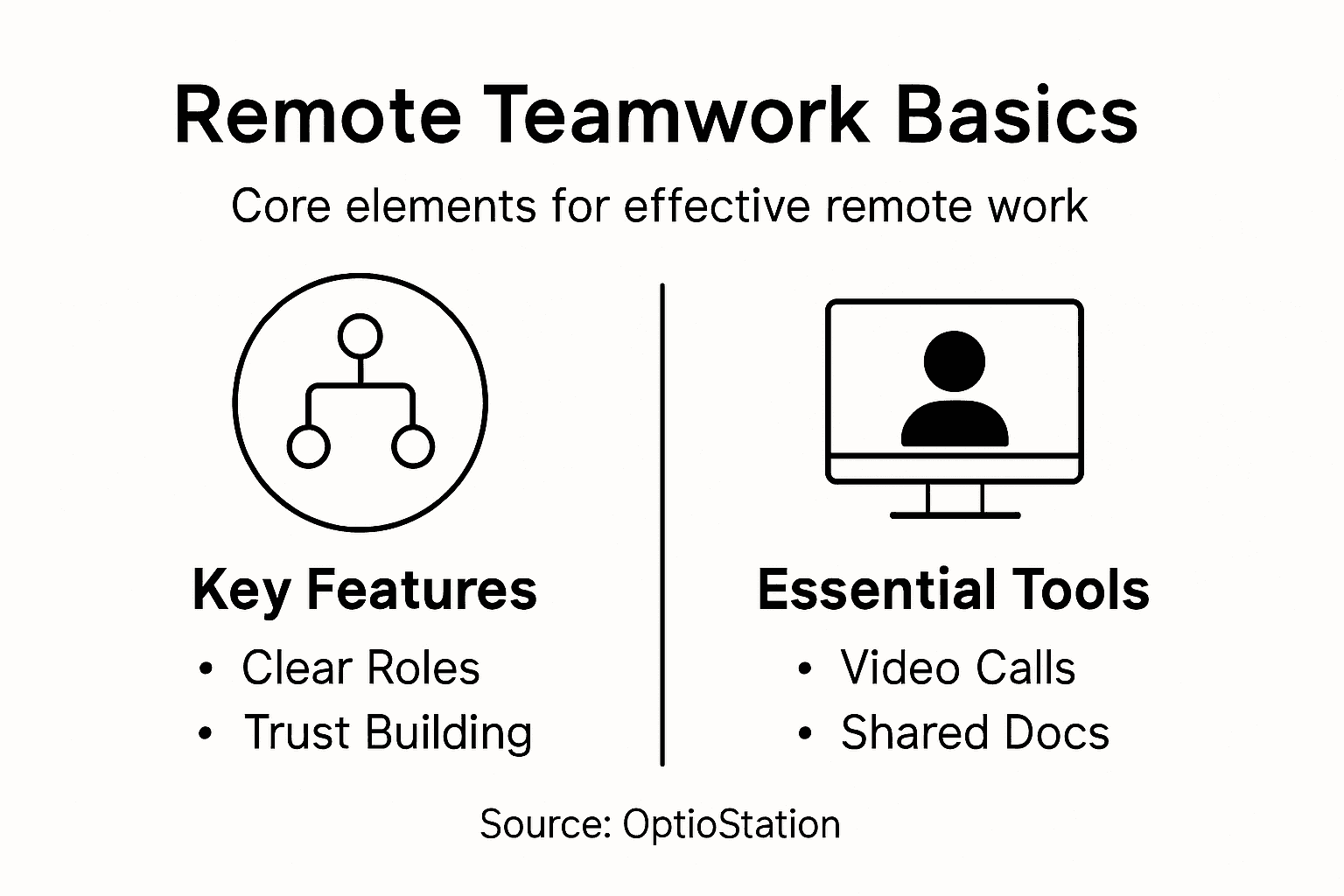
Beyond formal role assignments, successful remote teams cultivate a culture of shared responsibility. This means team members support each other’s goals, provide constructive feedback, and remain flexible in adapting to changing project requirements. The most effective remote teams view roles as dynamic and interconnected rather than rigidly fixed.
Pro tip: Create a detailed role matrix that outlines each team member’s responsibilities, communication channels, and performance expectations to ensure transparency and accountability.
Below is a quick reference for essential remote team roles and their unique contributions:
| Role | Key Contribution | Potential Pitfall if Missing |
|---|---|---|
| Project Leader/Coordinator | Guides objectives and deadlines | Team lacks direction |
| Communication Facilitator | Ensures clear information flow | Increased misunderstandings |
| Technical Support Specialist | Maintains digital tool function | Project delays due to tech failures |
| Task Allocation Manager | Matches tasks to strengths | Skills underutilized |
| Team Morale Specialist | Fosters engagement and support | Increased disengagement or burnout |
Risks, challenges, and common mistakes to avoid
Remote teamwork presents unique challenges that can significantly undermine collaboration effectiveness if not proactively addressed. Managing virtual team challenges reveals critical risks that teams must navigate to maintain productivity and team cohesion.
The most prevalent risks in remote teamwork include:
- Communication breakdowns
- Trust erosion
- Social isolation
- Productivity monitoring difficulties
- Unclear performance expectations
- Technology integration challenges
- Inconsistent workflow management
Team size dynamics play a crucial role in remote collaboration risks. Virtual team misconceptions highlight that larger teams often experience more significant collaboration challenges, with communication complexity increasing exponentially as team members are added.
Psychological risks such as social isolation and reduced interpersonal connection can dramatically impact team performance. Remote teams must intentionally create opportunities for informal interactions, develop robust communication protocols, and establish clear expectations to mitigate these potential pitfalls. Successful teams recognize that preventing these challenges requires proactive strategy and consistent effort.
Pro tip: Schedule regular video check-ins and create dedicated communication channels for non-work social interactions to combat isolation and maintain team connection.
Master Your Remote Teamwork with OptioStation
Remote teamwork poses real challenges like communication breakdowns, task allocation issues, and trust-building obstacles. As the article highlights, thriving in this digital collaboration landscape requires clear protocols, flexible workflows, and dependable tools that adapt to diverse team roles and sizes. If you want to turn these common pain points into your team’s competitive edge, it’s time to take control with a powerful system designed specifically for students and young professionals.
Become the Centurion of your own team by using OptioStation, the mobile app that acts as your Roman Optio, guiding you as second-in-command toward seamless task, team, and time management. With OptioStation, you gain clear communication channels, efficient task delegation, and performance tracking that reflect the best practices in remote teamwork. Don’t let remote work challenges slow you down — visit https://optiostation.com now to empower your collaboration with the tool built to make your virtual team stronger and more connected.
Frequently Asked Questions
What is remote teamwork?
Remote teamwork refers to a collaborative approach where team members work and communicate from different locations, utilizing digital technologies to maintain productivity and connection.
What are the key characteristics of effective remote teams?
Effective remote teams share several core characteristics, including clear communication protocols, robust project management systems, established trust mechanisms, consistent virtual interaction platforms, and defined performance metrics.
Why is trust important in remote teamwork?
Trust is critical in remote work environments because it helps to compensate for the lack of face-to-face interaction. It fosters open communication, collaboration, and a sense of community among team members, enhancing overall productivity.
What are the common challenges of remote teamwork?
Common challenges of remote teamwork include communication breakdowns, social isolation, unclear performance expectations, and technology integration issues. Addressing these risks proactively can help maintain team cohesion and effectiveness.
Recommended
- Understanding Remote Teamwork Tips for Effective Collaboration – Optio Station: Best Project Management App for Prioritization
- Understanding Effective Virtual Team Tips for Success – Optio Station: Best Project Management App for Prioritization
- Coordinating Remote Teams Workflow for Better Results – Optio Station: Best Project Management App for Prioritization
- Understanding Team Collaboration Guide – Optio Station: Best Project Management App for Prioritization
- Why Study Management Online: Global Career Benefits
- Remote Work Technology: Improving AI Security and Value – BizDev Strategy
