

Trying to lead a team project can feel confusing when so many rules and rumors complicate what actually matters. Project management is more than checklists—it means aligning your team with strategic goals and adapting when things shift. Many students believe that following rigid steps guarantees success, but flexible, people-centered approaches help teams thrive. You will find practical insight that clears up common myths and helps you organize work more smoothly.
Table of Contents
- Project Organization Basics And Misconceptions
- Types Of Project Organization Structures
- Core Roles And Responsibilities In Team Projects
- Effective Task And Time Management Strategies
- Common Pitfalls And How To Avoid Them
Key Takeaways
| Point | Details |
|---|---|
| Understanding Project Management | Effective project management goes beyond checklists, emphasizing flexibility and human dynamics. |
| Avoiding Common Misconceptions | Recognize that rigid processes and fixed budgets can hinder team creativity and progress. |
| Selecting Structure Wisely | Choose the right project organization structure to enhance collaboration and adaptability. |
| Proactive Risk Management | Anticipate potential pitfalls and implement strategies to mitigate risks before they escalate. |
Project organization basics and misconceptions
Project management might seem straightforward, but numerous misconceptions can derail even the most well-intentioned efforts. Organizational project management frameworks provide critical structure for student success, yet many misunderstand their core principles.
Students often assume project organization is simply about creating checklists and tracking tasks. In reality, effective project management involves complex strategic alignment and dynamic adaptation. The most successful project managers understand that rigid processes rarely translate to genuine productivity.
Several key misconceptions frequently emerge among students and young professionals:
- Process Over People: Believing strict procedures matter more than team dynamics
- Inflexible Budgeting: Treating project budgets as immutable rather than adaptive guidelines
- Scope Rigidity: Refusing to adjust project parameters when unexpected challenges arise
- Risk Avoidance: Attempting to eliminate all risks instead of managing them strategically
These misconceptions stem from a fundamental misunderstanding of project management’s true nature. Effective project management requires flexibility, human-centered approaches, and continuous learning.
This table summarizes common student misconceptions and their real-world project management implications:
| Misconception | Why It’s Harmful | Better Approach |
|---|---|---|
| Rigid processes | Stifles team creativity | Adapt processes to project needs |
| Fixed budgets | Limits opportunity | Use dynamic budgeting |
| Scope rigidity | Blocks progress | Negotiate scope changes |
| Total risk avoidance | Delays innovation | Manage risk proactively |
Pro tip: Treat your project management approach like a living strategy – adaptable, responsive, and focused on collaborative success.
Types of project organization structures
Understanding project organization structures is crucial for students and professionals navigating complex team environments. Organizational project management structures play a critical role in defining how teams collaborate, communicate, and deliver results.
Three primary project organization structures dominate modern workplace strategies: functional, matrix, and projectized. Each structure offers unique advantages and challenges depending on the project’s complexity, organizational culture, and strategic objectives.
Here’s a detailed breakdown of these organizational structures:
-
Functional Structure
- Employees grouped by specialized departments
- Clear departmental hierarchy
- Limited cross-functional collaboration
- Best for routine, predictable projects
-
Matrix Structure
- Balanced authority between functional managers and project managers
- Allows flexible resource allocation
- Encourages cross-functional communication
- Suitable for complex, interdisciplinary projects
-
Projectized Structure
- Project managers hold primary authority
- Team members report directly to project managers
- Highly flexible and adaptable
- Ideal for dynamic, innovation-driven environments
Project organization types fundamentally impact team dynamics, resource management, and overall project success. The key is selecting a structure that aligns with your project’s unique requirements and organizational context.
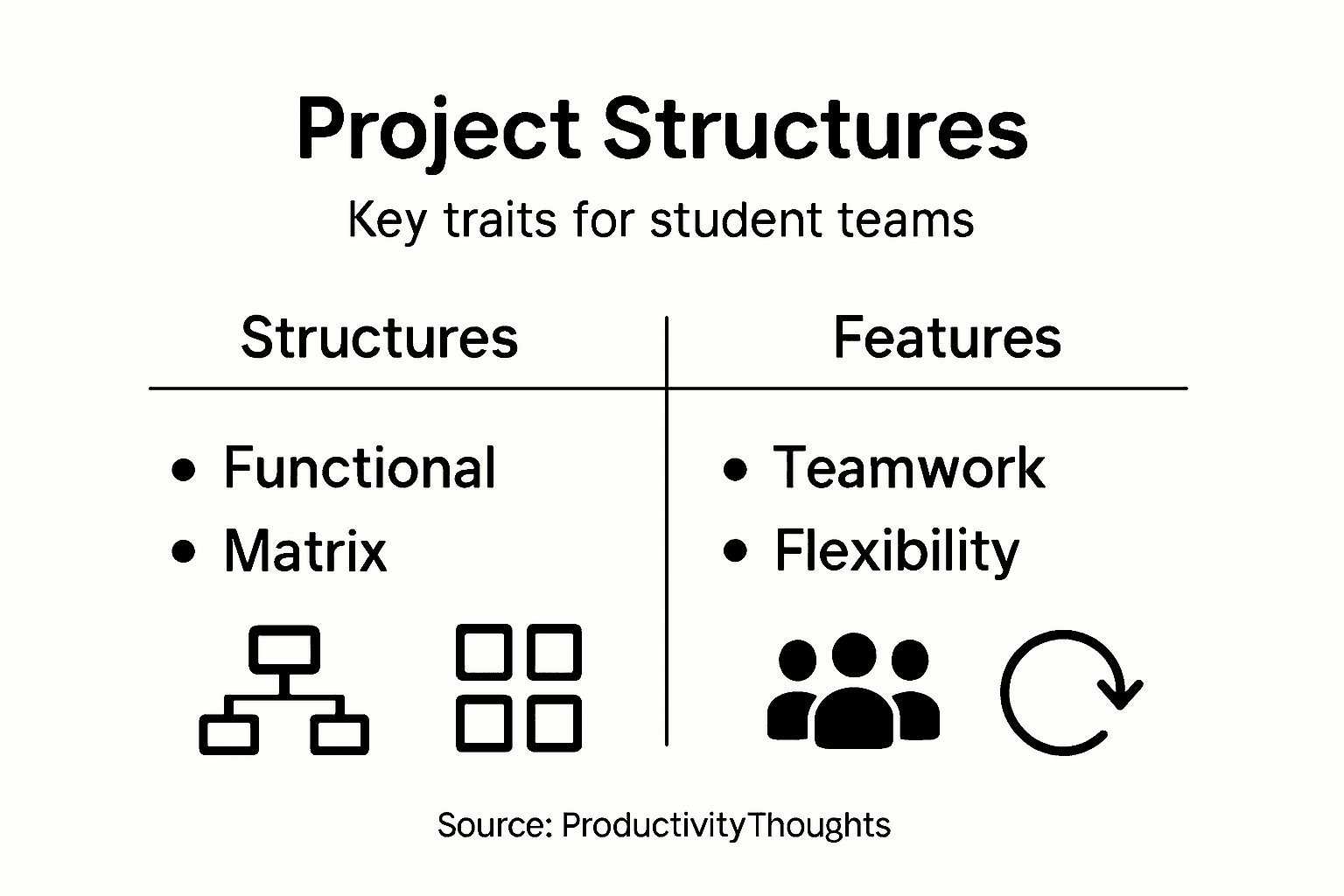
The following table compares how different project organization structures impact collaboration, authority, and project adaptability:
| Structure Type | Collaboration Level | Authority Distribution | Adaptability to Change |
|---|---|---|---|
| Functional | Minimal cross-team work | Department heads lead | Low, rigid processes |
| Matrix | Strong cross-team focus | Shared between managers | Moderate, flexible |
| Projectized | High teamwork | Project manager has control | High, fast response to shift |
Pro tip: Choose your project organization structure strategically, considering your team’s strengths, project complexity, and long-term organizational goals.
Core roles and responsibilities in team projects
Successful team projects require a clear understanding of core roles and responsibilities. Project management fundamentals emphasize the importance of defining distinct roles to ensure smooth collaboration and accountability.

Three primary roles typically emerge in team project environments: the project manager, team members, and stakeholders. Each role carries unique responsibilities that contribute to the project’s overall success and effectiveness.
Here’s a comprehensive breakdown of these critical roles:
-
Project Manager
- Overall project leadership
- Strategic planning and coordination
- Risk management and problem-solving
- Final accountability for project outcomes
-
Team Members
- Execute assigned tasks
- Collaborate across functional areas
- Report progress and challenges
- Contribute specialized expertise
-
Stakeholders
- Provide project requirements
- Offer strategic guidance
- Monitor project alignment with organizational goals
- Provide critical feedback and approvals
Project management standards highlight the interconnected nature of these roles, where clear communication and well-defined responsibilities are paramount. Understanding each role’s expectations prevents potential conflicts and enhances overall team performance.
Pro tip: Create a detailed responsibility matrix at your project’s outset to clarify expectations and minimize potential role confusion.
Effective task and time management strategies
Mastering task and time management is critical for student and professional success. Project management fundamentals provide essential frameworks for breaking down complex work into manageable components.
Effective time management goes beyond simple scheduling. It requires strategic approaches that help students prioritize tasks, allocate resources efficiently, and maintain consistent progress toward project goals. Understanding how to sequence activities and estimate realistic timeframes prevents overwhelming workloads and reduces last-minute stress.
Key strategies for optimal task management include:
-
Task Breakdown
- Divide large projects into smaller, actionable steps
- Assign specific deadlines to each subtask
- Create a visual representation of project progress
- Establish clear milestones and checkpoints
-
Prioritization Techniques
- Use methods like Eisenhower Matrix
- Distinguish between urgent and important tasks
- Focus on high-impact activities first
- Allocate time proportionally to task complexity
-
Time Tracking
- Monitor actual time spent on tasks
- Compare estimated vs. actual completion times
- Identify potential productivity bottlenecks
- Adjust future time estimates accordingly
Project time management processes emphasize continuous monitoring and adaptive scheduling. Successful time management isn’t about perfect planning, but maintaining flexibility and learning from each project’s unique challenges.
Pro tip: Implement a weekly review system to reassess priorities, track progress, and realign your task management strategy.
Common pitfalls and how to avoid them
Project management can quickly unravel when students and professionals fall into predictable traps. Project management misconceptions reveal critical patterns that can derail even the most well-intentioned efforts.
Navigating project challenges requires understanding the most common obstacles and developing strategic approaches to mitigate them. Successful teams anticipate potential issues and create proactive management strategies that address risks before they become significant problems.
Key project pitfalls to watch for include:
-
Scope Creep
- Undefined project boundaries
- Constant uncontrolled changes
- Lack of clear acceptance criteria
- Reluctance to say no to new requests
-
Communication Breakdowns
- Inconsistent status reporting
- Unclear role definitions
- Insufficient stakeholder engagement
- Poor documentation practices
-
Unrealistic Expectations
- Overpromising project outcomes
- Underestimating time and resource requirements
- Ignoring potential risks
- Failing to communicate limitations
Project management strategies emphasize that preventing these pitfalls requires consistent communication, realistic planning, and adaptable leadership. Understanding potential challenges helps teams develop more resilient project management approaches.
Pro tip: Conduct regular project health checks to identify and address potential issues before they escalate into significant problems.
Take Command of Your Projects with Optio Station
Many students face challenges in mastering project organization such as managing shifting scopes, balancing team roles, and adapting workflows effectively. This article highlights critical pain points like overcoming rigid processes and improving task and time management. Optio Station understands these struggles and is designed to empower you as the Centurion leading your projects. With its Roman-themed interface, Optio acts as your trusted second-in-command, helping you stay flexible and in control.
Discover practical strategies tailored for student success by exploring insights on ProductivityThoughts and learn essential tips through CenturionTips.

Ready to elevate your project management skills? Visit Optio Station now to access a powerful mobile app built specifically for task, team, and time management. Take charge today and transform how you organize projects with confidence and clarity.
Frequently Asked Questions
What are common misconceptions about project organization among students?
Many students mistakenly believe project organization is solely about checklists and task tracking. In reality, effective project management requires strategic alignment, flexibility, and focus on team dynamics.
What are the primary types of project organization structures?
The three main types are functional, matrix, and projectized structures. Each structure offers different benefits and challenges depending on project complexity and organizational objectives.
Why is defining roles and responsibilities important in team projects?
Clear roles and responsibilities enhance collaboration and accountability, reducing potential conflicts and ensuring everyone understands their contributions to the project.
How can students effectively manage tasks and time in projects?
Students can apply strategies like task breakdown, prioritization techniques, and time tracking to improve their task management, helping to maintain progress and avoid last-minute stress.
Recommended
- Project Management Plan Example: Success Blueprint For Students – Optio Station: Best Project Management App for Prioritization
- 7 Practical Work Goal Examples for Students and Professionals – Optio Station: Best Project Management App for Prioritization
- Why Plan Schedules: Key to Student Success – Optio Station: Best Project Management App for Prioritization
- Understanding Class Schedule Management: A Complete Guide – Optio Station: Best Project Management App for Prioritization
- Top 7 Interview Questions Program Managers Must Know
- Student Motivation Strategies That Transform Learning – Projector Display
