

TL;DR:
- Organizational project management links projects to an organization’s strategy, structure, and goals, emphasizing value delivery. Understanding how governance, structure, and frameworks influence project success helps young professionals develop strategic decision-making skills early. Applying habits like clear outcomes, phased planning, stakeholder clarity, and focus on high-value initiatives enhances practical OPM competencies.
Most people think project management is about deadlines, task lists, and maybe a Gantt chart. That framing misses the bigger picture entirely. Organizational project management (OPM) is the discipline that connects individual projects to the strategy, structure, and goals of the whole organization. Project success is now measured by the value delivered to stakeholders, not just whether you hit your scope or schedule. For college students and young professionals, understanding OPM early gives you a career edge that most of your peers will spend years trying to catch up on.
Table of Contents
- Key takeaways
- What organizational project management actually means
- Strategies to strengthen your OPM skills early
- How organizational structure shapes your role
- Tools and workflows that build real OPM skills
- My honest take on learning OPM early
- Level up your project management with Optiostation
- FAQ
Key takeaways
| Point | Details |
|---|---|
| OPM goes beyond task management | Organizational project management links projects to strategy, governance, and portfolio decisions. |
| Governance accelerates decisions | Clear decision rights speed up project execution instead of creating bureaucratic delays. |
| Structure shapes your authority | Your organizational structure determines how much influence you have as a project manager. |
| Planning buffers reduce failure | Adding 20–30% time buffers to plans significantly reduces the risk of overruns. |
| Tools support, strategy leads | Software and templates are only effective when backed by clear goals and governance thinking. |
What organizational project management actually means
Organizational project management is a system, not a single skill. It combines three interconnected layers: portfolio management, program management, and individual project management. Each layer serves a different purpose, and understanding how they connect is what separates people who just manage tasks from people who drive organizational results.
Portfolio management is the highest layer. It answers the question: are we working on the right projects at all? Portfolio manager success depends on how well an organization funds the right initiatives, sequences them, and cuts ineffective ones early. Program management sits in the middle, coordinating related projects that share goals or resources. Individual project management is where most students start, but knowing the layers above you changes how you make decisions at the ground level.
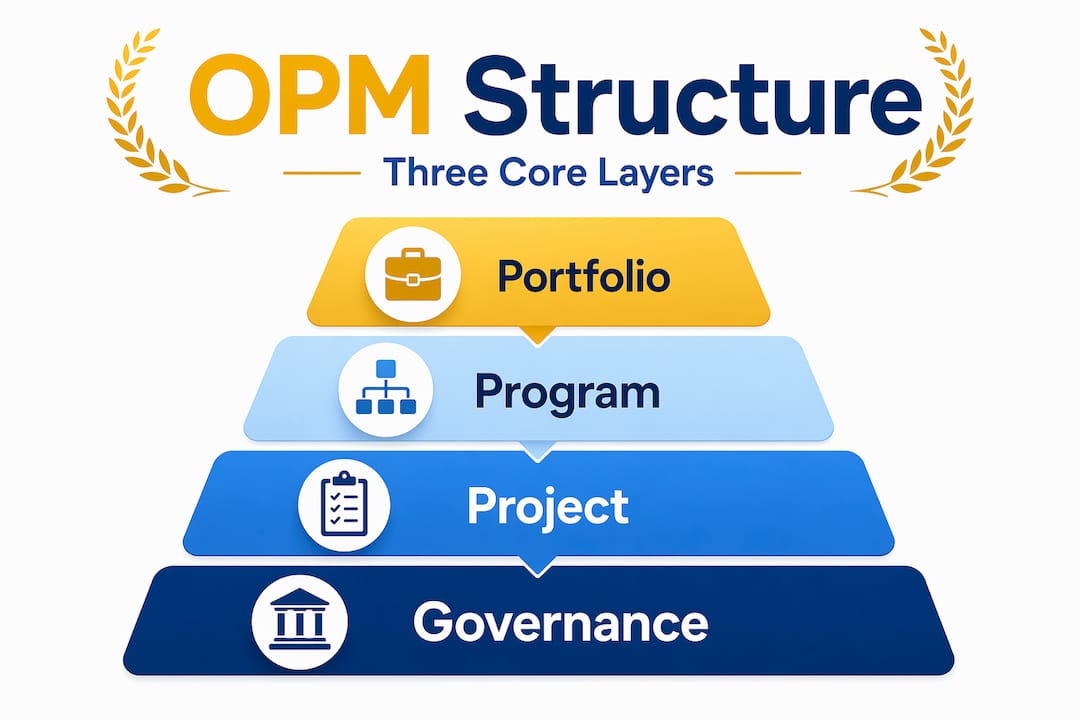
Governance ties the whole system together. Think of organizational project governance not as red tape, but as a decision-making infrastructure. Effective governance defines what decisions are made, who makes them, using what data, and when. When governance is designed well, it speeds things up rather than slowing them down.
How common project management frameworks compare
Different project management frameworks exist to match different types of work. Here is a quick comparison to orient you before we go deeper:
| Framework | Best for | Core strength |
|---|---|---|
| Waterfall | Sequential, predictable projects | Clear phases, easy documentation |
| Agile | Iterative, changing requirements | Speed, flexibility, team collaboration |
| Hybrid | Mixed complexity environments | Balances structure with adaptability |
| PMBOK (PMI standard) | Formal organizational settings | Standardized processes and governance |
No single framework wins every situation. The real skill in effective project management is knowing which approach fits your organizational context and adapting accordingly. Good practice in project management means applying recognized techniques that improve your odds of success, not blindly following a rigid methodology.
Key elements that every OPM system should address:
- Alignment: Every project should connect to a visible organizational goal.
- Governance: Clear rules about who decides what and when.
- Resource management: People, budget, and time allocated based on strategic priority.
- Performance tracking: Progress measured by value delivered, not just tasks completed.
Strategies to strengthen your OPM skills early
Getting good at organizational project management as a student or early-career professional is less about mastering every tool and more about building the right habits. Here are six strategies that actually move the needle.
-
Define outcomes before activities. Before you build a task list, write one sentence describing what success looks like for the organization or team. Projects without a clear outcome statement tend to drift. Connecting your work to a broader organizational strategy for projects is what makes your contributions visible and measurable.
-
Break complexity into phases. Large academic or work projects become manageable when you divide them into defined stages with specific deliverables. Each phase should have a clear exit point: what do you need to produce before moving forward? This mirrors how professional project management frameworks structure execution.
-
Get stakeholder clarity upfront. In any group project, ambiguity about roles and decision rights is the fastest path to conflict. Spend 20 minutes at the start of any project mapping who owns what decisions. You will avoid far more problems than any process tool can fix after the fact.
-
Build a communication rhythm. Miscommunication causes nearly half of rework in complex projects. A short weekly check-in, even a five-minute written status update shared with your team, creates the visibility that prevents surprises. This is team collaboration in project management at its most practical.
-
Plan for uncertainty. Add 20 to 30 percent extra time and 10 to 20 percent extra budget buffer to any plan you present. Every experienced project manager does this. Starting your career with that habit puts you ahead of peers who always run over.
-
Adapt your governance to your context. A solo capstone project needs a simple checklist and a weekly review. A five-person startup team needs defined roles and a shared workspace. Match your level of process to the actual complexity of the work.
Pro Tip: Create a one-page project brief for every significant project you take on. It should include the goal, stakeholders, key decisions, and success criteria. Reviewing it weekly keeps you aligned with the original intent and gives you something concrete to show decision-makers.
How organizational structure shapes your role
The organization you work in, or the academic setting you operate within, directly affects how much authority you have as a project manager. This is one of the most practical things you can understand early in your career.
Organizational structures dictate project manager authority in ways that affect everything from resource negotiation to scope control. The three main types work like this:
- Functional structure: Department heads hold authority. You as the project manager have limited power and often have to negotiate for team members’ time. Most large corporations and universities operate this way. Getting things done requires relationship skills more than formal authority.
- Matrix structure: Authority is shared between functional managers and project managers. Strong matrix organizations give project managers more leverage, but weak matrix environments can leave you fighting for resources constantly.
- Project-based (projectized) structure: The project manager has high authority and dedicated team members. Agencies, consulting firms, and construction companies often work this way. You own your outcomes completely.
Understanding which structure you are operating in tells you where to spend your political capital. Trying to enforce rigid project management governance in a functional environment where you have no formal authority will frustrate everyone. Adapting your approach to the reality of the structure is not compromise. It is smart execution.
Project manager authority varies greatly by structure, which strongly influences your planning, resource allocation, and decision speed. The earlier you internalize this, the faster you can get things done regardless of where you land.

Pro Tip: When joining any new team or organization, ask one question in your first week: “Who has final say on project scope changes?” The answer tells you everything about the structure you are working in.
Tools and workflows that build real OPM skills
Software does not manage projects. People do. But the right tools reduce friction, create visibility, and free up your mental energy for the decisions that actually matter.
A few categories worth knowing:
- Task and project tracking tools let you visualize your pipeline, assign ownership, and track progress without endless status meetings. For students learning to organize multiple projects, a simple Kanban board is often more effective than complex enterprise software.
- Templates and checklists are underrated. A project kickoff template you reuse saves you from reinventing the structure each time. Document your process once, improve it twice, and you have a system.
- Time blocking and energy management matter more than most project management courses admit. Managing your project time is as much about protecting focus blocks as it is about tracking milestones.
- Feedback loops and documentation turn completed projects into learning assets. A short retrospective after every project, even just three bullets on what worked and what did not, builds the kind of judgment that no course can teach directly.
Here is a practical tools overview for students and young professionals:
| Tool category | What it helps with | Good starting point |
|---|---|---|
| Task management app | Tracking deliverables and priorities | Mobile-first, simple interface |
| Shared workspace | Team collaboration in project management | Real-time visibility for all members |
| Time tracker | Estimating and reviewing time use | Weekly review rhythm |
| Template library | Consistent project kickoffs and reviews | One-page brief, status update format |
About 11% of project investment is wasted due to poor performance, and better tooling alone does not fix that. The fix is pairing the right tools with clear goals, defined roles, and a habit of reviewing what you planned versus what actually happened. Tools support that habit. They do not replace it.
Focusing on a small number of high-value initiatives known across your team is consistently more effective than juggling ten disconnected projects with equal priority. Use your tools to reflect that focus, not to make a crowded list look organized.
My honest take on learning OPM early
I have seen too many talented students and young professionals get their project management foundations from productivity YouTube rabbit holes. They end up with ten apps and no strategy. What they actually needed was to understand how projects connect to organizational goals before they touched a single tool.
The governance-versus-agility balancing act is where I see people get stuck most often. Transitioning PMOs from compliance enforcers to impact facilitators genuinely improves project outcomes, and that lesson applies at the individual level too. If your process feels like a bureaucratic exercise rather than a decision accelerator, simplify it. Governance should help you move faster, not document your way to missed deadlines.
The most career-defining shift you can make is moving from thinking about task delivery to thinking about investment decisions. Portfolio management success comes from managing the entire mix of initiatives, not just executing each one well. Even as a student, you can practice this by asking which of your projects deserves more of your time and whether any should be cut entirely.
Build your portfolio of artifacts early. A documented project brief, a retrospective note, a structured decision log: these are the things that make you credible in rooms where career decisions get made. People who can demonstrate that they think at the organizational level, not just the task level, stand out immediately.
— Optiostation
Level up your project management with Optiostation
If this article clarified how much more there is to project management than checklists, the next step is putting these ideas into practice with the right tools.
Optiostation was built specifically for students and young professionals who want to manage tasks, teams, and time the way serious Centurions operate. Whether you are balancing multiple courses, coordinating group projects, or managing responsibilities at your first job, the app gives you command over your work without unnecessary complexity. Start with our task management software guide to find the right setup for your situation. You can also explore how collaboration tools improve team communication and project coordination. Your strategy deserves better tools than a sticky note.
FAQ
What is organizational project management?
Organizational project management is a system that aligns portfolio, program, and individual project management with an organization’s overall strategy and goals. It goes beyond scheduling to include governance, resource allocation, and value delivery.
How does organizational structure affect project managers?
Your organizational structure determines how much authority you have as a project manager. In functional structures, authority rests with department heads, while project-based structures give project managers direct control over teams and resources.
What project management framework should students start with?
Most students benefit from starting with a hybrid approach: lightweight governance similar to PMBOK principles combined with Agile-style iteration. This builds foundational habits without overwhelming complexity.
Why does governance matter in project management?
Governance clarifies who makes which decisions and when, which speeds up execution rather than slowing it down. Without it, teams stall on small decisions and lose momentum on larger goals.
How can young professionals practice project portfolio management?
Start by reviewing all your active projects and asking which ones deliver the most value relative to your time investment. Cutting or deprioritizing low-impact work is the core habit of portfolio thinking, and you can practice it in academic settings today.
Recommended
- Understanding Project Management Tips for Success – Optio Station: Best Project Management App for Prioritization
- Command Log – Optio Station: Best Project Management App for Prioritization
- Best free project management software for students 2026 – Optio Station: Best Project Management App for Prioritization
- Best project management software for students in 2026 – Optio Station: Best Project Management App for Prioritization
