

Starting a project without a clear plan feels like building a house without blueprints. Many college students and young professionals struggle to organize their ideas, timelines, and resources when pitching projects to professors, clients, or team members. A well-structured project management proposal template solves this problem by providing a proven framework that clarifies objectives, streamlines communication, and increases your chances of approval. This guide shows you exactly how to create, customize, and use proposal templates to transform chaotic ideas into organized, compelling project plans that get results.
Table of Contents
- Key takeaways
- What is a project management proposal template?
- Key components of an effective project management proposal template
- How to create and customize your project management proposal template
- Using your project management proposal template to enhance organization and collaboration
- Discover top project management tools and software
- FAQ
Key Takeaways
| Point | Details |
|---|---|
| Template clarifies objectives | Using a proposal template clearly defines project goals and scope, helping you align with stakeholders. |
| Saves time and effort | Templates provide reusable structures that speed up planning and writing for proposals. |
| Core components | A strong proposal includes goals timelines budget and roles to communicate expectations. |
| Digital tools boost collaboration | Digital tools enhance proposal creation and team collaboration through automation and shared editing. |
What is a project management proposal template?
A project management proposal template is a pre-structured document that outlines the essential elements needed to plan, pitch, and execute a project successfully. Think of it as a reusable blueprint that guides you through defining your project’s purpose, deliverables, timeline, resources, and budget without missing critical details. Templates ensure you address stakeholder concerns systematically while maintaining a professional presentation standard.
These frameworks come in various formats, from simple Word documents to sophisticated digital platforms. Traditional templates might use static tables and text sections, while modern digital versions integrate dynamic features like automated calculations, collaborative editing, and visual timelines. Regardless of format, project management proposals structure project goals and resource plans to create shared understanding among everyone involved.
The real power of templates lies in standardization. When you use a consistent structure across projects, you build institutional knowledge that makes future proposals faster and more effective. New team members quickly understand expectations, stakeholders know exactly where to find specific information, and you avoid the mental drain of reinventing organizational systems for every new initiative.
Key benefits of using proposal templates include:
- Reduced planning time through reusable frameworks
- Improved communication by addressing common stakeholder questions upfront
- Enhanced credibility through professional, comprehensive documentation
- Better resource allocation by forcing systematic thinking about needs
- Increased approval rates when proposals clearly demonstrate value and feasibility
Templates also serve as teaching tools. As you work through each section, you develop deeper understanding of project management fundamentals. This structured approach helps you spot potential problems early, when solutions are easiest and cheapest to implement.
Key components of an effective project management proposal template
Every strong proposal template contains specific sections that address fundamental project questions. Understanding these components helps you build comprehensive proposals that inspire stakeholder confidence and set projects up for success.
-
Project overview and goals: Start with a clear statement of what you’re trying to achieve and why it matters. This section answers the “so what” question by connecting project outcomes to broader organizational or academic objectives. Include measurable success criteria so everyone knows what winning looks like.
-
Scope statement: Define exactly what your project will and won’t deliver. Clear project sections improve communication and execution by eliminating ambiguity. List specific deliverables, features, or outcomes, then explicitly state what falls outside the project boundaries to prevent scope creep.
-
Timeline and milestones: Break your project into phases with specific completion dates. Identify critical milestones that mark significant progress points. This section helps stakeholders understand the project’s duration and provides checkpoints for monitoring progress.
-
Budget and resources: Detail all required resources including personnel, equipment, software, and materials. Provide cost estimates for each category and justify major expenses. Transparent budgeting builds trust and helps decision-makers allocate funds appropriately.
-
Roles and responsibilities: Specify who does what throughout the project. Clear role definitions prevent confusion, reduce duplicated effort, and ensure accountability. Include decision-making authority so team members know who approves changes or resolves conflicts.
-
Risk assessment and mitigation: Identify potential obstacles that could derail your project and explain how you’ll address them. Proactive risk planning demonstrates maturity and preparedness, increasing stakeholder confidence in your ability to handle challenges.
-
Evaluation and success criteria: Describe how you’ll measure project success and what metrics you’ll track. This section closes the loop by connecting back to your initial goals with concrete measurement approaches.
Pro Tip: Customize your template based on audience and project type. Academic proposals might emphasize learning outcomes and research methodology, while client projects focus heavily on ROI and business value. Create multiple template versions for different contexts to maximize relevance and impact.
How to create and customize your project management proposal template
Building an effective template starts with understanding your typical project types and stakeholder needs. Begin by reviewing past successful proposals to identify common elements and structures that worked well. Use these insights to draft a basic framework that captures essential information while remaining flexible enough to adapt.

Start with a simple structure containing the seven key components outlined above. Write brief instructions or prompts under each heading to guide future users. For example, under “Project Overview,” include prompts like “State the problem this project solves” or “Describe the desired end state.” These reminders ensure comprehensive coverage even when you’re rushed.
Incorporate project specifics by replacing generic placeholders with actual details. Gather stakeholder input early to understand their priorities and concerns. Ask what information they need to make approval decisions, then ensure your template addresses those points explicitly. This collaborative approach increases buy-in and reduces revision cycles.
| Approach | Pros | Cons |
|---|---|---|
| Manual templates (Word, Google Docs) | Simple to create, universally accessible, no learning curve | Limited automation, version control challenges, manual updates |
| Digital project management platforms | Real-time collaboration, automated calculations, integrated workflows | Learning curve, subscription costs, potential feature overload |
| Spreadsheet-based templates | Flexible formatting, basic calculations, widely available | Limited visual appeal, collaboration friction, formatting inconsistencies |
Digital tools streamline task management and template customization, making them ideal for teams that manage multiple simultaneous projects. Platforms designed for students and young professionals often include pre-built templates you can adapt immediately. Explore options through resources like the best free project management software for students to find tools matching your budget and technical comfort level.
Customization tips for maximum effectiveness:
- Add visual elements like charts or diagrams to communicate complex information quickly
- Include examples or sample text to illustrate expectations for each section
- Create conditional sections that appear only when relevant to specific project types
- Build in review checkpoints where stakeholders provide feedback before full completion
- Establish version control practices to track template evolution and improvements
Review and update your template after completing each project. Note what worked well, what confused stakeholders, and what information you wished you’d included upfront. This continuous improvement approach ensures your template evolves with your growing expertise. Check out project plans templates guide for additional customization strategies and ready-to-use frameworks.
Pro Tip: Avoid over-customizing to the point where your template becomes rigid. The goal is structured flexibility, not bureaucratic constraint. If you find yourself deleting more than 30% of template content for typical projects, you’ve probably included too much.
Using your project management proposal template to enhance organization and collaboration
Templates transform from static documents into powerful collaboration tools when you actively use them to align teams and track progress. Start by sharing your proposal template with all stakeholders during project kickoff. Walk through each section together, ensuring everyone understands the plan and their role within it. This shared reference point prevents misunderstandings and creates accountability.
Proposal templates keep teams aligned by documenting decisions and agreements in writing. When disputes arise about scope or responsibilities, you can reference the approved proposal to resolve conflicts objectively. This documentation becomes especially valuable in academic group projects where team members have varying commitment levels or in professional settings with multiple stakeholders.
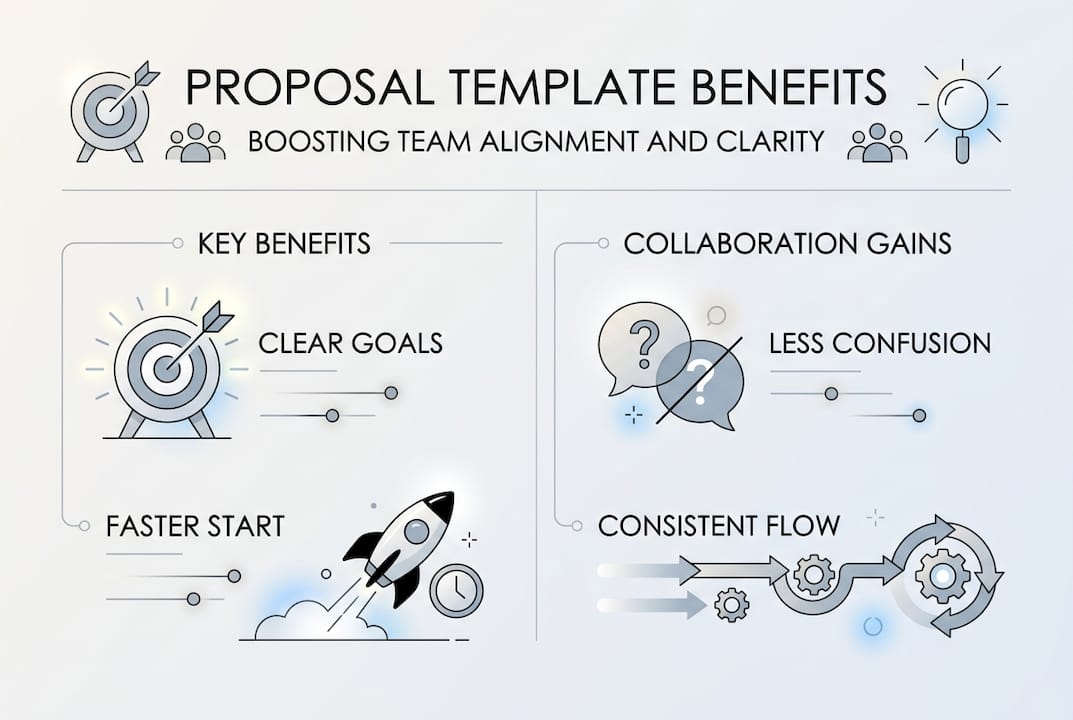
Collaboration best practices boost productivity by 30% when teams use structured approaches to coordination. Your proposal template supports this by establishing clear communication channels and decision-making processes upfront. Teams spend less time figuring out logistics and more time executing meaningful work.
Collaboration tips using proposals as your foundation:
- Schedule regular check-ins tied to proposal milestones to maintain momentum
- Use the proposal as your meeting agenda to keep discussions focused and productive
- Update the proposal document as changes occur to maintain a single source of truth
- Assign section ownership so team members take responsibility for specific deliverables
- Create proposal summaries for quick reference during busy execution phases
Integrate your proposal template with existing team tools for maximum efficiency. If you use understanding team collaboration guide principles, connect proposal milestones to your task management system. Link budget sections to expense tracking tools. Embed timeline visualizations in team dashboards. These integrations reduce duplicate data entry and keep information synchronized across platforms.
| Collaboration metric | Without structured proposals | With proposal templates |
|---|---|---|
| Time spent clarifying objectives | 8-12 hours per project | 2-3 hours per project |
| Scope change requests | 15-20 per project | 5-8 per project |
| Stakeholder satisfaction | 65-70% | 85-90% |
| On-time delivery rate | 55-60% | 75-80% |
The data shows clear advantages when teams use structured proposals. Reduced clarification time means faster project starts. Fewer scope changes indicate better initial planning. Higher satisfaction and delivery rates demonstrate improved execution. These improvements compound over multiple projects, building team capability and reputation.
Apply task management principles from guides like how to manage tasks effectively by breaking proposal sections into actionable work items. Assign deadlines to each component so proposal creation itself becomes a managed mini-project. This approach prevents last-minute rushes and produces higher quality submissions. For workplace applications, explore how to keep track of tasks at work to connect proposals with daily execution practices.
Discover top project management tools and software
Now that you understand how to create and use project management proposal templates effectively, the right software can amplify your results dramatically. Digital tools designed for students and young professionals streamline template creation, enable real-time collaboration, and integrate proposals with task execution seamlessly.
Optio Station offers comprehensive guides to help you find the perfect project management solution for your needs and budget. Whether you’re managing coursework, internship projects, or early-career initiatives, the right platform makes proposal development faster and more effective. Explore the best task management software guide to compare features, pricing, and user experiences across leading platforms.
Discover how to transform proposals into actionable workflows through how to manage tasks effectively, which connects planning with daily execution. For students specifically, check out best project management software for students to find tools offering educational discounts and student-friendly features. These resources help you move from theoretical understanding to practical application, turning your proposals into successful project outcomes.
FAQ
What is a project management proposal template?
A project management proposal template is a reusable framework that outlines all essential elements needed to plan and pitch a project, including objectives, scope, timeline, budget, roles, and success criteria. It provides a structured approach to organizing project information so stakeholders can quickly understand what you’re proposing and make informed approval decisions. Templates save time by eliminating the need to start from scratch for each new project while ensuring you don’t overlook critical planning components.
How can I customize a project management proposal template?
Customize templates by adjusting sections to match your specific project type, audience expectations, and organizational requirements. Start with a basic framework, then add or remove components based on stakeholder priorities and project complexity. Incorporate your project’s unique details like specific deliverables, team member names, actual budget figures, and relevant timelines. Digital tools make customization easier by allowing you to save multiple template versions for different project categories, automatically populate common fields, and collaborate with team members on refinements in real time.
What are the benefits of using a project management proposal template?
Templates dramatically reduce planning time while improving proposal quality and consistency. They ensure you address all stakeholder questions upfront, reducing revision cycles and accelerating approvals. Structured proposals enhance communication by creating shared understanding among team members and decision-makers. Templates also build your project management skills by teaching you to think systematically about objectives, resources, risks, and success metrics. Over time, reusable frameworks compound your efficiency gains, letting you focus energy on creative problem-solving rather than administrative formatting.
Can I use project management proposal templates as a student?
Absolutely. Templates work exceptionally well for student projects including group assignments, research proposals, capstone projects, and club initiatives. They help you organize complex coursework requirements, coordinate team members effectively, and demonstrate professionalism to professors and advisors. Using templates builds valuable project management skills that transfer directly to internships and early-career roles. Many students report higher grades and reduced stress when using structured proposal approaches because they catch potential problems early and communicate plans more clearly to instructors and teammates.
Where can I find the best project management proposal templates?
Numerous online resources offer free and premium templates suited to different project types and experience levels. Optio Station provides curated templates and guides specifically designed for students and young professionals through resources like the project plans templates guide. Professional associations, project management software platforms, and educational institutions also maintain template libraries. Start by exploring multiple sources to find formats that match your communication style and stakeholder preferences, then customize your favorites to create personalized versions that serve your specific needs efficiently.
Recommended
- Project Management Contract Template: Tools for Success – Optio Station: Best Project Management App for Prioritization
- Project Portfolio Template: Streamline Team Success – Optio Station: Best Project Management App for Prioritization
- Project management portfolio template guide 2026 – Optio Station: Best Project Management App for Prioritization
- Master project management task list templates in 2026 – Optio Station: Best Project Management App for Prioritization
- Master RFP Automation to Accelerate Security Reviews
