
Teamwork matters because it does three things one person rarely can: it solves complex problems with pooled knowledge, it builds the interpersonal skills employers screen for, and it makes hard work easier to sustain. But it only works when the team is built and run on purpose. Adding people to a project does not make it better by default.
This guide is written for college students and young professionals. It covers what the research says about teamwork and collaboration, the difference between the two words, where teams go wrong, and the habits that make group work pay off.
TL;DR
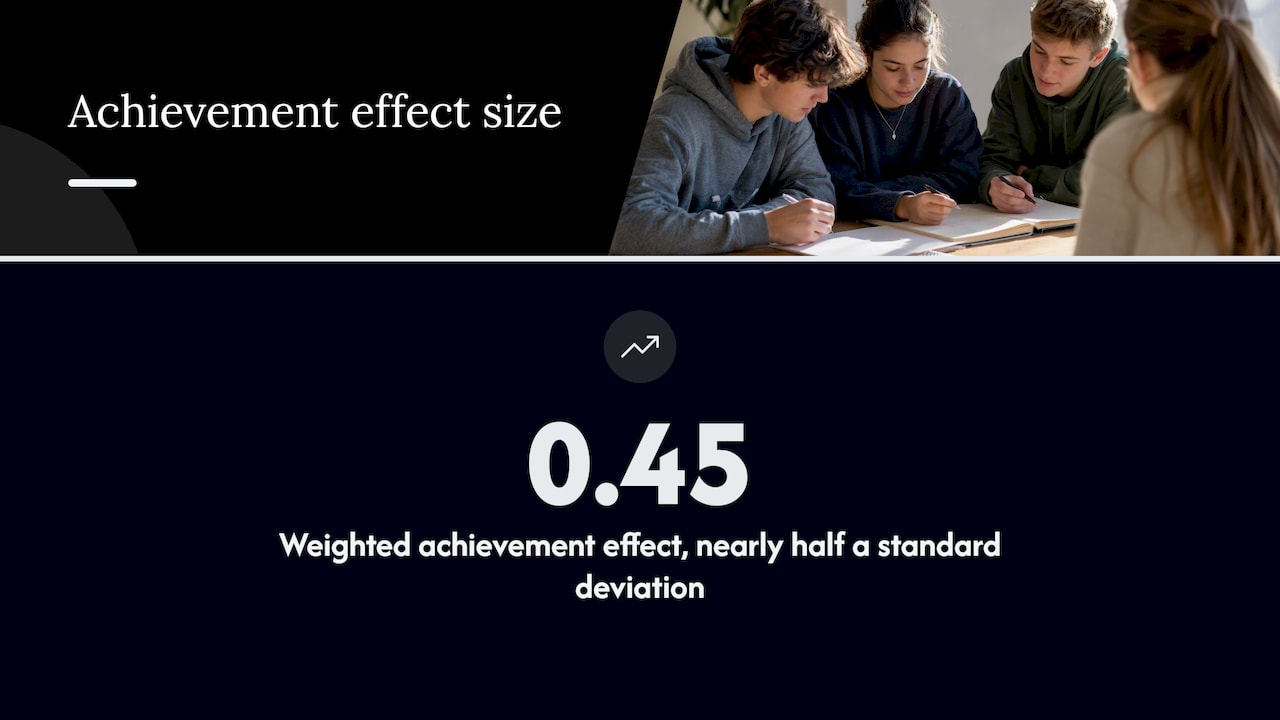
- Cooperative learning beats competitive and individual learning for college students, with a weighted effect size of 0.45 in the research we cite below.
- Teamwork and collaboration are not synonyms. Collaboration is the deepest level: a shared mission, pooled resources and shared risk.
- Bigger is not better. Large teams lose time to coordination, so match team size to the task.
- Trust, clear roles and regular check-ins do more for results than debate for its own sake.
- A shared task list that everyone can see removes most of the friction in student and early-career teams.
Table of Contents
- Why teamwork matters more than most people admit
- Teamwork versus collaboration: the 3 C’s
- What the research says about what makes teams work
- Common ways teamwork fails
- A practical routine for student and early-career teams
- Our perspective: collaboration is mostly about visibility
- Put it into practice with Optio
- FAQ
- Sources
Why teamwork matters more than most people admit
Most students treat group projects as a burden. Engineering education researchers note that employers keep naming team skills as a gap in how graduates are prepared. The group assignment you dread is the place where you practice what you will be measured on at work.
Employers say so directly. A NACE report on career readiness competencies cites an Economist Intelligence Unit survey of 343 C-level executives. In it, 63% named collaboration and teamwork as a skill they look for. The same report lists teamwork among its core career readiness competencies.
There are four main reasons it matters.
Better results on complex work
Simple tasks are often faster alone. Complex tasks are different. They need several kinds of knowledge and skill at once, and a team supplies them. The catch is interdependence: the more your work depends on someone else’s, the more the team has to coordinate. Research on task interdependence in teams points out that benefits of teams include information sharing, risk sharing, and coordination among employees.
Stronger learning and grades
For students the evidence is unusually solid. A series of meta-analyses on college student achievement compared cooperative, competitive and individualistic learning structures. A review of active learning research reports that, across meta-analyses covering studies from 1924 to 2017 in the cited literature, cooperative structures outperform the other two on achievement. The weighted average effect size is 0.45, close to half a standard deviation. In practical terms, that is the kind of gap that separates a 75 from an 85 on an exam, though your own results will vary with the course and the team.
Better relationships and persistence
The gains are not only academic. A meta-analysis of cooperative learning in college found a significant positive effect on peer relationships, with effect sizes between 0.71 and 0.88 compared with other structures. Related findings include more persistence in difficult courses, higher self-esteem and stronger social support. For a first-year student in a hard class, a study group is partly an academic tool and partly a reason to keep showing up.
Skills that transfer to the first job
You learn to give and take feedback, divide work fairly, disagree without damage and deliver together. Those skills show up in every interview that asks about a time you worked on a team. If presenting your team’s work is the weak spot, a practical guide like this one on public speaking for professionals can help you prepare for the moment your group project meets an audience.
Teamwork versus collaboration: the 3 C’s
People use the words interchangeably, but practitioners separate them. The 3 C’s framework describes a ladder of engagement:
| Level | What it means | Student example |
|---|---|---|
| Communication (or cooperation) | Sharing information | Posting lecture notes in a group chat |
| Coordination | Aligning tasks and setting up clear channels | Splitting a case study into sections with deadlines |
| Collaboration | Shared mission, pooled resources, shared risk | Writing and presenting one argument together, with shared accountability for the grade |
The MITRE partnership template makes a point that is easy to miss: collaboration carries the highest risk, because it asks for equal sharing of risk, shared leadership and sometimes a restructuring of roles. So before you commit, ask whether the goal justifies it. A weekly reading group may need only coordination. A capstone project probably needs real collaboration.
That answers a common question. The three C’s are not three steps you must always climb. They are three settings, and good teams pick the one that fits the job.
What the research says about what makes teams work
Trust comes first, and it starts with the leader
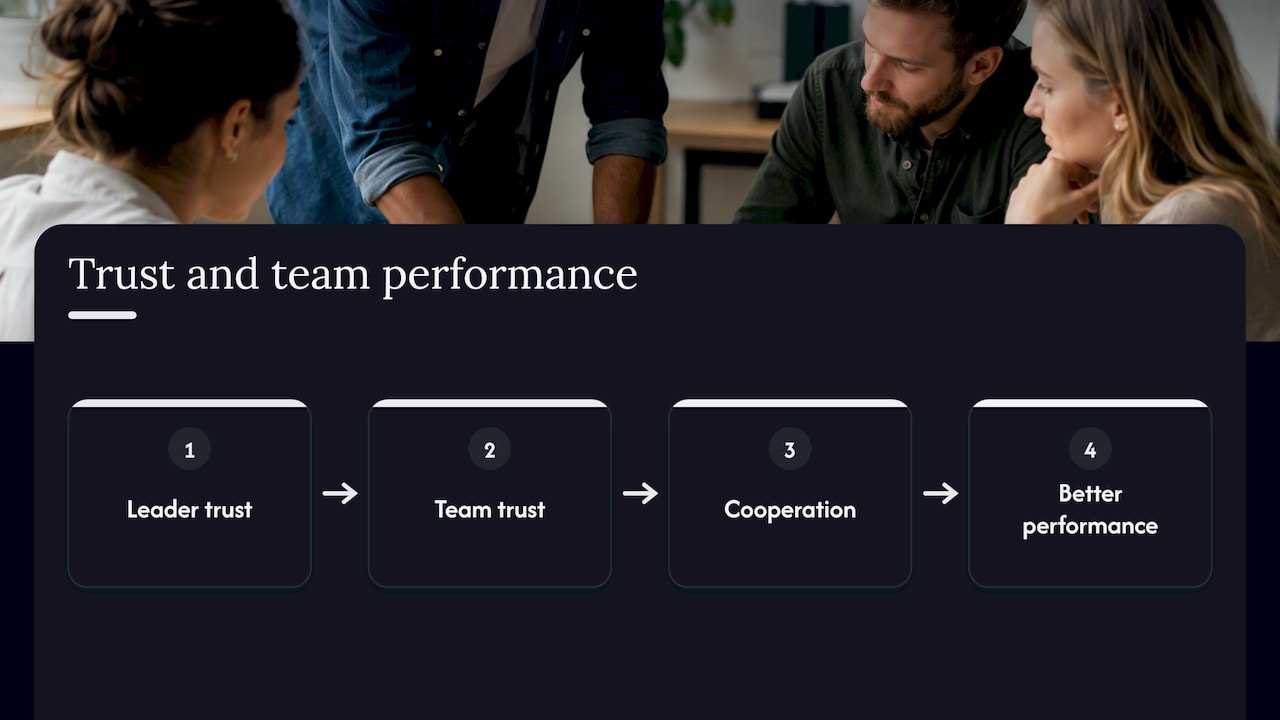
A 2025 longitudinal study of trust in leaders describes a cascade. Trust in the leader fosters trust among team members, which fuels cooperation, which shows up as better performance. Your team may not have a formal leader. Whoever sets the pace, runs the first meeting or chases the missing section is acting as one, and their reliability sets the tone.
Conflict is not the secret ingredient
A popular idea says healthy disagreement about the task improves results. An updated meta-analysis of team conflict found that all types of conflict (task, relationship, process and status) are generally negatively related to team performance. That does not mean you should stay quiet. It means you should raise disagreements early, calmly and about the work, instead of letting them harden.
Pause and reflect
High-performing teams practice reflexivity: they stop periodically to look at their goals, process and resources. A meta-analysis on team reflexivity links this habit to how teams develop and use their resources. A fifteen-minute check-in at the midpoint of a project (what is working, what is blocked, who is overloaded) is the cheapest version.
Size matters, and bigger is not better
A meta-analysis of team size and effectiveness shows that the relationship is not a straight line. Small, diverse teams gain from a wider pool of knowledge, but large teams often lose time to coordination if the task does not justify the headcount. Gallup has also reported that teams under 10 members show both the highest and lowest engagement in its database, which shows how easily small teams swing one way or the other. For a class project, three or four people is usually plenty.
Reward the team, not just the individual
When tasks are highly interdependent, rewards tied to the team avoid conflicting incentives. If everyone is graded or ranked only against each other, people protect their own piece and stop helping. Instructors can design for this. Students can do their part by agreeing at the start how the work, and the credit, will be shared.
Common ways teamwork fails
- Unclear ownership. Everyone assumes someone else is handling the slides.
- Hidden work. Tasks live in private notes and chat threads, so nobody sees the true state of the project.
- Too many people. Meetings grow, decisions slow down and the same three people do the work.
- Late conflict. A quiet frustration in week one becomes a blow-up the night before the deadline.
- No review point. The team discovers a missing piece at submission, not at the halfway mark.
Notice that most of these are coordination problems, not character problems. They are fixable with structure.
A practical routine for student and early-career teams
- Agree on the goal in one sentence. Write down what finished looks like and when.
- Pick the right level. Decide which parts need true collaboration and which just need coordination.
- Assign one owner per task. Shared tasks with no owner tend to stall.
- Make the work visible. Keep one list, with due dates, that everyone can see.
- Set short check-ins. Ten to fifteen minutes, at a fixed time, with three questions: done, next, blocked.
- Hold one reflection. At the midpoint, ask what to change in how you work.
- Credit the team. Close with a short debrief on what each person contributed and what to repeat next time.
If you want more on turning this into habits, see our guides on how to improve teamwork for success in college and work and how to manage team tasks effectively. For remote groups, coordinating remote teams covers the extra care that distance needs. If you want real examples, group project examples shows what good looks like.
Our perspective: collaboration is mostly about visibility
We built Optio around a simple observation: most team friction in student life is not about people disliking each other. It is about not knowing who is doing what, by when, and what matters most right now. The research above backs this up. Coordination losses grow with size, trust grows with reliability, and reliability is easier when commitments are in plain sight.
That is why we focus on simplicity and flexibility, not on adding more features to manage. We are an indie-built app, and we shape it with feedback from the people who use it. The Roman theme is partly a joke and partly a point: a centurion leads a small unit with clear roles, and Optio is the second-in-command that keeps the list straight so you can focus on the work and on each other.
Our advice, plainly: pick fewer, clearer tasks, name one owner for each, and review together before the deadline, not after.
— Optiostation
Put it into practice with Optio
If your team keeps losing track of who owns what, Optio’s Prioritization Station is built for that. It combines task management, team collaboration, time tracking and goal setting in one mobile app for students and young professionals. You can color-code the different parts of your life, set smart reminders and connect Google Calendar so deadlines sit next to the rest of your schedule. Core features are free, with advanced capabilities planned behind a paid subscription. For a wider look at the category, read our guide to task management software.
FAQ
Why are teamwork and collaboration important?
They let people tackle problems that are too complex for one mind, and they build the communication and trust skills that employers look for. In college, cooperative learning is linked to higher achievement and better peer relationships. They also spread the workload and the risk, which makes hard projects easier to finish.
What are the 10 benefits of teamwork?
Commonly listed benefits include better problem solving, more ideas, faster delivery on complex tasks, shared workload, stronger communication, higher motivation, mutual support, skill building, better relationships and shared accountability. Not all of them appear automatically. They depend on trust, clear roles and a team size that suits the task. Our piece on the advantages of teamwork goes into more detail.
What are the 3 C’s of collaboration?
Communication, coordination and cooperation or collaboration, depending on the framework. They run from sharing information, to aligning tasks, to working toward a shared mission with pooled resources and shared risk. Use the lightest level that fits the job.
Is more conflict good for a team?
No. A recent meta-analysis found that task, relationship, process and status conflict are all generally negatively related to team performance. Healthy teams surface problems early and review how they work, rather than relying on friction to produce better ideas.
Sources
- NACE: Career Readiness Competencies, development and validation
- Prince (2004): Does Active Learning Work? A Review of the Research
- Effects of cooperative, competitive, and individualistic learning structures on college student achievement and peer relationships
- Springer, Stanne and Donovan: cooperative learning meta-analysis
- Task interdependence in teams: relative performance information
- AHRQ: the 3 C’s
- MITRE: Cooperation, Coordination and Collaboration template
- Trust in leader as antecedent to trust in team members
- The paradox of team conflict revisited
- Team reflexivity meta-analysis
- Team size and team effectiveness meta-analysis
- Gallup: The 5 Tactics of Teamwork
