

Staying glued to your desk for hours feels productive, but your brain disagrees. Extended work sessions without rest drain mental energy, tank your focus, and leave you scrambling to meet deadlines. Breaks timed with natural cognitive rhythms transform how you work, turning fatigue into sustained performance. This guide reveals science-backed strategies to schedule breaks that actually restore your mental edge and prevent burnout.
Table of Contents
- Understanding The Science Of Breaks
- Benefits Of Scheduled Breaks
- Effective Break Activities
- Scheduling Strategies
- Common Mistakes And Warnings
- Tools And Techniques For Scheduling Breaks
- Expected Outcomes And Benefits
- Enhance Your Productivity With Optio Station
- FAQ
Key takeaways
| Point | Details |
|——-|———||
| Breaks aligned with brain rhythms enhance focus | Scheduling rest periods around 90-minute ultradian cycles maximizes cognitive recovery and attention span. |
| Active break activities boost mental restoration | Physical movement and nature exposure during breaks deliver stronger recovery than passive screen time. |
| Structured techniques prevent burnout sustainably | Methods like Pomodoro and flexible microbreaks create consistent routines that protect long-term productivity. |
| Common mistakes sabotage break benefits | Skipping breaks, using screens during rest, and rigid schedules undermine recovery and increase fatigue. |
| Consistent practice yields measurable gains | Proper break scheduling can improve productivity by 9-21% while reducing stress and boosting mood. |
Understanding the science of breaks
Your brain isn’t built for marathon focus sessions. Human brains work in cycles of about 90 minutes, alternating between peak concentration and natural rest phases called ultradian rhythms. Push past these cycles without pausing, and your attention collapses like a house of cards.
Mental fatigue accumulates fast when you ignore these signals. Within two hours of uninterrupted work, your cognitive function drops noticeably. Tasks take longer, errors multiply, and even simple decisions feel overwhelming. This isn’t laziness, it’s biology.
Scheduled breaks act as mental reset buttons. They allow your prefrontal cortex to recover from decision fatigue and attention strain. Research shows that regular breaks improve information retention and slash burnout risk by giving your brain the downtime it craves.
Timing matters enormously here. Breaks taken during natural energy dips restore mental resources far more effectively than random pauses. When you align rest periods with your ultradian rhythm, you work with your biology instead of fighting it. This synchronization helps you maintain high performance across longer work spans without crashing.
Understanding these cycles transforms how you approach types of schedules for students and professionals. You stop viewing breaks as time wasted and start treating them as strategic recovery tools. The science is clear: your brain needs structured downtime to deliver sustained output.
Key cognitive benefits of timed breaks include:
- Restored attention capacity for subsequent work blocks
- Reduced accumulation of mental fatigue throughout the day
- Enhanced problem solving through subconscious processing during rest
- Lower stress hormone levels that protect against burnout
This foundation sets the stage for understanding why scheduled breaks deliver concrete advantages beyond just feeling refreshed. Next, explore the specific ways strategic rest periods enhance your performance and well-being.
Benefits of scheduled breaks
Scheduled breaks deliver measurable improvements across multiple dimensions of your work life. Taking regular scheduled breaks improves information retention and creativity, making study sessions and project work noticeably more effective. Students who implement structured rest periods report higher grades and better conceptual understanding.
Your emotional health gets a serious boost too. Regular breaks lower cortisol levels, the stress hormone that spikes during prolonged concentration. This translates to improved mood stability throughout your day. You handle setbacks more calmly and maintain patience during challenging tasks.
Physical benefits stack up quickly with active breaks. Standing, stretching, or walking counteracts the cardiovascular risks of extended sitting. Even brief movement bursts improve circulation and oxygen flow to your brain, sharpening mental clarity immediately after returning to work.

Job satisfaction climbs when breaks become routine. Employees with structured rest schedules report feeling more valued and less overwhelmed. This psychological lift improves engagement and reduces the cynicism that feeds burnout over time.
Practical advantages for students and young professionals:
- Sharper focus during intensive study or project sprints
- Better long-term knowledge retention for exams and presentations
- Reduced physical strain from desk work preventing chronic pain
- Higher creative output when tackling complex problems
- Improved work-life boundaries protecting personal time
These benefits compound when you pair breaks with other productivity techniques for centurions like time blocking and priority management. The synergy between effective rest and smart task organization creates a performance multiplier effect.
Aligning breaks with time management goals examples for centurions ensures your rest periods support broader productivity objectives. This integration prevents breaks from feeling random or disruptive, making them a seamless part of your workflow.
Understanding why plan schedules in the first place helps you see breaks as essential components of any effective time management system, not optional extras. The evidence overwhelmingly supports building rest into your daily structure from the start.
Effective break activities
What you do during breaks matters as much as taking them. Physical movement stands out as the most restorative choice. Taking active breaks with physical activity like stretching or walking helps refocus attention and improves blood flow, washing away metabolic waste that builds up during mental effort.
Nature exposure amplifies recovery even further. Stepping outside for five minutes delivers attention restoration that screen time never matches. Natural light resets your circadian rhythm and boosts vitamin D production, supporting both immediate focus and long-term health.
True mental disengagement is non-negotiable for effective breaks. Your brain needs complete separation from work-related thinking. This means avoiding emails, planning, or anything remotely task-focused. Let your mind wander freely or focus on purely physical sensations.
Screen time ranks among the worst break activities. Scrolling social media or watching videos keeps your visual cortex engaged and prevents the neural recovery that makes breaks valuable. Your eyes stay strained, your posture stays hunched, and mental fatigue persists.
High-value break activities:
- Brief walks around your building or neighborhood
- Simple stretching sequences targeting neck, shoulders, and back
- Mindful breathing exercises for three to five minutes
- Casual conversations with colleagues or friends
- Light snacks paired with hydration
Pro Tip: Keep a water bottle at your desk and use break time to refill it. This combines hydration with light movement and creates a natural trigger to step away from your workspace.
The key is choosing activities that create genuine contrast with your work. If you spend hours typing, stretch your hands and arms. If you analyze spreadsheets, give your eyes a break from screens. This contrast principle maximizes the restorative effect.
For students managing packed schedules, integrating break activities with organization tips for busy professionals ensures rest periods fit smoothly into hectic days without adding stress or complexity.
Scheduling strategies
The Pomodoro Technique dominates break scheduling for good reason. The Pomodoro Technique, involving 25-minute focused work intervals followed by 5-minute breaks, results in lowered anxiety and sustained productivity without burnout. After completing four Pomodoros, take a longer 15 to 20 minute break to align with ultradian cycles.
Microbreaks offer flexibility for intense concentration work. Taking two to three minute pauses every 25 to 30 minutes helps maintain focus during deep work sessions. These ultra-short breaks prevent mental fatigue from accumulating without disrupting flow state.
Ultradian rhythm scheduling takes a broader approach. Work for 90 minute blocks matching your natural cognitive cycle, then rest for 15 to 20 minutes. This method suits tasks requiring extended uninterrupted attention like writing, coding, or research.
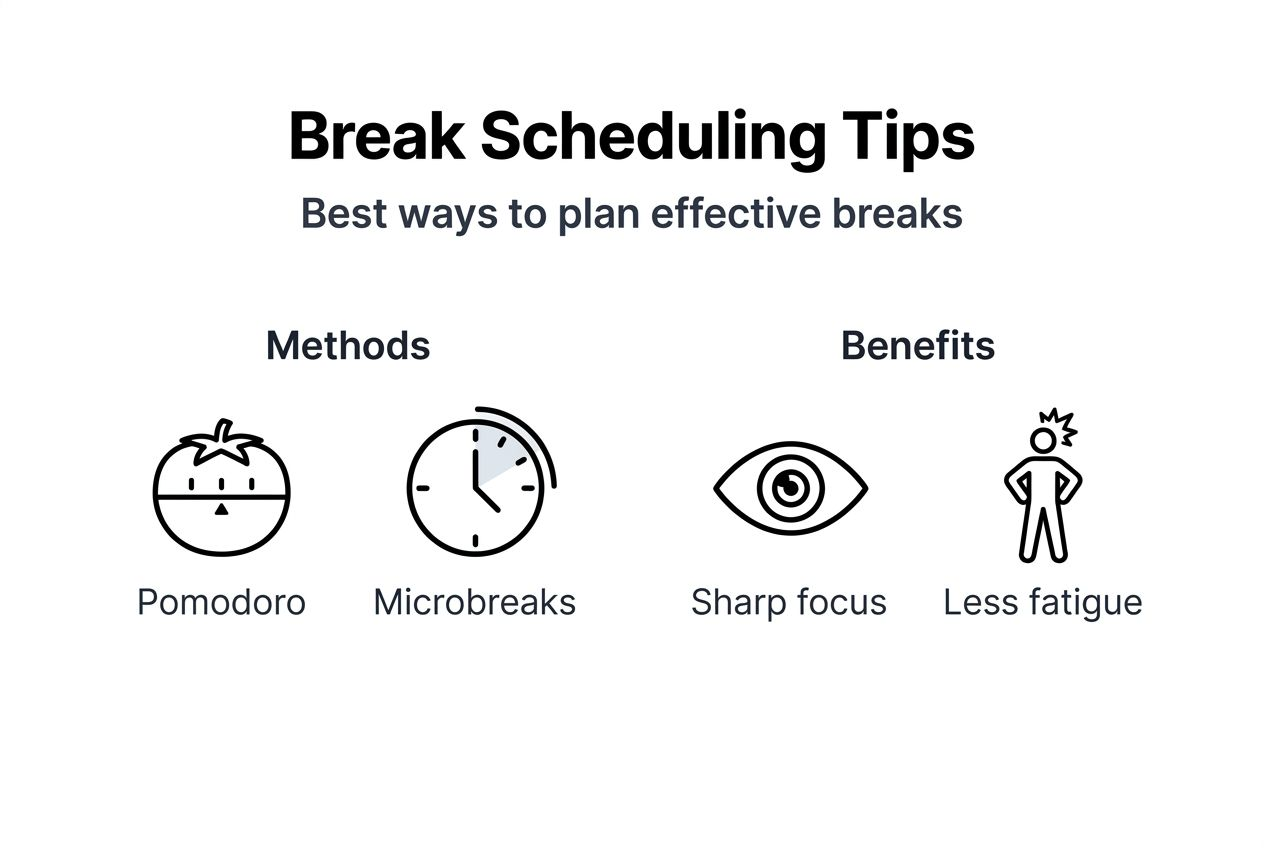
Personalization drives long-term adherence. Experiment with different intervals to discover what matches your energy patterns. Some people thrive with 50 minute work blocks, others prefer 35 minutes. Your ideal timing depends on task complexity and personal stamina.
Implementing structured break schedules:
- Start with Pomodoro to establish baseline habits and rhythm
- Track your energy levels across different work block lengths
- Adjust intervals based on task demands and personal performance data
- Schedule longer breaks after mentally demanding work clusters
- Build in buffer time around meetings to prevent schedule compression
| Strategy | Work Duration | Break Length | Best For |
|---|---|---|---|
| Pomodoro | 25 minutes | 5 minutes (15-20 every 4 cycles) | Maintaining consistent focus, reducing procrastination |
| Microbreaks | 25-30 minutes | 2-3 minutes | Intensive concentration tasks, preventing eye strain |
| Ultradian | 90 minutes | 15-20 minutes | Deep work requiring extended attention spans |
| Flexible blocks | 35-50 minutes | 5-10 minutes | Variable task complexity, personalized energy patterns |
Pro Tip: Use your calendar to block break times just like meetings. This prevents you from skipping breaks when your schedule gets tight and signals to others that this time is protected.
Integrating breaks with time blocking guide principles creates a comprehensive daily structure. You allocate specific time slots for both productive work and essential recovery, ensuring neither gets sacrificed.
Combining break scheduling with other productivity techniques for centurions like priority matrices and energy management multiplies effectiveness. The systems reinforce each other, creating sustainable high performance.
A solid schedule management plan template should incorporate break intervals as fundamental components, not afterthoughts. This ensures recovery time remains protected even when deadlines loom.
Common mistakes and warnings
Skipping breaks leads to increased burnout, poorer focus, and declining productivity over the day. What feels like gained time actually costs you more through reduced efficiency and increased errors. Your output per hour plummets after two straight hours without rest.
Common mistakes in break scheduling include skipping breaks, engaging in screen time during breaks, and working through fatigue leading to diminished returns. Each error compounds the others, creating a downward spiral of declining performance and mounting stress.
Using work-related activities during breaks completely defeats their purpose. Checking emails or planning next tasks keeps your prefrontal cortex engaged in executive functions. This prevents the neural recovery that makes breaks restorative in the first place.
Ignoring natural energy dips is another productivity killer. Powering through afternoon slumps with caffeine and willpower works briefly but accelerates mental fatigue. Your brain screams for rest while you demand more output, a recipe for burnout.
Rigid schedules without personal adjustment reduce compliance dramatically. If your break system feels like another obligation instead of genuine relief, you’ll abandon it quickly. Flexibility within structure keeps breaks sustainable long-term.
Critical mistakes to avoid:
- Believing longer uninterrupted work equals more productivity
- Using breaks to catch up on messages or administrative tasks
- Sitting still during breaks instead of incorporating movement
- Maintaining identical break patterns regardless of task difficulty
- Skipping breaks during crunch periods when you need them most
Pro Tip: Set a non-negotiable minimum break standard. Even on your busiest days, take at least one five-minute movement break every 90 minutes. This floor prevents complete break abandonment during stressful periods.
“The most dangerous myth is that breaks are optional luxuries. Your brain treats them as biological necessities. Skip them consistently, and you’ll pay with declining health and performance.”
Understanding time management for young professionals includes recognizing that rest is productive work. Recovery time directly enables high-quality output during active work periods.
Tools and techniques for scheduling breaks
Timers and alarms create reliable external cues for break times. Physical timers on your desk work better than phone alarms because they avoid the temptation to check notifications. The visual countdown also helps you pace work intensity as break time approaches.
Dedicated break scheduling apps automate the entire system. Apps like Focus Keeper and Be Focused implement Pomodoro intervals with customizable durations. They track completed cycles and provide statistics showing your focus patterns over time.
Data-driven feedback helps optimize your personal break schedule. Apps recording your productivity levels across different intervals reveal which timing patterns maximize your output. This empirical approach beats guessing which schedule works best.
Flexible break banks add sophisticated time management. Some systems let you save unused break minutes for longer rest periods later. This accommodates variable workflow demands without abandoning structured recovery completely.
Practical tools for break management:
- Physical Pomodoro timers for distraction-free tracking
- Forest app that gamifies focus sessions with virtual tree growth
- RescueTime for automated productivity and break pattern analysis
- Simple kitchen timers as low-tech reliable alternatives
- Calendar blocking tools to reserve break time visually
| App/Tool | Key Features | Best For |
|---|---|---|
| Focus Keeper | Pomodoro timer, statistics, customizable intervals | Students wanting simple reliable break tracking |
| Forest | Gamification, phone blocking, social features | People struggling with phone distraction during work |
| Be Focused | Task integration, break customization, reporting | Professionals managing multiple projects with varied break needs |
| Brain Focus | Flexible intervals, notification control, minimalist design | Users preferring clean interfaces without complexity |
Integrating these tools with productivity hacks for students creates a comprehensive system. The technology handles timing and tracking while you focus on actual work and recovery.
Expected outcomes and benefits
Productivity improvements from effective break scheduling range from 9% to 21% depending on implementation quality and task type. These gains come from sustained focus during work blocks rather than grinding through fatigue with diminishing returns.
Mental clarity improvements appear within days of adopting structured breaks. You’ll notice sharper thinking during afternoon sessions that previously felt sluggish. Decision quality stays high throughout your day instead of deteriorating after lunch.
Mood elevation is among the fastest benefits you’ll experience. Reduced stress hormone levels translate to better emotional regulation and increased patience. Frustration with difficult tasks decreases because your brain gets regular recovery opportunities.
Physical well-being improves gradually through regular active breaks. Reduced back pain, fewer headaches, and better posture develop over weeks of consistent movement during rest periods. These physical gains support sustained productivity long-term.
Key measurable outcomes:
- Higher task completion rates within scheduled time blocks
- Reduced error rates in detail-oriented work
- Improved sleep quality from better stress management
- Greater work satisfaction and reduced feelings of overwhelm
- Sustainable high performance without periodic crashes
Consistent scheduling with personal autonomy creates lasting lifestyle improvements. When you control break timing and activities, the system feels empowering rather than restrictive. This psychological ownership drives long-term adherence.
Understanding why manage tasks effectively includes recognizing that energy management through breaks is equally critical as time management. Both elements must work together for sustainable productivity.
A complete productivity system for students integrates break scheduling as a foundational component. Recovery periods enable all other productivity techniques to function at peak effectiveness.
Enhance your productivity with Optio Station
Optio Station provides comprehensive tools designed specifically for students and young professionals managing complex schedules and competing demands. The platform integrates task management software guide principles with time blocking features that complement effective break scheduling.
Built for Centurions who demand peak performance, Optio Station helps you manage tasks effectively while protecting essential recovery time. The Roman-themed interface makes productivity planning engaging rather than tedious.
Integrated focus timers and schedule visualization features help you keep track of tasks at work while ensuring breaks remain protected. This holistic approach prevents the common trap of sacrificing rest for short-term output gains.
FAQ
How often should I schedule breaks during study or work sessions?
Take short breaks every 25 to 30 minutes for microbreak benefits, then longer 15 to 20 minute breaks after 90 minute cycles. This dual approach maintains immediate focus while respecting ultradian rhythm recovery needs. Adjust intervals based on task intensity and personal energy patterns.
What are the best activities to do during breaks?
Physical movement like stretching or brief walks delivers the strongest recovery benefits. Avoid all screen time and work-related thinking to allow genuine mental disengagement. Natural light exposure and casual social interaction also enhance break effectiveness significantly.
Can using screens during breaks reduce their effectiveness?
Absolutely, screen use prevents the neural recovery that makes breaks restorative. Your visual cortex stays engaged, attention systems remain active, and mental fatigue persists. Physical activity and nature exposure provide far superior cognitive recovery compared to passive screen time.
How can I personalize my break schedule to fit my work style?
Track your energy levels and productivity across different interval lengths for two weeks. Notice when focus naturally wanes and when you feel most mentally sharp. Use timer apps to experiment with various work and break durations, then standardize the pattern that maximizes your sustained output.
What happens if I skip breaks or work through fatigue?
Skipping breaks increases burnout risk substantially and reduces focus quality throughout your day. Productivity per hour declines sharply after two uninterrupted hours, creating diminishing returns that waste time rather than saving it. Mental fatigue accumulates faster, leading to increased errors and poorer decision quality.
Recommended
- 7 Time Management Goals for Employees Examples to Boost Productivity – Optio Station: Best Project Management App for Prioritization
- 7 Best Time Management Goals Examples for Centurions – Optio Station: Best Project Management App for Prioritization
- 7 Essential Types of Schedules for Students and Professionals – Optio Station: Best Project Management App for Prioritization
- 7 Examples of Effective Time Management Skills for Success – Optio Station: Best Project Management App for Prioritization
- How to Avoid Jet Lag Naturally on LA Trips
