

The fastest way to improve teamwork skills is to pick one specific, observable behavior, build an if-then plan around it, and get a teammate or manager to reinforce it for several weeks. Gallup’s research links roughly 70% of team engagement variance to manager behavior, not perks or strategy decks, which is why reinforcement matters as much as the practice itself. Apps exist that can help track these habits day to day so the reinforcement actually happens. Expect weeks of repetition, not a single training session, before the behavior sticks.
TL;DR:
- Reinforcing a single observable behavior over several weeks, with manager or teammate support and tracking tools, is key to building lasting teamwork habits.
- Focus on micro-behaviors like asking clarifying questions, posting status updates, and naming owners, which directly remove common friction points in team collaboration.
- Using structured communication frameworks and clear roles documented in simple tools helps prevent misunderstandings and ambiguity without adding unnecessary complexity.
- Manager involvement and regular reinforcement are more effective than one-off workshops in embedding teamwork skills over time.
- Habit formation requires consistent practice over six to eight weeks, with specific feedback, tracked actions, and integration into existing routines for lasting change.
Table of Contents
- Which teamwork behaviors should you practice first?
- How do you communicate better with your team?
- How do you make roles and responsibilities clear?
- How long does it take to build real teamwork habits?
- How do you handle conflict without damaging trust?
- What’s the right way to pick and use collaboration tools?
- What Optiostation sees in teams that actually improve
- Why practice beats a one-off workshop
- Turn these habits into something your team can actually see
- Sources
- FAQ
Which teamwork behaviors should you practice first?
Skip the long list of vague advice like “communicate better” or “be a team player.” Those phrases don’t tell you what to do on Tuesday morning. Instead, pick one narrow, visible behavior you can repeat until it becomes automatic. Below are behaviors worth practicing, ranked roughly by how much friction they remove for the least effort.
- Ask one clarifying question before disagreeing. Misunderstandings, not actual disagreements, cause most team friction. Before pushing back on an idea, ask “What am I missing here?” A student working on a group project might ask a teammate why they chose a particular source before dismissing it.
- Post a two-line status update every Wednesday. Silence reads as inaction even when work is happening. A short note like “Draft done, waiting on feedback from Sam” keeps everyone oriented without a meeting.
- Name the next owner out loud before ending a meeting. Tasks die in the gap between “we agreed” and “who’s doing it.” Close every meeting with “So, who’s picking this up?”
- Restate the decision in your own words before moving on. This catches misalignment before it costs anyone time. Try “So we’re going with option B, and I’ll send the summary by Friday.”
- Give one specific piece of feedback instead of a general reaction. “The intro is strong, but the data section needs a source” beats “looks good.” Coursera’s guidance on teamwork skills points to focused feedback as one of the most practical levers for improving how teams work together.
- Flag a blocker within 24 hours instead of sitting on it. Waiting to see if a problem resolves itself usually just delays the moment someone else finds out too late.
- Acknowledge a teammate’s point before adding your own. A quick “Good point, and I’d add…” signals you’re listening, not just waiting to talk.
- Show up two minutes early to virtual meetings. It sounds small, but chronic lateness quietly signals that other people’s time matters less than yours.
- Ask “What does done look like?” before starting shared work. Half of team rework comes from two people picturing a different finish line.
- Thank a specific action, not a general effort. “Thanks for catching that error before submission” lands differently than “great job, team.”
Pick one behavior. Write it as an if-then plan: “If it’s Wednesday afternoon, then I post my status update before I log off.” Track it for three to four weeks before adding a second behavior. Piling on five new habits at once is how most self-improvement plans quietly die by week two.
Pro Tip: Attach your chosen behavior to an existing routine you never skip, like opening your laptop each morning or closing out a class. Habits stick faster when they ride on something you already do automatically.
For more structured behaviors organized by school and work context, Optiostation’s guide on boosting group results through team collaboration breaks down additional micro-routines by setting.
How do you communicate better with your team?
Most “communication problems” are actually listening problems wearing a disguise. Before working on what you say, fix how you listen.
- Practice reflective restatement. Repeat back what you heard in your own words before responding: “So you’re saying the deadline moved because the client changed scope?” This single habit catches more misunderstandings than any meeting agenda template.
- Check for understanding out loud. End key exchanges with “Does that match what you were expecting?” rather than assuming silence means agreement.
- Enforce a no-multitasking norm in meetings. Split attention is the quiet killer of team meetings. Closed laptops, phones away, one conversation at a time.
- Use the Three Levels of Speaking Up. Esther Choy’s framework, described in her Forbes piece on teamwork communication, breaks contribution into three manageable steps instead of one intimidating leap. Level one is a clarifying question: “Can you walk me through how we got to this number?” Level two is naming a gap: “I don’t think we’ve accounted for the holiday schedule.” Level three is respectfully challenging an assumption: “I hear the logic, but I think we’re assuming the client agrees with this timeline, and I’m not sure they do.”
- Match the channel to the message. Atlassian’s guidance on workplace communication recommends deciding upfront which channel handles what: quick logistics go in chat, decisions go in a shared doc, anything emotionally loaded or complex gets a real conversation, not a message thread.
The Three Levels framework works because it lowers the barrier to speaking up. Most people don’t stay quiet because they have nothing to say. They stay quiet because they don’t know which of the three moves is appropriate for the moment, so they say nothing at all. Giving people a menu of scripted openers removes that hesitation.
Documentation follows the same logic as channel choice. Use messages for anything time-sensitive and short-lived. Use a shared doc for anything someone will need to reference again, like a decision or a spec. Save video or a live call for anything with real disagreement underneath it, since tone gets lost fast in text.
How do you make roles and responsibilities clear?
Ambiguity about who owns what is one of the most common, and most fixable, sources of team dysfunction. A one-page team charter fixes most of it. It doesn’t need to be formal. It needs four things: the team’s actual goal in one sentence, who owns which piece of work, how decisions get made when people disagree, and what “done” means for the current project.
Write it in language people will actually reread, not corporate boilerplate. “Maya owns the design, final say goes to her unless the client pushes back” is more useful than “Maya is responsible for design deliverables.”
Three artifacts make ownership visible without extra meetings:
- A task board with named owners and due dates. Not just tasks. Names attached to tasks. A board with no owner column is just a wish list.
- A decision log. One line per decision: what was decided, who decided it, and when. This kills the “wait, who agreed to this?” argument before it starts.
- A shared doc for standing agreements. Meeting cadence, response-time expectations, and the current definition of done for the project all live in one place instead of scattered across old messages.
When you assign a task, say the deadline and the definition of done in the same sentence: “Can you own the client email by Thursday? Done means it’s reviewed by Priya before it goes out.” When someone finishes something, have them confirm it explicitly rather than letting it fade into silence: “Client email sent and approved.” That confirmation habit alone eliminates a surprising amount of quiet duplicate work.
How long does it take to build real teamwork habits?
Longer than most people expect, and that’s the point. Vague goals like “be a better communicator” rarely survive contact with a busy week. Narrow behaviors tied to if-then plans survive because they remove the decision-making step. You’re not deciding whether to speak up in the moment. You already decided last week, when you wrote the plan.
Background research on implementation intentions supports this: pairing a specific behavior with a specific trigger produces meaningfully higher follow-through than setting a goal alone, because the decision gets made in advance instead of under pressure. Practical team-learning approaches echo this too, showing that spaced practice with regular reinforcement over months beats a single workshop for producing skills that actually transfer to real work.
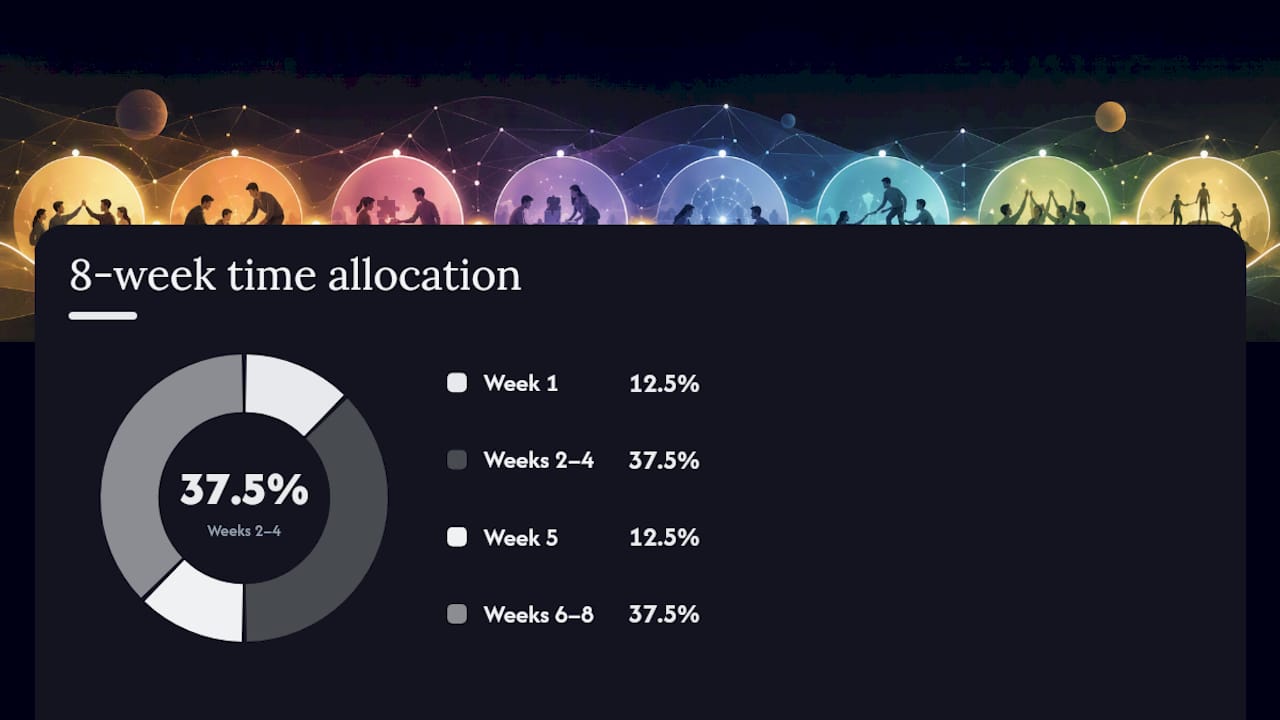
Here’s a schedule that fits around an existing job or class load:
- Week 1: Choose one behavior and write the if-then plan. Tell one teammate or your manager what you’re working on.
- Weeks 2 to 4: Practice the behavior in real situations, not drills. Track frequency, not feelings, by tallying how many times you actually did it versus how many times the trigger occurred.
- Week 5: Ask for specific feedback: “Did you notice me asking clarifying questions this month? What would make it more useful?”
- Weeks 6 to 8: Adjust based on that feedback, then add a second behavior once the first feels automatic.
The Gallup finding on manager influence over engagement matters here because supervisor attention is often the difference between a habit that sticks and one that quietly disappears by week three. If your manager knows what you’re practicing, ask them to notice it out loud once. That small acknowledgment does more for follow-through than any tracking spreadsheet.
Measure the behavior itself, not a vague sense of “teamwork is going better.” Count how many status updates you posted, how many clarifying questions you asked, how many times you named the next owner before ending a meeting. Specific counts hold up under scrutiny. Feelings don’t.
How do you handle conflict without damaging trust?
Most workplace conflict scripts fail because they either avoid the issue entirely or turn it into a personal accusation. A better script has three parts: state the fact, name the effect on the work, and propose a next step. “The report came in two days late, which pushed the client review into the weekend. Can we agree on a buffer day for the next deadline?” That structure keeps the conversation about the work, not the person.
Psychological safety, the sense that speaking up won’t cost you socially, is what makes people willing to use that script in the first place. Stanford IRISS research on cooperation versus competition found that cooperative norms reduce harmful competitive behavior and increase collaboration, while environments that reward individual wins over shared ones quietly erode people’s willingness to raise concerns.
A few rituals build that safety without requiring a culture overhaul:
- Run a short retrospective after every project, not just the big ones. What worked, what didn’t, one change for next time.
- Have the leader admit a mistake first. A leader saying “I should have flagged the budget issue sooner” does more to open up a team than any trust-building exercise.
- Add an “ask one question” round to meetings. Going around the table so everyone contributes at least one question normalizes speaking up for people who wouldn’t volunteer otherwise.
Know when to loop in a manager. If the same conflict repeats after two direct conversations, if someone’s tone crosses from disagreement into disrespect, or if the disagreement is blocking a deadline, escalate it rather than letting it fester. Related work on psychological safety in Agile teams makes a similar case: safety isn’t a soft nicety layered on top of process, it’s the mechanism that makes fast, iterative work possible at all.
Pro Tip: If a conflict conversation feels tense before it starts, open with the fact, not the feeling. “The report was late” lands better than “I was frustrated when the report was late,” even though both are true.
What’s the right way to pick and use collaboration tools?
Tool choice matters less than most people assume. Norms matter more. Atlassian’s guidance on communication breakdowns makes the point clearly: a team with three well-understood tools and clear rules for each beats a team with ten tools and no rules, every time.
Judge any tool on three things: can people find what they need without asking, is ownership visible on every task, and does it add signal or just noise. If a tool fails two of the three, it’s probably making things worse.
A minimal setup that covers most teams:
- One central decision doc that holds standing agreements and major calls, so nobody has to scroll through old messages to find out what was decided.
- One task board with owners and due dates, visible to the whole team, updated in real time rather than batched at the end of the week.
- One meeting notes template used every time, so notes are searchable and consistent instead of scattered across different formats.
For remote or hybrid teams, add three habits: post async updates instead of defaulting to a meeting, schedule across time zones with a shared rotating time slot rather than always favoring one region, and cap recurring meetings at the minimum needed to unblock real work. Optiostation’s breakdown of how collaboration tools power modern teamwork covers how to set up that kind of central workspace without letting it turn into another source of noise.
What Optiostation sees in teams that actually improve
Watching how students and young professionals build teamwork skills points to one consistent pattern: the people who improve fastest aren’t the ones who read the most advice. They’re the ones who make one commitment visible and let someone else see whether they kept it.
Task and time tracking apps exist to fill that gap. A behavior like “post a Wednesday status update” only survives if there’s somewhere to put it and someone likely to notice if it’s missing. Color-coded tracking and shared visibility turn a private intention into something a teammate or manager can actually reinforce, which lines up with the manager-influence pattern Gallup documented across its engagement research.
A workflow that tends to hold up over a full semester or quarter: schedule the practice window at the start of each week rather than hoping you remember, log the specific behavior each time it happens instead of summarizing at the end, and send a two-line report to whoever is reinforcing it, whether that’s a manager, a professor, or a teammate. The report doesn’t need to be polished. It needs to exist consistently.
…
Why practice beats a one-off workshop
Workshops feel productive because they’re intense and finite. You show up, you learn something, you leave with a worksheet. But teamwork skills aren’t knowledge problems. They’re habit problems, and habits don’t form in an afternoon.
The manager-engagement research from Gallup keeps surfacing in this piece for a reason: leaders shape the daily experience of a team far more than any training session does. A behavior practiced once in a workshop and never mentioned again fades within days. A behavior practiced weekly, with someone noticing whether it happened, becomes part of how a person works. That difference in structure, not motivation or talent, explains most of the gap between people who “know” good teamwork practices and people who actually do them.
— Optiostation
Turn these habits into something your team can actually see
There are other ways to track this: a shared spreadsheet, sticky notes on a whiteboard, a group chat everyone eventually mutes. They work until the novelty wears off, which is usually within a couple of weeks. Optiostation was built by an indie team that kept hearing the same complaint from students and young professionals: tracking a habit is easy for three days and then quietly disappears.
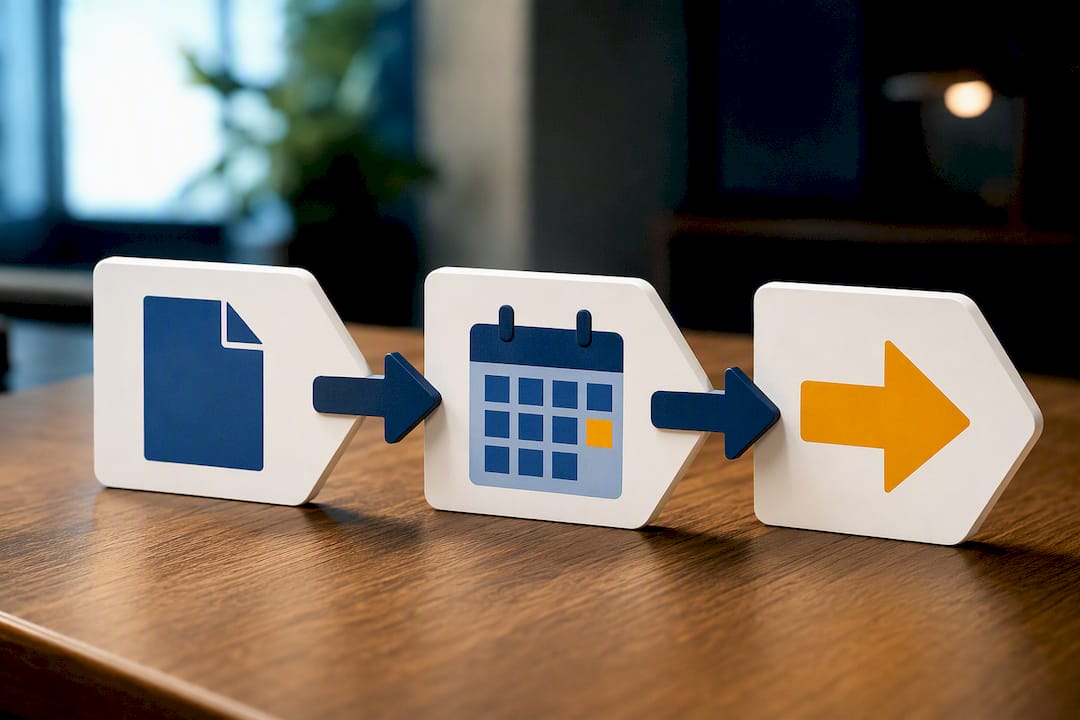
Some apps keep behaviors visible without turning tracking into its own chore. Color-coded task categories separate school, work, and personal commitments so a teammate can glance at a board and know exactly what “done” looks like for a part of a shared project. Smart reminders nudge users toward the if-then plan set instead of relying on memory, and Google Calendar integration keeps deadlines from living in two places at once.
None of this requires the app. The behaviors in this article work with a notebook and a reliable teammate. But if you want a lighter way to keep commitments visible and reinforced, start with Optiostation’s guide on how to improve teamwork for success in college and work and set up your first tracked behavior this week.
Sources
- Forbes: The best teamwork tips to improve communication immediately — Esther K. Choy
- Coursera: Teamwork skills — how to improve yours
- IRISS / Stanford: Competition or cooperation — fostering a collaborative workplace
FAQ
What’s the single best way to improve teamwork skills?
Pick one narrow, observable behavior, pair it with an if-then plan, and get a teammate or manager to notice whether you’re doing it. Vague goals like “communicate better” rarely survive a busy week.
How long does it take to build a new teamwork habit?
Plan on six to eight weeks of consistent practice with regular feedback checkpoints, not a single session. Spaced practice with reinforcement produces skills that actually transfer to real work.
What is the Three Levels of Speaking Up framework?
It’s a communication model from Esther Choy that breaks speaking up into three steps: asking a clarifying question, naming missing information, and respectfully challenging an assumption.
Why does manager involvement matter for teamwork skills?
Gallup’s research attributes roughly 70% of team engagement variance to manager behavior, which means a manager who notices and reinforces a new habit dramatically improves the odds it sticks.
Can an app like Optiostation actually help with teamwork skills?
Optiostation can make commitments and deadlines visible to teammates, which supports the reinforcement that habits need to stick, though the underlying behaviors work with or without any app.
