
TL;DR:
- Effective teamwork significantly boosts academic performance and prepares students for the professional world.
- Small, well-structured teams with clear roles and open communication outperform larger, unorganized groups.
- Psychological safety and trust are crucial for team success, beyond just coordination and tools.
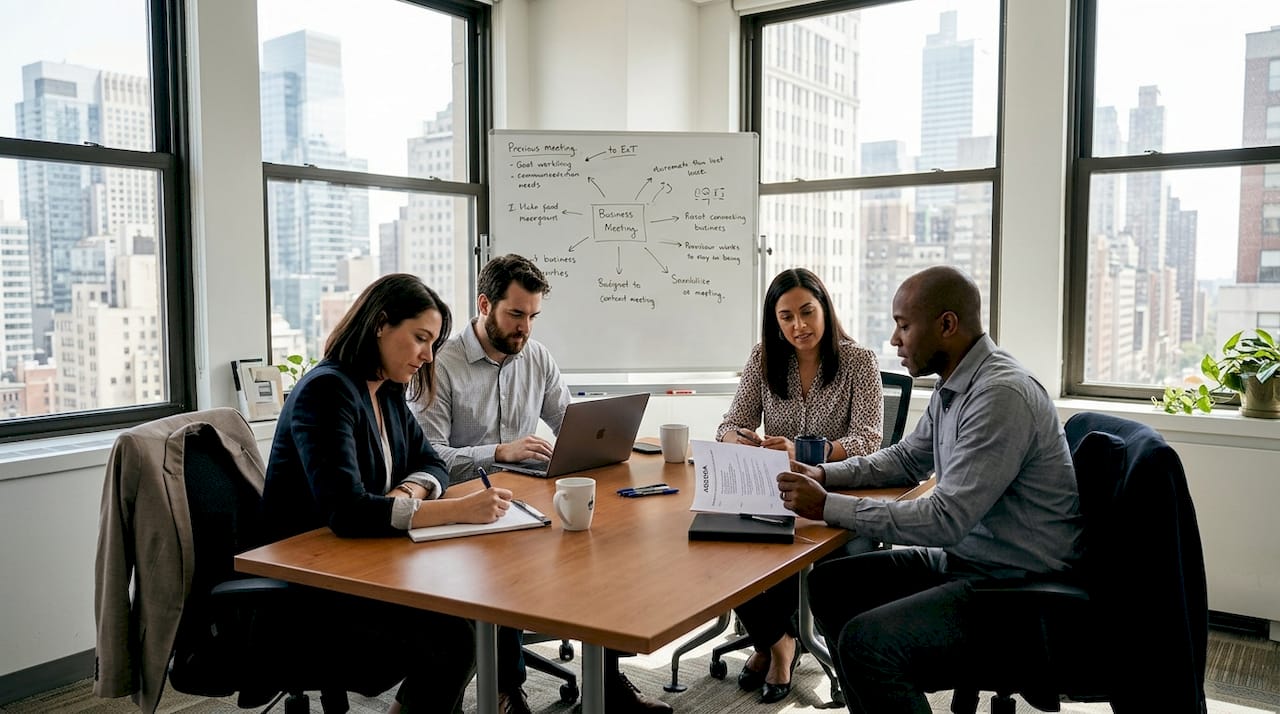
Teams that collaborate well are five times more likely to be high-performing than those that don’t. Yet most students and young professionals still bet everything on solo effort, grinding through projects alone and wondering why results fall flat. The truth is that collaboration is not a soft skill you pick up by accident. It is a set of learnable behaviors that directly shape your grades, your career trajectory, and how much you actually enjoy the work. This guide breaks down why teamwork matters, what makes it work, where it breaks down, and how to use it as a real competitive advantage.
Table of Contents
- Why teamwork matters for academic and professional success
- The mechanics of effective teamwork: What makes teams succeed?
- Common teamwork pitfalls and how to overcome them
- The evolving role of technology in teamwork
- Our take: Why most teamwork advice misses the point
- Take your teamwork further with the right tools
- Frequently asked questions
Key Takeaways
| Point | Details |
|---|---|
| Peer support drives results | Smaller, collaborative teams boost engagement and academic outcomes more than working alone. |
| Soft skills matter | Teamwork directly improves communication, leadership, and problem-solving, which top employers seek. |
| Structure teams for success | Managing group size, clear roles, and psychological safety helps teams avoid common pitfalls. |
| Digital tools help—but have limits | Collaboration technology enhances teamwork but cannot fully replace in-person interaction for all students. |
Why teamwork matters for academic and professional success
Let’s start with the numbers. Collaborative learning significantly boosts college students’ academic engagement and performance. That is not a vague claim. Research consistently shows that students who work in structured teams report higher motivation, stronger peer support networks, and better retention of course material compared to those who work alone.
On the career side, the stakes are just as high. 75% of employers rate teamwork as one of the top skills they look for when hiring. That means the ability to collaborate is not just a classroom exercise. It is a direct signal to future employers that you can operate in real-world environments.
“Teamwork is not a bonus skill. It is the baseline expectation in almost every professional setting you will enter after graduation.”
The benefits of teamwork go well beyond grades. When you work in groups, you build communication habits, practice giving and receiving feedback, and develop leadership instincts that no solo assignment can teach. You also close achievement gaps. Students who might struggle independently often thrive when they have peers to lean on and learn from.
Here is a quick comparison of what you gain from each type of work:
- Solo assignments: Deep focus, individual accountability, self-paced learning
- Team projects: Shared problem-solving, peer accountability, real-time feedback, exposure to different perspectives
- Team projects (additional): Communication skill-building, leadership practice, and higher engagement overall
The teamwork advantages are clearest when teams are structured with intention. Random groupings with no shared goals tend to underperform. But when teams have clear roles, mutual accountability, and a reason to care about the outcome together, the results are measurably better. Understanding this distinction is the first step toward using teamwork as a real tool rather than just a required exercise.
The mechanics of effective teamwork: What makes teams succeed?
Knowing that teamwork matters is one thing. Knowing what makes it work is where most guides fall short. Research points to a few specific factors that separate high-performing teams from frustrating ones.
First, group size matters more than most people realize. Smaller group sizes consistently produce better collaborative outcomes. Large groups dilute accountability and make it harder for quieter members to contribute. A team of three to five people tends to hit the sweet spot between diverse input and manageable coordination.
Second, real-time interaction changes the dynamic. In-person teamwork is especially advantageous for first-generation college students, who benefit most from synchronous, face-to-face collaboration. The energy, immediate feedback, and social cues of being in the same room create conditions that async tools simply cannot replicate.
Here is a summary of key research findings on what drives collaborative success:
| Factor | Impact on outcomes | Notes |
|---|---|---|
| Group size (3 to 5) | High | Smaller groups improve accountability |
| Peer support | High | Acts as a direct mediator of performance |
| In-person interaction | Moderate to high | Especially benefits first-generation students |
| Shared goals | High | Aligns effort and reduces conflict |
| Individual incentives | Moderate | Reduces social loafing when present |
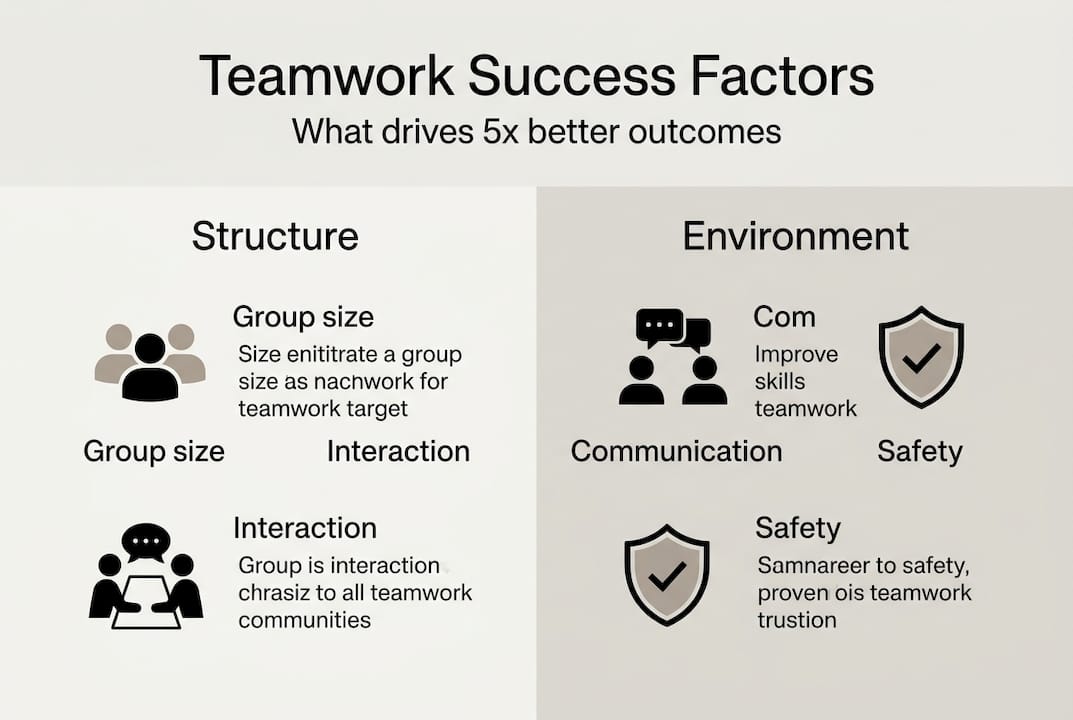
Beyond structure, the essential elements of a well-functioning team include open communication, psychological safety (meaning everyone feels safe to speak up without fear of judgment), aligned incentives, and a shared sense of purpose.
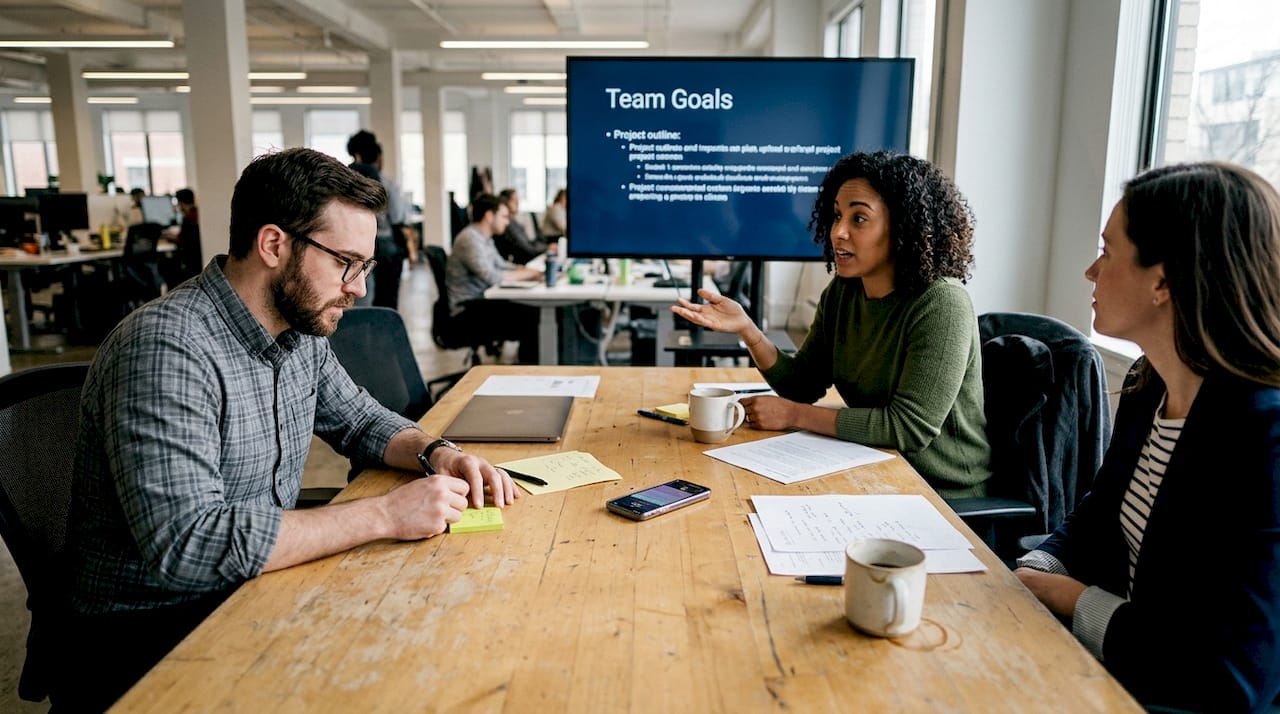
Pro Tip: When forming a study group or project team, assign roles in the first meeting. Even informal titles like “note-taker” or “deadline tracker” create ownership and reduce the confusion that kills momentum early on.
Gen Z students and young professionals tend to prioritize soft skills and peer learning over hierarchical instruction. That is actually a strength. Leaning into group project examples that mirror real-world team structures helps you build habits that transfer directly into your career. The goal is not just to finish the project. It is to practice the kind of collaboration that makes you someone others want to work with.
- Define roles clearly before the work begins
- Set a communication norm (when and how you will check in)
- Agree on a decision-making process for disagreements
- Schedule at least one in-person or live session per project phase
- Review what worked and what did not after each project
Common teamwork pitfalls and how to overcome them
Even well-intentioned teams fall apart. The reasons are usually predictable, which means they are also preventable. Here are the traps that catch most students and young professionals off guard.
Social loafing is the most common. It happens when one or two people carry the team while others coast. Research shows that “Inefficient Socializers” form the largest group profile in collaborative settings, with high emotional support but low actual engagement. They feel like good teammates but do not pull their weight on deliverables.
Groupthink is the quieter killer. Teams that avoid conflict often end up agreeing on mediocre ideas because no one wants to rock the boat. The result is a project that feels smooth but produces underwhelming work.
Then there is pseudo-collaboration, where teams hold lots of meetings, share updates constantly, and feel busy without making real progress. 97% of people say collaboration is critical, yet 50% still prefer to do their best work alone. That tension is real, and it shows up as teams that talk a lot but execute poorly.
| Pitfall | Best practice |
|---|---|
| Social loafing | Assign individual deliverables with deadlines |
| Groupthink | Designate a “devil’s advocate” for key decisions |
| Pseudo-collaboration | Limit meetings; track output, not activity |
| Role confusion | Define responsibilities in writing at kickoff |
| Conflict avoidance | Build in structured feedback rounds |
Pro Tip: After each major milestone, do a five-minute “plus/delta” check-in. Each person names one thing that worked (plus) and one thing to change (delta). It normalizes feedback and catches problems before they become resentments.
Here is how to address the most common pitfalls directly:
- Set individual roles and tie each person to a specific output
- Use a shared tracker so everyone can see who is doing what
- Schedule brief, focused check-ins instead of long open-ended meetings
- Create space for dissenting opinions during planning
- Address issues early and directly rather than letting them fester
Learning to navigate group project success pitfalls is a skill in itself. The teams that learn to manage team tasks with clarity and honesty consistently outperform those that prioritize harmony over accountability.
The evolving role of technology in teamwork
Digital tools have changed how teams work, and the data is clear: technology helps. A meta-analysis on tech-supported collaboration found a moderate to large effect on learning outcomes, with an effect size of approximately 0.7 for collaboration quality and 0.8 for academic achievement. Those are significant numbers.
Stat callout: Technology-supported teamwork produces an achievement effect size of 0.8, placing it among the most impactful interventions in educational research.
Here is what that looks like in practice:
- Project management apps (like Optio) help teams track tasks, deadlines, and responsibilities in one place
- Instant messaging platforms reduce the lag of email and keep communication fast and contextual
- Async document tools let teams contribute on their own schedules without losing version control
- Shared calendars eliminate the “when are we meeting?” back-and-forth that wastes time
But technology has real limits. Asynchronous and remote teamwork limits certain benefits, especially for first-generation college students who gain the most from live, in-person interaction. A Slack thread cannot replicate the energy of a whiteboard session.
The smartest approach is to use collaboration tools for coordination and documentation, while protecting time for real-time interaction when the work demands it. Use async tools to handle logistics. Use live sessions to solve problems, make decisions, and build the trust that holds teams together.
For a deeper look at how to structure your team’s digital workflow, the team collaboration guide and collaboration best practices are worth bookmarking.
Our take: Why most teamwork advice misses the point
Most guides focus on process: assign roles, set deadlines, use the right tools. That advice is not wrong. But it skips the thing that actually determines whether a team thrives or quietly falls apart: psychological safety.
When people do not feel safe to share half-formed ideas, admit confusion, or push back on a bad plan, the team performs below its potential no matter how good the project management system is. Psychological safety and aligned incentives are the real drivers of team results, not just coordination mechanics.
Our experience at Optio is that teams only consistently perform when two things are true: everyone understands what they personally gain from the group succeeding, and everyone believes their voice will be heard without penalty. When those conditions are missing, even the most organized teams stall.
The uncomfortable truth is that most teamwork problems are not logistical. They are relational. Before you optimize your workflow, check your team accountability strategies. Ask whether your team has the trust and the incentive alignment to actually use those workflows. Fix the foundation first.
Take your teamwork further with the right tools
You now have a clear picture of what makes collaboration work and what gets in the way. The next step is putting it into practice with tools and resources built for exactly your situation as a student or young professional.
Optio is designed to be your second-in-command, helping you and your team manage tasks, track time, and stay aligned without the chaos. Whether you are running a group project or coordinating a work team, the team collaboration guide gives you a practical starting point. For habits that stick, explore teamwork best practices and the top time management apps that complement strong collaboration. Your team’s best work starts with the right foundation.
Frequently asked questions
How does teamwork improve academic performance?
Collaborative learning boosts peer support and engagement, which directly raises academic performance, particularly in smaller, well-structured groups where accountability is shared.
What soft skills can you develop through group projects?
Group projects build communication, leadership, and problem-solving skills. These are highly valued by employers and difficult to develop through solo work alone.
Are digital tools as effective as in-person teamwork?
Digital tools improve coordination and outcomes, but in-person interaction remains essential for maximum benefit, especially for first-generation college students who gain the most from real-time collaboration.
What are common teamwork challenges and how can you fix them?
Social loafing, groupthink, and role confusion are the most common issues. You can address them by setting clear roles, giving direct feedback, and aligning each person’s incentives with the team’s shared goal.
Why is psychological safety important in teams?
Psychological safety lets team members share ideas and take risks freely. Aligned incentives and safety together are among the strongest predictors of real team performance.
Recommended
- How to Improve Teamwork for Success in College and Work – Optio Station: Best Project Management App for Prioritization
- Benefits of Teamwork – Keys for Global Student Success – Optio Station: Best Project Management App for Prioritization
- How to Manage Team Tasks Effectively for Success – Optio Station: Best Project Management App for Prioritization
- Teamwork Advantages: Boosting Collaboration and Success – Optio Station: Best Project Management App for Prioritization
- Team Building za Podjetja – Golden Gloves Gym
