
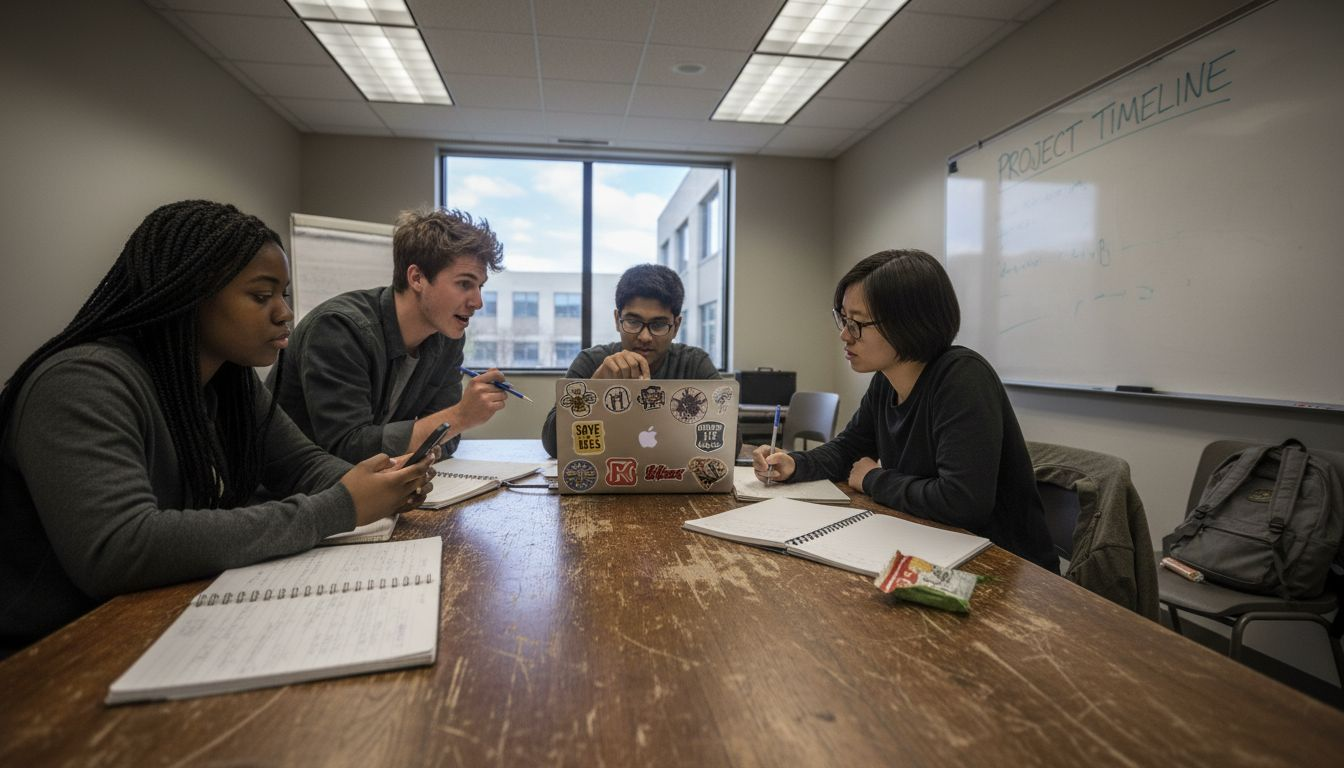
Struggling to balance deadlines and group dynamics during European college projects can feel overwhelming. Multidisciplinary teamwork is not just about dividing tasks but about developing transversal competencies such as communication, leadership, and critical thinking, preparing you for real-world careers. By understanding common myths around group projects and using proven strategies for clear roles, resource allocation, and conflict management, you can boost productivity and reduce stress while strengthening skills that matter far beyond university.
Table of Contents
- Group Projects Defined And Common Myths
- Types Of Group Projects In College
- Effective Roles And Team Structures
- Digital Tools For Collaboration And Management
- Essential Strategies For Successful Teamwork
- Common Pitfalls And How To Avoid Them
Key Takeaways
| Point | Details |
|---|---|
| Embrace Distributed Leadership | Successful group projects utilize distributed leadership, allowing members to take initiative based on their strengths rather than relying on a single leader. |
| Establish Clear Roles and Responsibilities | Define explicit roles using tools like a RACI matrix to prevent confusion and ensure accountability among team members. |
| Utilize Digital Collaboration Tools | Leverage task management and communication platforms to streamline coordination and reduce information overload within the team. |
| Address Conflict Proactively | Foster a culture of open dialogue to address conflicts immediately and encourage psychological safety for effective problem-solving. |
Group Projects Defined and Common Myths
A group project is far more than just splitting work among teammates and calling it a day. These are collaborative assignments specifically designed to develop transversal competencies like communication, problem-solving, leadership, and teamwork. When done well, they mirror real-world team environments where you’ll eventually work. But here’s the catch: despite their educational value, group projects carry a reputation problem among students—and much of that stems from persistent myths that simply don’t hold up under scrutiny.
Let’s address the elephant in the room. Many students believe that common myths about group work ruin the entire experience. The first major myth? That you need one clear leader making all decisions. Reality check: effective groups operate with distributed leadership, where different members step up based on their strengths and the task at hand. Another widespread belief is that meetings are pointless or that disagreement signals failure. Wrong on both counts. Face-to-face or video meetings create accountability and psychological safety, while healthy conflict actually drives better solutions. One person staying silent or not pulling their weight gets blamed on that individual’s laziness—but the actual problem usually lies in how the group is structured and whether everyone feels genuinely included.
What separates successful group projects from disasters is understanding what actually works. Research on group project development points to clear patterns: groups that succeed establish transparent project scopes, prioritize tasks effectively, hold structured kickoff meetings, and actively manage conflict instead of pretending it doesn’t exist. They also ensure that resources are allocated fairly and that psychological safety exists so people can voice concerns without fear. The workload isn’t distributed randomly; it’s aligned with deadlines and individual capabilities. When groups skip these steps and just wing it, fairness becomes murky and resentment builds.
Understanding what group projects actually are and dismantling the myths surrounding them transforms how you approach them. You stop seeing them as obstacles and start recognizing them as opportunities to build skills you’ll use for the next decade of your career.
Pro tip: Before your next group project starts, propose a 30-minute kickoff meeting where everyone explicitly discusses how decisions get made, what happens if someone disagrees, and how conflicts will be resolved—this single conversation eliminates most future friction.
Types of Group Projects in College
College group projects aren’t all the same. Depending on your course and instructor, you might encounter vastly different formats, each designed to develop different competencies. Understanding what type of project you’re facing helps you prepare your team appropriately and allocate effort where it matters most. The main distinction comes down to how tasks connect and what you’re ultimately trying to accomplish together.
The most common structures fall into a few categories. Project-based learning centers on a shared goal where teammates work toward a specific deliverable—think creating a marketing campaign for a fictional startup or designing a solution to a real-world problem in your field. Collaborative writing projects require multiple people to contribute to a single document or research paper, which demands careful coordination to maintain voice and flow. Problem-based learning asks your group to research, analyze, and solve a complex case or scenario without a predetermined answer, which mirrors how professionals actually work. Then there’s interdisciplinary problem-solving, where students from different majors approach one challenge from multiple angles. For example, a sustainability project might pull together engineering, business, and environmental science students. Types of collaborative learning experiences vary in how much independence each member has, but they all emphasize developing leadership, communication, and critical thinking skills alongside your subject matter knowledge.
Each type has different implications for how you structure your team. Various college project formats require different levels of task interdependence—meaning how much your work actually depends on what your teammates are doing. In a collaborative writing project, everyone’s interconnected. In a project-based learning scenario where you divide tasks cleanly, you might work more independently. The goal orientation matters too. Some projects measure success by the final product, others by the process and what you learned. This distinction changes everything about how you manage timelines, feedback, and revisions. The best teams recognize their project type early and design their workflow accordingly, rather than assuming every group project works the same way.
Here’s a comparison of common college group project types and their teamwork requirements:
| Project Type | Task Interdependence | Main Skill Developed | Success Criteria |
|---|---|---|---|
| Project-based learning | Low to medium | Problem-solving | Quality of deliverable |
| Collaborative writing | High | Coordination | Unified document output |
| Problem-based learning | Medium to high | Analytical thinking | Solution process |
| Interdisciplinary solving | High | Cross-field communication | Multi-perspective report |
Pro tip: During your first meeting, ask your instructor to clarify which type of project you’re doing and what the assessment criteria are—this single clarification prevents weeks of misalignment and wasted effort.
Effective Roles and Team Structures
You can have brilliant people and a solid project, but without clear roles and structure, chaos erupts. This is where most groups stumble. Someone ends up doing double work, someone else disappears entirely, and nobody knows who decides what. The solution isn’t complicated, but it does require intentionality. Your team needs defined roles that match individual strengths, clear responsibilities tied to specific tasks, and a structure that acknowledges how everyone’s work connects.
Start by mapping out what your project actually requires. Do you need someone coordinating deadlines? Someone synthesizing information from multiple sources? A person managing communication with your instructor or external stakeholders? A quality check person? Rather than defaulting to the cliched “project manager plus everyone else,” think about what competencies and behavioral traits your teammates bring. One person might thrive at synthesizing complex information while another excels at pushing the group to meet deadlines. A third might naturally build consensus when disagreements arise. Balanced team composition with clear responsibilities actually drives better outcomes because people play to their strengths rather than resenting forced roles that don’t fit them. This isn’t about pigeonholing anyone. It’s about recognizing that most people perform better and feel more engaged when their work aligns with what they’re actually good at.

Once you’ve identified roles, make them explicit. Use a simple tool like a RACI matrix, which stands for Responsible, Accountable, Consulted, and Informed. For each major task, identify who does the work, who approves it, who provides input, and who just needs to know the outcome. This removes ambiguity that kills team dynamics. Structured clarity through defined accountabilities means fewer arguments about who was supposed to handle something and less wasted effort on duplicate work. You can also create a quick team charter at the start that documents your goals, major deliverables, and how decisions get made. This becomes your reference point when conflicts arise or someone challenges the structure.
The final piece is recognizing that team structure isn’t fixed. As your project progresses, you’ll learn what’s working and what isn’t. If someone’s struggling in their assigned role, swap responsibilities. If a role turns out to be unnecessary, eliminate it. The teams that adapt throughout the project perform significantly better than those that stick rigidly to initial decisions even when reality proves them wrong.
Pro tip: Create a visible role chart showing who owns what and share it in your group chat or shared document so everyone can reference it when confusion hits—this single artifact prevents most role-related conflicts.
Digital Tools for Collaboration and Management
Trying to manage a group project through email threads and scattered messages is like trying to coordinate a military campaign with carrier pigeons. You’ll lose information, duplicate work, miss deadlines, and watch your sanity crumble. The good news is that modern digital tools eliminate most of these problems if you choose the right ones and actually use them consistently. The key is picking tools that fit your specific workflow rather than adopting everything available.
Start with task and workflow management. Tools like Asana, Trello, or Monday.com give your team a single source of truth for what needs doing, who owns it, and when it’s due. Instead of relying on someone’s memory or constant Slack reminders, tasks live in one organized space where deadlines are visible and dependencies are clear. For communication, you need something faster than email but more organized than a group chat. Slack or Microsoft Teams create searchable conversation threads tied to projects, making it easy to find decisions you made weeks ago without scrolling through 300 messages. Document collaboration requires real-time editing capabilities, which Google Workspace or Microsoft 365 provide brilliantly. Multiple people can edit a document simultaneously, see changes instantly, and avoid the nightmare of version control where someone’s working on an outdated file.
Digital collaboration platforms supporting task management and communication have transformed how teams work together across distances. Beyond the general purpose tools, specialized platforms exist for specific needs. If your project involves heavy research, tools like Zotero help manage references collectively so you’re not duplicating citation work or losing sources. For literature review heavy projects, research collaboration tools with citation analytics allow teams to synthesize findings and track which sources matter most. The mistake most groups make is tool overload. You don’t need Asana and Monday.com and Trello. Pick one task manager. Pick one communication platform. Pick one document storage system. Consistency matters more than having the fanciest options available.
Here’s what actually makes the difference with tools: adoption discipline. A brilliant project management platform gathering dust helps nobody. Establish a simple rule on day one. All deadlines go in the task manager, not Slack. All project decisions get documented in your shared drive with a clear naming system. All decisions about scope or approach happen in your weekly standup meeting, documented in one searchable place. When your team actually uses the tools consistently, coordination overhead drops dramatically and you recover hours per week that would’ve been wasted on clarifications and corrections.
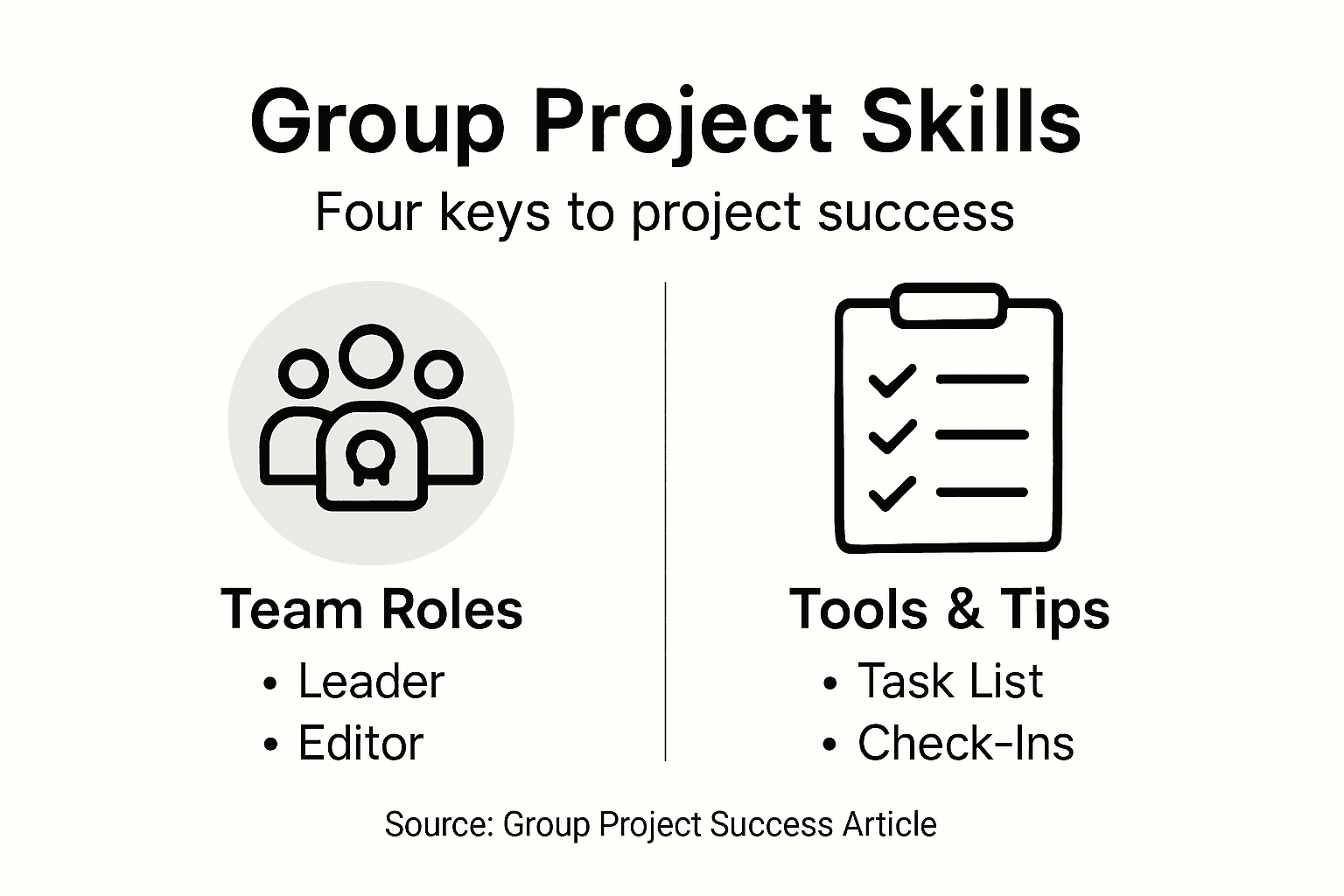
Pro tip: Start with three tools maximum: one for tasks (like Optio Station for your student team), one for communication (Slack or Discord), and one for documents (Google Drive or OneDrive). Forcing everyone onto more platforms kills adoption faster than anything else.
Essential Strategies for Successful Teamwork
Successful teamwork doesn’t happen by accident. It requires deliberate strategies that build trust, clarify expectations, and keep everyone pulling in the same direction. The groups that shine aren’t the ones with the smartest people. They’re the ones that establish clear processes early and stick to them. Start with a team charter before diving into actual work. This is a simple document that takes 30 minutes to create but saves weeks of friction. Your charter should outline your project goals, how decisions get made, what happens when someone disagrees, how often you’ll meet, and what behavior you expect from each other. Make it specific and honest. Don’t write vague statements like “we’ll communicate well.” Write “we’ll have a 45-minute standup every Tuesday at 7 PM and async updates in Slack by 5 PM the day before.” When people see the actual expectations in writing, they self-select into commitment or raise concerns early.
Beyond the charter, implement clear communication protocols. Trust and inclusivity in team collaboration require transparent channels where everyone can voice concerns without fear. Designate specific platforms for specific purposes. Status updates go in your task manager, not Slack. Complex decisions happen in synchronous meetings, documented afterward in your shared drive. Quick clarifications happen in a group chat. This prevents the chaos of important decisions getting buried in message threads. Equally important is establishing psychological safety, which means people feel comfortable admitting mistakes, asking questions, and disagreeing without retribution. The moment someone gets shut down for raising a concern, you’ve lost that person’s honest input forever.
Diverse teams with complementary skills and defined expectations consistently outperform homogeneous groups. But diversity only works when you actively manage conflict and differences. When disagreements surface, treat them as information, not threats. Ask “Why do you see it that way?” instead of defending your position. Document what you’ve learned and move forward. Create accountability without blame. If someone misses a deadline, the conversation is “What got in the way and how do we prevent it next time?” not “You didn’t pull your weight.” Finally, assign specific responsibilities using a RACI matrix or role chart so everyone knows exactly what they own. Ambiguity breeds resentment. Clarity breeds collaboration.
Pro tip: Schedule a brief 15-minute retro after each major milestone where you discuss what worked, what didn’t, and what you’ll change next time—this continuous adjustment keeps your team getting stronger throughout the project.
This summary highlights strategies that boost team effectiveness:
| Strategy | Impact on Team | Example Practice |
|---|---|---|
| Team charter | Reduces confusion | Define goals, meeting routines |
| Role assignment | Prevents overload | RACI matrix for responsibilities |
| Communication protocols | Builds trust | Fixed platforms for updates |
| Scheduled retrospectives | Drives improvement | Milestone reviews and adjustments |
Common Pitfalls and How to Avoid Them
Every group project that derails follows a predictable pattern. Someone stops showing up. Work quality drops. Resentment builds. Then everyone scrambles in the final week trying to salvage a failing project. These aren’t random disasters. They’re predictable pitfalls you can see coming and prevent with the right awareness and action. The most common culprit is unequal workload distribution. One person carries the project while others coast, telling themselves they’ll contribute next time. This breeds immediate resentment from the overworked person and enabling behavior from the slackers. The second major pitfall is poor coordination, where scheduling conflicts, unclear deadlines, and miscommunication create constant friction. A third problem emerges when people avoid conflict instead of addressing it head-on, letting tensions simmer until someone blows up. Finally, many groups lack clear starting momentum, with unclear expectations and no structured kickoff, so people just sort of wander into the work without alignment.
The good news is these pitfalls are preventable. Coordination challenges and motivation losses stem largely from poor structure, not from bad people. Keep your group small. A five-person team coordinates vastly more easily than an eight-person team. Assign specific, non-overlapping roles so everyone owns something distinct. If three people are researching, one person synthesizing, and one person writing, everyone knows exactly what they’re responsible for. Schedule regular check-ins at fixed times rather than relying on people to organize meetings spontaneously. Use your task manager religiously. If a deadline isn’t in the system with clear ownership, it doesn’t exist. When conflicts surface, address them immediately in a structured way. Don’t let passive-aggressive Slack messages fester for weeks. Have a conversation, clarify the issue, and document the resolution.
Major pitfalls including workload imbalance and disengagement require active management from day one. Start with a structured kickoff meeting where you design the project together rather than someone presenting a predetermined plan. This builds buy-in and shared ownership. Distribute leadership so multiple people feel accountable for success, not just one person. Create a feedback loop where people can voice concerns anonymously if needed. Some groups use a simple mid-project survey asking “What’s working?” and “What needs to change?” This surfaces problems early enough to fix them rather than at the bitter end. Watch for the early warning signs: someone who goes quiet in meetings, decreasing participation, or people complaining to teammates instead of addressing issues directly. When you spot these signs, have a one-on-one conversation with that person asking what’s going on and what support they need.
Pro tip: Create a simple shared document listing each person’s responsibilities and when they’ll check in their work, then reference it weekly in your meetings so slippage becomes visible instantly instead of surprising everyone at deadline.
Take Command of Your Group Projects with Optio Station
Group projects often fail because of unclear roles, missed deadlines, and poor communication. This article highlights these pain points and the need for structured teamwork, consistent coordination, and clear task ownership. If you want to avoid frustration and boost your skills in leadership, task management, and collaboration, embracing the right tools is key.
Optio Station acts as the perfect second-in-command for every Centurion leading a group. Designed with students and young professionals in mind, this mobile app helps you master time management, team coordination, and task prioritization. Say goodbye to confusion with features that support role clarity and deadline tracking consistent with the article’s recommendations on effective group structures. Discover practical tips and expert advice in our CenturionTips category to become a true leader in your team.
Don’t let your next group project fall apart due to poor coordination. Visit Optio Station now and empower your team with tools to build trust, stay aligned, and manage responsibilities effectively. Learn how prioritization can change your game in ProductivityThoughts and start leading with confidence today.
Frequently Asked Questions
What are the key competencies developed through group projects?
Group projects help develop essential competencies such as communication, problem-solving, leadership, and teamwork, preparing students for real-world team environments.
How can I ensure a fair workload distribution among team members?
Ensure fair workload distribution by clearly defining roles based on individual strengths, keeping communication open, and regularly checking in on task ownership to prevent resentment and confusion.
What digital tools are recommended for managing group projects effectively?
Tools like Asana, Trello, and Google Workspace facilitate task management and collaboration, allowing teams to organize tasks, communicate effectively, and collaborate on documents in real-time.
How can conflicts be properly managed in group projects?
Conflicts can be managed by creating a structured environment where team members can voice concerns openly, discussing disagreements constructively, and documenting resolutions to maintain accountability.
Recommended
- 7 Inspiring Examples of Group Projects for Success – Optio Station: Best Project Management App for Prioritization
- How to Improve Teamwork for Success in College and Work – Optio Station: Best Project Management App for Prioritization
- Team Collaboration Explained: Boosting Group Results – Optio Station: Best Project Management App for Prioritization
- How to Manage Team Tasks Effectively for Success – Optio Station: Best Project Management App for Prioritization
- Making Learning Fun: Engaging Activities for Your Kids
- 5 Reasons to Volunteer as a Group Abroad 🌍🤝
- Avantages vidéo en formation : dynamiser l’apprentissage
