

Many students and young professionals feel stuck juggling multiple tasks without clear progress. Research shows weekly goal reviews deliver a 20% productivity boost by transforming vague intentions into focused action. This guide reveals how structured reviews help you track progress, stay motivated, and achieve your most important objectives without burning out.
Table of Contents
- Introduction To Goal Reviews In Task Management
- How Goal Reviews Enhance Productivity And Motivation
- Common Misconceptions And Pitfalls In Goal Reviewing
- Comparison Of Goal Review Frameworks
- Optimal Frequency And Techniques For Goal Reviews
- Integrating Goal Reviews With Digital Task Management Tools
- Psychological And Motivational Benefits Of Goal Reviews
- Practical Steps To Implement Effective Goal Reviews
- Explore Top Task Management Apps To Boost Your Goal Reviews
- FAQ
Key Takeaways
| Point | Details |
|---|---|
| Regular reviews matter | Weekly goal reviews optimize productivity by 20% and reduce cognitive overload by 15% compared to other frequencies. |
| Motivation increases | Recognizing progress through structured reflection reduces exam stress by 18% and keeps you committed to goals. |
| Frameworks guide success | SMART goals work best for beginners with clear criteria, while OKRs suit ambitious career objectives. |
| Digital tools enhance results | Apps with goal tracking features increase task completion rates by 30% through automated reminders and progress visualization. |
| Implementation is straightforward | Five simple steps—from setting SMART goals to scheduling reviews—integrate goal tracking into your routine seamlessly. |
Introduction to Goal Reviews in Task Management
Goal reviews are regular reflections where you assess progress toward your objectives, identify obstacles, and adjust your approach. For students balancing coursework and young professionals managing projects, these reviews transform abstract goals into concrete action plans. They serve as checkpoints that keep you aligned with priorities rather than drifting through tasks reactively.
Self-regulated learning thrives on consistent monitoring. When you review goals systematically, you catch problems early and celebrate small wins that fuel motivation. Regular reflection on progress helps students reduce procrastination and better allocate study time, leading to improved academic performance. This practice clarifies what deserves your attention and what can wait.
Goal reviews combat the paralysis that comes from facing too many demands. By examining your goals weekly, you maintain focus and avoid the scattered feeling that saps energy. Our guide to goal setting for students explains how to establish meaningful objectives that these reviews will track.
Key benefits of regular goal reviews include:
- Reduced procrastination through accountability checkpoints
- Clearer priorities that guide daily task selection
- Increased motivation from recognizing incremental progress
- Better time allocation based on what’s working
- Early detection of obstacles before they derail plans
How Goal Reviews Enhance Productivity and Motivation
Continuous monitoring creates a feedback loop that sharpens your focus. When you check progress weekly, you naturally prioritize tasks that move goals forward and eliminate activities that don’t contribute. This focused effort prevents the common trap of staying busy without being productive.

Students using weekly goal review sessions reported up to 15% higher grades and 30% less procrastination compared to controls. The mechanism is simple: reviews force honesty about whether you’re following through. That honesty drives behavior change faster than vague intentions ever could.
Time blocking and structured daily schedules become more effective when paired with reviews. You allocate time based on what last week’s review revealed about your capacity and energy patterns. Over time, this creates a personalized system that fits your rhythm rather than fighting it. Understanding why review productivity matters helps you appreciate this connection.
Practical techniques that amplify review benefits:
- Schedule 30-minute weekly review sessions at the same time
- Use time blocking to protect deep work periods for priority goals
- Track completion rates to identify patterns in your productivity
- Adjust goals based on realistic assessment of available hours
- Celebrate completed milestones to maintain positive momentum
Pro tip: Set a recurring calendar event for Sunday evenings to review the past week and plan the next. This prevents task overload by giving you a regular moment to assess capacity before committing to new obligations.
Motivation compounds when you see tangible progress. Each review where you check off completed goals reinforces the belief that your system works. This psychological boost matters more than most people realize because sustained effort requires evidence that your actions produce results. Reflecting on goals to boost productivity explores this motivation-action cycle in depth.
Common Misconceptions and Pitfalls in Goal Reviewing
Many people set goals once and assume the planning phase alone ensures success. This static approach fails because circumstances change, obstacles emerge, and initial estimates often miss the mark. Goals need ongoing attention to remain relevant and achievable.
Setting overly ambitious goals without breaking them into feasible steps creates frustration. You need milestones that feel within reach during each review period. When goals consistently feel impossible, you stop checking progress because the review becomes demoralizing rather than motivating.
Ignoring adaptive feedback is another trap. If every review reveals the same obstacle, something in your approach needs adjustment. Reviews should inform changes to your strategy, not just document repeated failure. Continuous goal monitoring leads to 22% better academic engagement over static goal-setting because it enables this adaptive response.
Pro tip: During each review, ask yourself what one adjustment would make next week more successful. This simple question prevents the cycle of setting the same ineffective goals repeatedly.
Common pitfalls to avoid:
- Reviewing goals too infrequently to catch problems early
- Setting goals without considering your actual available time
- Focusing only on what went wrong instead of also recognizing progress
- Keeping goals rigid when circumstances clearly require change
- Skipping reviews when you feel behind, which compounds the problem
Realistic and adjustable goals maintain motivation because they respect your capacity. Our goal setting guide for students emphasizes this balance between ambition and feasibility, helping you set objectives you can actually review with honest optimism.
Comparison of Goal Review Frameworks
Two frameworks dominate goal-setting practices: SMART goals and OKRs. Each offers distinct advantages depending on your situation. Understanding their differences helps you choose the right structure for your reviews.
SMART goals use five criteria: Specific, Measurable, Attainable, Relevant, and Time-bound. This framework excels at creating clarity for individual tasks and projects. When you review SMART goals, you can objectively determine completion based on the measurable criteria you established.
OKRs (Objectives and Key Results) pair ambitious objectives with quantifiable key results that indicate progress. This framework suits complex initiatives where the path isn’t fully clear at the start. Young professionals managing multi-faceted projects often find OKRs better capture the scope of their work.
| Feature | SMART Goals | OKRs |
|---|---|---|
| Structure | Five specific criteria for each goal | Objective with 3-5 key results |
| Ease of use | Straightforward for beginners | Requires more planning and iteration |
| Review frequency | Weekly or biweekly works well | Monthly or quarterly is typical |
| Best use cases | Individual tasks, academic assignments, skill development | Team projects, career milestones, ambitious initiatives |
| Flexibility | Moderate, criteria guide adjustments | High, key results can evolve |
SMART goal framework users showed 15% higher success rate in goal completion when integrating regular reviews. The framework’s clarity makes reviews straightforward because you simply check whether you met the criteria.
For students balancing classes, assignments, and extracurriculars, SMART goals provide enough structure without overwhelming complexity. You can quickly review each goal and know exactly where you stand. For young professionals managing ambitious career targets, OKRs allow the flexibility to pursue bold objectives while tracking multiple success indicators. Our goal setting framework guide explores both approaches with practical examples.
Optimal Frequency and Techniques for Goal Reviews
Review frequency significantly impacts results. Too frequent creates cognitive overload and wastes time. Too infrequent means you drift off course before correcting. Finding the right balance maximizes productivity gains while maintaining sustainability.
Daily reviews work for highly structured environments but often feel excessive for students and young professionals. Monthly reviews provide insufficient feedback to course-correct effectively. Weekly goal reviews optimize productivity gains by 20% compared to monthly reviews and reduce cognitive overload seen in daily reviews by 15%.
Weekly reviews hit the sweet spot because they provide regular accountability without becoming burdensome. You can remember the past week’s activities clearly enough to extract lessons. You also have enough time between reviews to implement changes and see their effects.
Effective review techniques include:
- Journaling progress in a dedicated notebook or digital document
- Using checklists to ensure you evaluate all active goals
- Setting digital reminders for your review time so it becomes routine
- Enabling app notifications that prompt reflection on goal progress
- Scheduling reviews at times when you typically have mental energy
Avoid burnout by keeping reviews focused and time-limited. A 30-minute weekly session suffices for most people. If reviews start feeling like another obligation you dread, you’re likely overcomplicating the process or reviewing too frequently. Our guide on weekly goal planning techniques offers specific strategies for efficient reviews.
Consistency matters more than perfection. Missing an occasional review isn’t catastrophic, but skipping them regularly defeats their purpose. Treat your review time as an appointment with yourself that deserves the same respect you give meetings with others. This commitment transforms reviews from optional tasks into reliable habits that compound benefits over time.
Integrating Goal Reviews with Digital Task Management Tools
Digital tools enhance goal reviews by automating reminders, visualizing progress, and maintaining historical records you can reference. Apps designed for students and young professionals make integration seamless when you choose features that match your workflow.
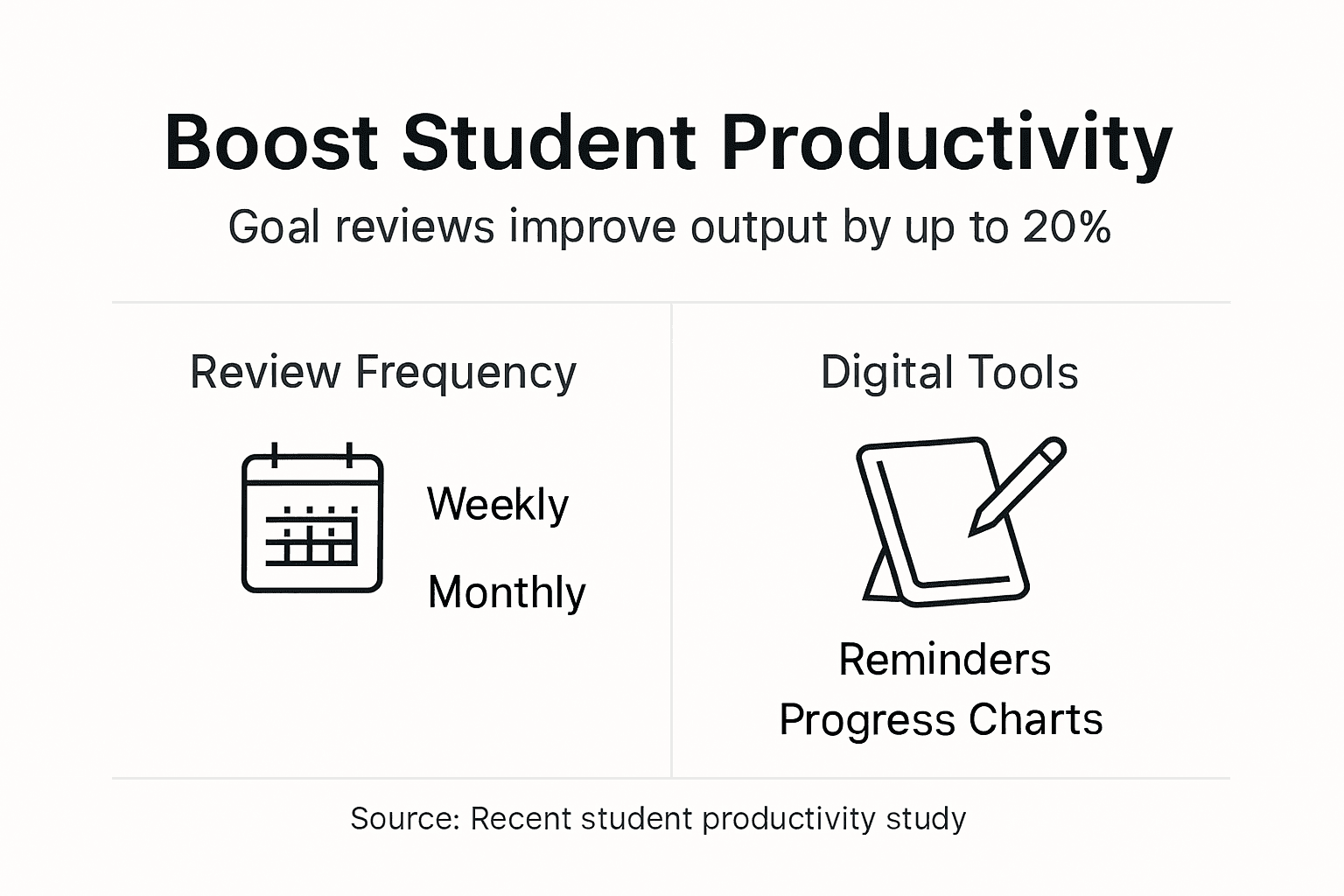
Automated reminders ensure you never forget review sessions. Progress visualization through charts or completion percentages provides instant feedback that motivates continued effort. Many apps also support accountability by sharing goals with friends or study partners who check in on your progress.
Optio Station exemplifies productivity apps built specifically for goal reviews and task tracking. Its interface links daily tasks directly to larger goals, so each completed item contributes visibly to goal progress. This connection reinforces the value of your daily work during weekly reviews.
Step-by-step integration process:
- Choose an app that supports both goal setting and task management in one place
- Input your SMART goals or OKRs with clear success criteria
- Break each goal into weekly tasks or milestones the app can track
- Set recurring reminders for your weekly review time
- During reviews, use the app’s progress reports to assess completion rates
Pro tip: Link every daily task to a specific goal in your app. This creates a direct line of sight between today’s work and your larger objectives, making reviews more meaningful because you see exactly how tasks contributed to progress.
Users of goal-tracking apps that prompt regular reviews have 30% higher task completion rates. The combination of reminders, visibility, and easy tracking removes friction from the review process. You spend less time gathering information and more time analyzing what the data reveals.
Experiment with different tools to find your fit. Some people prefer minimal interfaces while others want detailed analytics. Our task management software guide compares popular options, and our article on keeping track of tasks effectively offers implementation advice that applies across platforms.
Psychological and Motivational Benefits of Goal Reviews
Regular goal reviews reduce stress by replacing uncertainty with clarity. When you know exactly what needs attention and what’s on track, the mental burden of wondering whether you’re doing enough disappears. This psychological relief matters especially during high-pressure periods like exam season or project deadlines.
Students practicing weekly goal reviews reported 18% lower stress levels during exam periods. The structured reflection prevents the spiral of anxiety that comes from feeling overwhelmed without a plan. You replace vague worry with specific action steps identified during your review.
Weekly goal reviews transform anxiety about falling behind into confidence that you’re addressing what matters most. This shift from reactive worry to proactive planning protects both productivity and mental health.
Structured reflection also improves well-being by creating moments of recognition for your efforts. Without reviews, achievements blur together and progress feels invisible. Taking time to acknowledge completed goals provides the positive reinforcement your brain needs to maintain motivation through challenging periods.
Mental health benefits extend beyond stress reduction:
- Increased sense of control over your academic or professional trajectory
- Reduced burnout risk through realistic goal adjustment before exhaustion hits
- Better work-life balance by deliberately planning time for non-goal activities
- Improved self-efficacy as you build evidence of your capability
- Lower anxiety from having a clear plan rather than constant uncertainty
The motivational boost from recognizing progress creates a positive feedback loop. Each review where you see completed goals reinforces your commitment to the process. This intrinsic motivation proves more sustainable than external pressure because it’s rooted in your own observable success. Our article on the benefits of reflecting on goals explores this psychological dimension further.
Embrace goal reviews as a tool for mental health as much as productivity. The clarity and sense of progress they provide protect against the burnout that derails even the most ambitious students and professionals.
Practical Steps to Implement Effective Goal Reviews
Starting an effective goal review practice requires deliberate setup. Follow these steps to build a sustainable system that delivers consistent benefits.
-
Set SMART goals with measurable criteria. Define exactly what success looks like so your reviews have clear standards. Vague goals produce vague reviews that waste time without generating insights.
-
Schedule consistent review sessions, ideally weekly. Choose a time when you typically have energy and minimal interruptions. Sunday evenings or Friday afternoons work well for many people because they naturally mark the transition between weeks.
-
During reviews, honestly assess progress and obstacles. Review each goal and determine what percentage you completed. More importantly, identify what prevented 100% completion so you can address those factors.
-
Adjust goals or priorities based on insights gained. If a goal consistently feels unattainable, break it into smaller milestones or extend the timeline. If you’re consistently exceeding expectations, raise the bar to maintain challenge.
-
Recommit to adjusted goals and integrate them into your task workflow. Update your task list to reflect any changes from the review. This ensures your daily work aligns with your revised priorities.
Pro tip: Use calendar blocks and phone reminders to protect your review time. Treat this appointment with yourself as seriously as you would a meeting with a professor or boss. Consistency builds the habit that delivers long-term results.
Maintain a reflection journal or notes document where you record key insights from each review. Over time, this creates a personal database of what works for you. You’ll notice patterns about when you’re most productive, which types of goals you excel at, and what obstacles repeatedly challenge you. These insights make future planning more accurate.
Explore our practical goal examples for inspiration on well-crafted objectives that lend themselves to effective reviews. Our digital organization checklist helps you set up the supporting systems that make consistent reviews possible.
Explore Top Task Management Apps to Boost Your Goal Reviews
Ready to transform your goal reviews from theory into practice? Specialized task management software like Optio Station seamlessly integrates goal tracking with daily task management, creating the accountability system students and young professionals need. The app’s Roman-themed interface positions you as the Centurion in command, with Optio as your second-in-command managing the details.

Digital tools eliminate the friction that often derails manual goal reviews. Automated reminders keep you consistent, progress visualization shows results immediately, and mobile access means you can review goals anywhere. Visit our task management software guide to explore features that matter most for effective reviews. Learn how to keep track of tasks at work and discover the essential time management apps that complement your goal review practice.
FAQ
What is the best frequency for goal reviews?
Weekly goal reviews are optimal for most students and young professionals, offering the perfect balance between staying on track and avoiding burnout. Research shows weekly reviews optimize productivity by 20% compared to monthly reviews while reducing the cognitive overload associated with daily reviews. Adjust frequency based on your personal workload, but weekly serves as the gold standard for sustainable results.
Can goal reviews help reduce exam or work stress?
Yes, studies show weekly goal reviews can reduce stress by 18% during high-pressure periods by improving organization and providing manageable plans. Structured reflection during reviews helps alleviate the anxiety that comes from uncertainty about whether you’re adequately prepared. By replacing vague worry with specific action steps, reviews transform overwhelming pressure into focused effort that protects your mental health.
Which goal review framework is best for beginners?
SMART goals are typically easier for beginners due to their clear, measurable criteria that make reviews straightforward. The framework’s five components provide enough structure to guide effective reviews without overwhelming complexity. OKRs can be adopted later once you’re comfortable with basic goal reviews and ready to pursue more ambitious or complex objectives that benefit from the flexible key results approach.
How can digital tools improve the goal review process?
Digital tools provide automated reminders that ensure consistent review habits, progress tracking that visualizes achievements, and historical data that reveals productivity patterns. These features increase accountability by making progress visible and removing the friction of manual tracking. Apps that integrate goal reviews with daily task management help you see exactly how today’s work contributes to larger objectives, increasing motivation and completion rates by up to 30%.
Recommended
- Why Review Productivity Matters for Centurions – Optio Station: Best Project Management App for Prioritization
- Command Log – Optio Station: Best Project Management App for Prioritization
- Productivity System Explained: Boost Academic Success – Optio Station: Best Project Management App for Prioritization
- Why Reflect on Goals: Unlocking Productivity Growth – Optio Station: Best Project Management App for Prioritization
