

Trying to juggle academic deadlines and career ambitions can feel overwhelming, especially when your goals seem scattered or out of reach. Clear organization tools make all the difference for college students and young professionals aiming to maximize results within the Optio app. By embracing the power of Goal Mapping, which blends words, images, and positive mindsets to engage both sides of the brain, you can turn abstract aspirations into real, measurable progress.
Table of Contents
- Goal Mapping Defined For Modern Centurions
- Major Types Of Goal Mapping Methods
- How Goal Mapping Works In Productivity Apps
- Typical Steps And Essential Features In Goal Mapping
- Common Mistakes And Pitfalls To Avoid
- Comparing Goal Mapping With Other Techniques
Key Takeaways
| Point | Details |
|---|---|
| Holistic Approach | Goal Mapping integrates visual and verbal strategies to engage both hemispheres of the brain for better goal achievement. |
| Diverse Methodologies | Various goal mapping methods like SMART, OKRs, and MAPS cater to different contexts and objectives. |
| Productivity Integration | Productivity apps enhance goal mapping by providing customizable goal creation and adaptive feedback systems. |
| Avoiding Pitfalls | Common mistakes in goal mapping include overwhelming complexity and lack of specificity; prioritize clarity and regular progress tracking to succeed. |
Goal Mapping Defined for Modern Centurions
Goal mapping represents a revolutionary approach to achieving personal and professional objectives that goes far beyond traditional goal-setting techniques. Developed by Brian Mayne, this whole-brain goal-setting system uniquely combines visual and verbal strategies to unlock human potential.
Unlike conventional methods that rely solely on written lists or verbal affirmations, goal mapping integrates words, pictures, and symbols to engage both hemispheres of the brain. This approach allows individuals to communicate directly with their subconscious mind, creating a more holistic and powerful goal achievement framework.
The core principles of goal mapping include:
- Utilizing imagery as a communication tool with the subconscious
- Integrating left and right brain functions simultaneously
- Creating visual representations of goals that inspire action
- Developing positive mental frameworks for success
- Establishing sustainable habits through mental visualization
Modern Centurions recognize that goal mapping is more than just a planning technique—it’s a comprehensive methodology for transforming aspirations into tangible achievements. By leveraging accelerated learning techniques, individuals can design goal maps that not only outline objectives but also create powerful emotional connections to their desired outcomes.
Pro tip: Create your goal map using both analytical language and inspirational imagery to maximize your brain’s motivational potential.
Major Types of Goal Mapping Methods
Goal mapping encompasses several powerful methodologies designed to transform aspirations into actionable strategies. Goal-setting frameworks have evolved to address diverse organizational and personal development needs, offering multiple approaches to tracking and achieving objectives.
The most prominent goal mapping methods include:
- SMART Goals: Specific, Measurable, Achievable, Relevant, Time-bound
- OKRs: Objectives and Key Results
- MAPS Method: Measurable, Achievable, Positive, Specific
- BHAGs: Big Hairy Audacious Goals
- Balanced Scorecard: Comprehensive organizational performance framework
- WOOP Method: Wish, Outcome, Obstacle, Plan
Each framework offers unique advantages for different contexts. The MAPS method, for instance, emphasizes creating goals that are not just measurable but also motivationally charged. By focusing on clarity and positive framing, this approach helps individuals and teams design objectives that inspire genuine commitment and action.

Organizations and individuals can select goal mapping methods based on their specific needs, considering factors like complexity of objectives, time horizons, and desired level of detail. Goal tracking strategies enable more precise alignment between aspirational thinking and practical execution.
Here’s a comparison of popular goal mapping methods and the contexts where they excel:
| Method | Best For | Unique Advantage |
|---|---|---|
| SMART Goals | Solo professionals | Clear, measurable targets |
| OKRs | Corporate teams | Alignment and quantifiable results |
| MAPS Method | Motivational individuals | Positive, inspiring frameworks |
| BHAGs | Visionary organizations | Long-term, bold ambitions |
| Balanced Scorecard | Performance management | Balanced metrics, strategic focus |
| WOOP Method | Personal development | Overcoming internal obstacles |
Pro tip: Experiment with multiple goal mapping methods to discover which approach resonates most powerfully with your personal motivation and work style.
How Goal Mapping Works in Productivity Apps
Productivity apps have revolutionized how individuals track and achieve their objectives by integrating sophisticated goal-setting technologies that transform abstract aspirations into actionable strategies. These digital platforms go beyond simple task management, offering comprehensive systems that engage users through intelligent goal tracking and motivation mechanisms.
The core functionality of goal mapping in productivity apps typically includes:
- Customizable Goal Creation: Allowing users to design personalized objectives
- Visual Milestone Tracking: Providing graphical representations of progress
- Adaptive Feedback Systems: Offering real-time insights and performance analysis
- Accountability Features: Enabling users to set and monitor commitment levels
- Personalized Motivation Tools: Generating dynamic encouragement based on individual progress
Modern productivity applications understand that goal mapping is more than just listing tasks—it’s about creating a holistic system that connects psychological motivation with practical execution. By breaking down complex objectives into manageable milestones, these apps help users maintain focus and momentum through continuous engagement and adaptive tracking.
Goal mapping transforms abstract dreams into concrete, trackable achievements by bridging imagination and systematic execution.
Pro tip: Select a productivity app that offers flexible goal mapping features that can adapt to your evolving personal and professional development needs.
Typical Steps and Essential Features in Goal Mapping
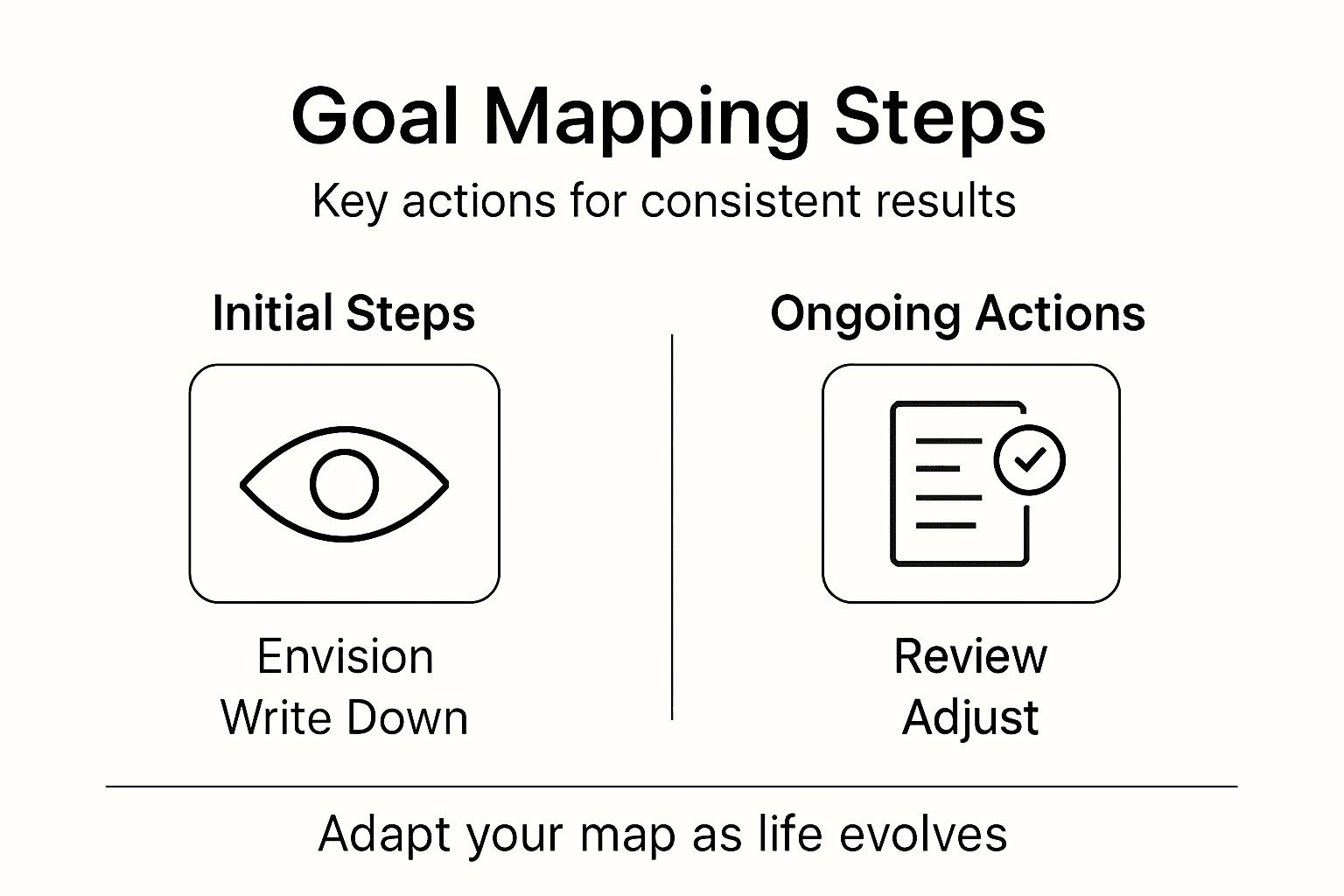
Successful goal mapping requires a structured approach that transforms abstract aspirations into concrete, achievable objectives. Goal setting methods provide a systematic framework for turning dreams into actionable plans through strategic, intentional processes.
The fundamental steps in effective goal mapping include:
- Defining Clear Objectives: Establish precise, meaningful goals
- Breaking Down Large Goals: Segment complex objectives into manageable milestones
- Prioritizing Targets: Rank goals based on importance and potential impact
- Creating Actionable Strategies: Develop specific action plans for each goal
- Regular Progress Tracking: Monitor and assess advancement consistently
Essential features that distinguish powerful goal mapping approaches involve creating goals that are Measurable, Achievable, Positive, and Specific (MAPS). This framework ensures that objectives are not just theoretical concepts but practical, motivational targets that drive genuine progress.
Effective goal mapping transforms abstract desires into structured pathways, connecting imagination with systematic execution.
Pro tip: Write down your goals and review them regularly, treating them as living documents that can be adjusted and refined as your journey progresses.
Common Mistakes and Pitfalls to Avoid
Goal setting mistakes can derail even the most ambitious Centurions from achieving their objectives. Understanding these potential pitfalls is crucial for maintaining focus, momentum, and strategic progress toward meaningful achievements.
The most critical mistakes in goal mapping include:
- Overwhelming Complexity: Setting too many goals simultaneously
- Misaligned Objectives: Creating goals disconnected from personal values
- Lack of Specificity: Developing vague, unmeasurable goals
- Inconsistent Tracking: Failing to monitor progress regularly
- Unrealistic Expectations: Setting unachievable or overly ambitious targets
- Neglecting Adaptability: Refusing to adjust goals as circumstances change
Students and young professionals often struggle with goal mapping by creating objectives that sound impressive but lack substantive meaning. Educational goal-setting strategies emphasize the importance of developing goals that are not just ambitious, but genuinely connected to personal motivation and growth.
Below is a summary table outlining common goals pitfalls and how to effectively avoid them:
| Pitfall | Why It Happens | Effective Solution |
|---|---|---|
| Overwhelming Complexity | Too many goals at once | Prioritize and limit objectives |
| Misaligned Objectives | Lacking personal relevance | Align goals with core values |
| Unrealistic Expectations | Setting unattainable aims | Set challenging yet feasible targets |
| Inconsistent Tracking | Failure to monitor progress | Establish regular review routines |
| Neglecting Adaptability | Refusing to revise plans | Adjust goals with new insights |
The most dangerous goal-setting mistake is creating an illusion of progress without meaningful advancement.
Pro tip: Review and recalibrate your goals quarterly, ensuring they remain challenging yet achievable and aligned with your evolving personal and professional landscape.
Comparing Goal Mapping With Other Techniques
Goal Mapping techniques represent a unique approach to strategic planning that distinguishes itself from traditional goal-setting methodologies. Unlike conventional frameworks, this method integrates psychological insights with practical goal achievement strategies.
Key differences between Goal Mapping and other techniques include:
-
SMART Goals: Linear, purely quantitative approach
- Focuses on specific, measurable outcomes
- Limited emotional engagement
-
Goal Mapping: Holistic, whole-brain methodology
- Combines verbal and visual elements
- Targets subconscious motivation
- Emphasizes emotional connection to objectives
-
OKRs (Objectives and Key Results): Organizational performance framework
- Primarily used in corporate settings
- Emphasizes measurable key results
- Less personalized approach
The strategic analysis of goal models reveals that Goal Mapping offers a more comprehensive approach to objective setting. By integrating imagery and symbolic representation, this technique creates more engaging and memorable goal frameworks that connect deeply with individual motivations.
Traditional goal-setting techniques measure progress; Goal Mapping transforms the journey itself.
Pro tip: Experiment with multiple goal-setting techniques to discover the approach that resonates most powerfully with your personal motivation and learning style.
Unlock Your Potential with Optio, the Ultimate Goal Mapping Companion
The challenge many Centurions face is transforming their well-structured goals into consistent daily actions without feeling overwhelmed or losing motivation. This article highlights key pain points such as balancing complexity, maintaining focus, and creating meaningful emotional connections to objectives through innovative goal mapping techniques like the MAPS method. Optio, the task, team, and time management app built for students and young professionals, is designed exactly to solve these challenges by serving as your reliable second-in-command in achieving true productivity.

Experience how Optio blends strategic goal mapping principles with a Roman-themed user experience tailored for Centurions who want clear, measurable progress and real accountability. Don’t let vague plans or inconsistent tracking slow you down. Visit https://optiostation.com now to equip yourself with the tools that transform aspirations into action. Take control of your journey today and lead your legion of goals confidently with Optio.
Frequently Asked Questions
What is goal mapping?
Goal mapping is a holistic approach to achieving personal and professional objectives by combining visual and verbal strategies that engage both hemispheres of the brain, allowing individuals to communicate with their subconscious and create sustainable habits.
How can I create an effective goal map?
To create an effective goal map, define clear objectives, break down large goals into manageable milestones, prioritize targets, develop actionable strategies, and consistently track your progress using measurable, achievable, positive, and specific criteria.
What are some common mistakes to avoid in goal mapping?
Common mistakes include setting too many goals at once, creating misaligned objectives that lack personal relevance, failing to monitor progress regularly, having unrealistic expectations, and neglecting the need for adaptability in your goals.
How does goal mapping differ from other goal-setting techniques?
Goal mapping differs from other techniques by integrating psychological insights with practical strategies, using both verbal and visual elements to engage the subconscious mind, whereas traditional techniques often focus on linear, quantitative approaches that lack emotional connection.
Recommended
- 7 Essential Productivity Hacks for Students and Professionals – Optio Station: Best Project Management App for Prioritization
- 7 Types of Productivity Techniques Every Centurion Should Know – Optio Station: Best Project Management App for Prioritization
- 7 Examples of Time Management Skills at Work for Centurions – Optio Station: Best Project Management App for Prioritization
- Step by Step Goal Tracking for Students and Professionals – Optio Station: Best Project Management App for Prioritization
