

Over half of American project managers admit their teams misunderstand how individual goals connect to organizational success. This confusion does not just slow projects, it erodes trust and motivation. Whether you are a college student or just started your leadership path, gaining clear goal alignment can transform team results. You will discover evidence-based explanations, cut through common myths, and pick up practical strategies that help every team member see their value in the bigger picture.
Table of Contents
- Defining Goal Alignment And Common Myths
- Types Of Goal Alignment In Teams
- How Goal Alignment Works In Projects
- Frameworks For Aligning Goals Effectively
- Team Roles, Responsibilities, And Risks
- Common Goal Alignment Pitfalls To Avoid
Key Takeaways
| Point | Details |
|---|---|
| Goal Alignment is Intentional | Effective goal alignment requires deliberate communication and understanding among team members to connect individual responsibilities with larger organizational objectives. |
| Types of Goal Alignment | Vertical, horizontal, and cultural alignments each serve unique strategic purposes in fostering team collaboration and achieving performance objectives. |
| Dynamic Project Coordination | Project goal alignment is a continuous process that transforms strategic intentions into outcomes through systematic coordination and regular communication. |
| Avoiding Common Pitfalls | To ensure successful goal alignment, organizations should prioritize transparency and collaboration while avoiding vague or unrealistic goal setting. |
Defining Goal Alignment and Common Myths
Goal alignment represents the strategic coordination of individual and team objectives that support broader organizational aims. At its core, this concept goes beyond simple task completion to create a unified direction where each team member understands how their specific responsibilities connect to larger strategic outcomes. Researchers have demonstrated that effective goal alignment requires intentional communication and shared understanding.
Contrary to popular belief, goal alignment does not happen automatically. Many teams mistakenly assume that simply declaring organizational objectives will naturally translate into coordinated effort. In reality, alignment demands deliberate processes that reconcile different individual priorities and perspectives. Goal alignment is a dynamic process involving continuous dialogue, mutual understanding, and adaptive strategies that evolve as team dynamics and organizational needs change.
Common myths about goal alignment often prevent teams from implementing effective strategies. One prevalent misconception is that one-size-fits-all goals work universally. Performance management research reveals that successful alignment requires nuanced approaches tailored to specific team contexts, cultural dynamics, and individual strengths. Teams must recognize that alignment is not a static state but a continuous journey of communication, adjustment, and collaborative problem solving.
Pro tip: Schedule quarterly alignment meetings where team members can openly discuss how their individual goals connect to broader organizational objectives, creating transparency and shared understanding.
Types of Goal Alignment in Teams
Teams encounter multiple sophisticated approaches to goal alignment that extend far beyond simple task coordination. Strategic goal alignment represents a nuanced framework with distinct interconnected dimensions that help organizations achieve comprehensive performance objectives. The primary types of goal alignment include vertical, horizontal, and cultural dimensions, each serving unique strategic purposes for team collaboration.
Vertical alignment connects individual team member goals directly to broader organizational strategy, ensuring that every professional understands how their specific responsibilities contribute to overarching company objectives. This approach creates a clear line of sight between personal performance and enterprise-level outcomes. Horizontal alignment, by contrast, focuses on harmonizing goals across different teams and departments, promoting cross-functional cooperation and reducing potential siloed working environments.

Cultural alignment represents a critical yet often overlooked dimension of goal coordination. Organizational alignment research demonstrates that shared values, communication norms, and collaborative practices significantly impact a team’s ability to achieve synchronized goals. By establishing common understanding and psychological contracts among team members, organizations can create more resilient and adaptable collaborative environments that transcend traditional hierarchical boundaries.
Pro tip: Create a visual goal mapping exercise where team members can physically connect their individual objectives to broader team and organizational goals, helping everyone understand their strategic contribution.
Here’s a comparison of the main goal alignment types and how they influence team dynamics:
| Alignment Type | Core Focus | Main Advantage | Key Challenge |
|---|---|---|---|
| Vertical | Linking individual to org goals | Ensures strategic direction | Risk of rigid top-down control |
| Horizontal | Synchronizing across teams | Enhances cross-team collaboration | Potential for unclear ownership |
| Cultural | Shared values and norms | Builds team resilience | Difficult to measure progress |
How Goal Alignment Works in Projects
Project goal alignment is a dynamic process that transforms strategic intentions into tangible outcomes through systematic coordination and continuous communication. Successful project alignment fundamentally begins during the project initiation phase, where team leaders must explicitly connect project objectives with broader organizational strategies. This critical early stage sets the foundation for understanding how individual project deliverables contribute to overarching business goals.
The mechanism of goal alignment operates through several key mechanisms. First, stakeholder engagement becomes paramount, requiring frequent communication channels that enable transparent discussions about project scope, expectations, and strategic relevance. Project managers must create comprehensive alignment frameworks that translate high-level organizational objectives into specific, measurable team tasks. This translation process involves breaking down complex strategic goals into actionable milestones that each team member can understand and directly influence.
Implementing goal alignment requires a multifaceted approach that goes beyond simple task assignment. Teams need robust mechanisms for tracking progress, regularly reassessing alignment, and maintaining flexibility to adapt when organizational priorities shift. This means developing dynamic feedback loops, conducting periodic alignment reviews, and creating environments where team members feel empowered to provide insights about potential misalignments or opportunities for strategic refinement. Successful goal alignment transforms projects from isolated efforts into strategic instruments that drive organizational performance.
Pro tip: Develop a quarterly goal alignment dashboard that visually maps project objectives against organizational strategy, allowing real-time tracking and immediate identification of potential disconnections.
Frameworks for Aligning Goals Effectively
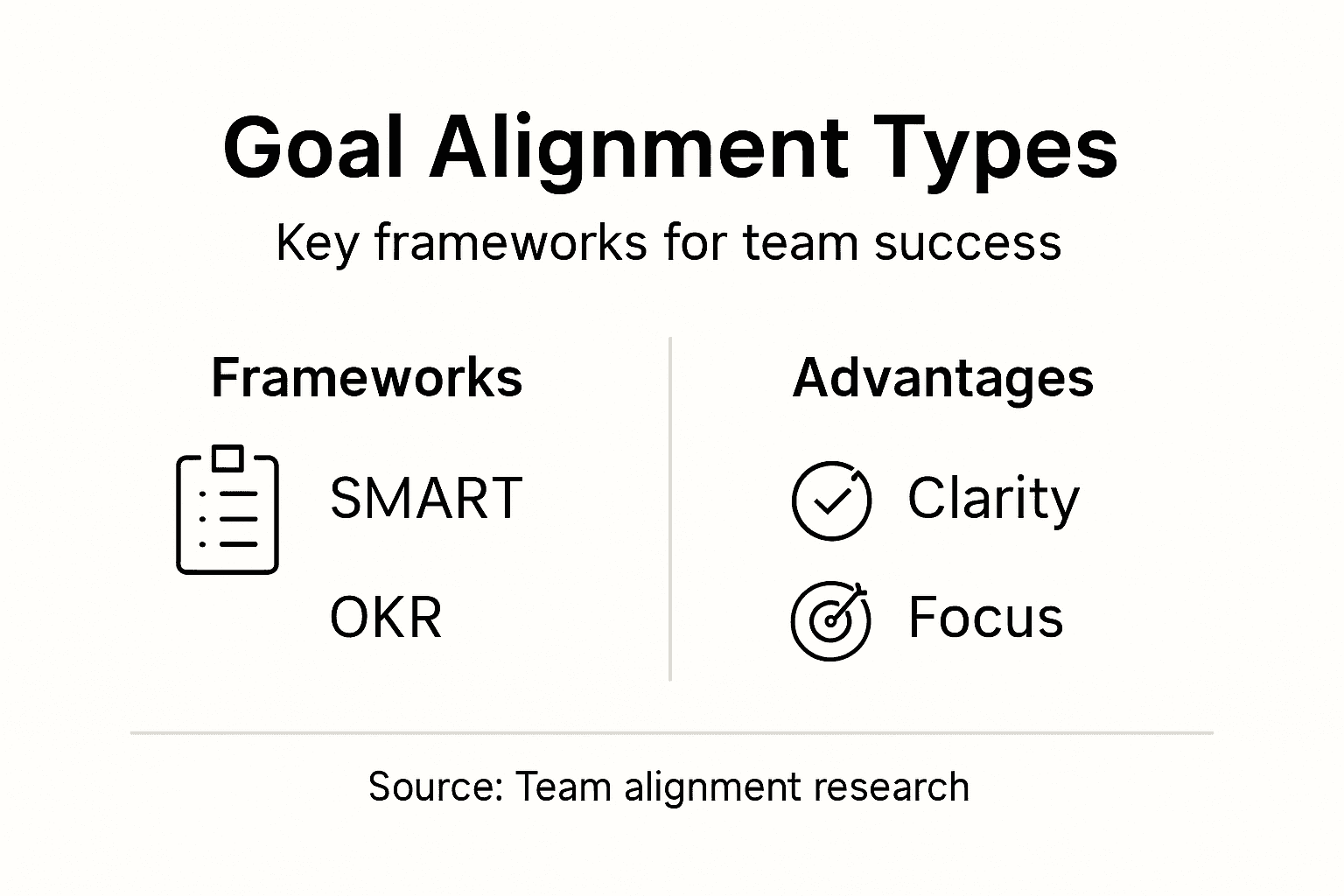
Goal-setting frameworks provide structured approaches that transform abstract strategic objectives into actionable team plans. These systematic methodologies help organizations translate complex organizational goals into clear, measurable individual and team targets. The most prominent frameworks include SMART, Objectives and Key Results (OKRs), Key Performance Indicators (KPIs), and Big Hairy Audacious Goals (BHAGs), each offering unique strategies for goal alignment and performance tracking.
The SMART framework represents a foundational approach to goal setting, ensuring goals are Specific, Measurable, Achievable, Relevant, and Time-bound. This method forces teams to create precise, well-defined objectives that can be clearly understood and tracked. OKRs take this a step further by connecting individual and team objectives directly to broader organizational outcomes, creating a cascading system of accountability and strategic alignment. By establishing clear key results that demonstrate progress, teams can maintain transparency and focus on meaningful, impactful work.
Effective goal alignment requires selecting the right framework based on organizational context. Different goal-setting approaches work better in various environments, depending on team autonomy, organizational culture, and goal complexity. Some teams might benefit from the structured approach of SMART goals, while others might require the more flexible OKR methodology. The key is understanding your team’s unique dynamics and choosing a framework that promotes clarity, motivation, and strategic coherence.
Pro tip: Conduct an annual framework assessment to evaluate which goal-setting methodology best matches your team’s current strategic needs and organizational culture.
Below is a summary of popular goal-setting frameworks and when each is most effective:
| Framework | Best Use Case | Strength | Limitation |
|---|---|---|---|
| SMART | Clear, actionable objectives | Easy to communicate | Can limit ambition |
| OKRs | Linking personal to org goals | Drives transparency | Requires frequent reviews |
| KPIs | Ongoing performance tracking | Focuses efforts | Not always strategic |
| BHAGs | Inspiring long-term vision | Motivates and unifies | May feel unrealistic |
Team Roles, Responsibilities, and Risks
Team role clarity is fundamental to successful organizational performance. When team members understand their specific responsibilities, they can leverage individual strengths more effectively and minimize potential conflicts. Clear role definitions create a structured environment where accountability becomes transparent, enabling teams to navigate complex projects with precision and confidence.
The risks associated with ambiguous roles are significant and multifaceted. Undefined responsibilities can lead to task duplication, critical task omission, and interpersonal tensions that undermine team productivity. Some common risks include overlapping work areas, unclear decision-making authority, and diminished individual accountability. Periodic role reassessment becomes crucial in mitigating these potential challenges, allowing teams to adapt roles based on evolving project needs and individual team member capabilities.
Effective role management requires a dynamic approach that balances structure with flexibility. Teams should develop comprehensive role descriptions that outline not just tasks, but expected outcomes, decision-making boundaries, and interdependencies between team members. This approach helps create a holistic understanding of how individual contributions connect to broader team and organizational objectives, reducing friction and enhancing collaborative potential.
Pro tip: Create a visual responsibility matrix that maps each team member’s roles, key performance indicators, and interdependencies to enhance clarity and prevent potential overlaps.
Common Goal Alignment Pitfalls to Avoid
Goal-setting strategies often fail due to systematic errors that undermine team performance and organizational objectives. Understanding these common pitfalls is crucial for creating effective, actionable goal frameworks that drive meaningful results. The most prevalent challenges emerge from poor communication, lack of strategic context, and ineffective implementation processes.
One significant pitfall is imposing goals without meaningful employee input, which creates disengagement and reduces individual motivation. Teams frequently struggle with goals that are either too vague to be actionable or unrealistically ambitious, creating frustration and potential burnout. Disconnected goal creation that neglects inter-team dependencies can fragment organizational efforts, preventing collaborative momentum and reducing overall productivity. These challenges are compounded when organizations fail to establish regular tracking mechanisms that allow for timely adjustments and strategic realignment.
Successful goal alignment requires a holistic approach that prioritizes transparency, collaboration, and adaptive planning. This means developing goals that are not just numeric targets but meaningful representations of strategic intentions. Organizations must create communication channels that enable cross-functional dialogue, ensuring that individual and team objectives connect seamlessly with broader organizational strategies. Regular progress reviews, collaborative goal-setting processes, and flexible adaptation mechanisms are essential for maintaining alignment in dynamic work environments.
Pro tip: Implement quarterly goal review sessions where teams collaboratively assess progress, discuss interdependencies, and recalibrate objectives to maintain strategic relevance and team engagement.
Strengthen Your Team’s Goal Alignment with Optio Station
The article reveals how critical clear goal alignment is for driving team success and avoiding pitfalls like miscommunication and disengagement. If you face challenges connecting individual tasks to broader objectives or struggle with maintaining transparency and collaboration across your projects, Optio Station can be your trusted second-in-command in overcoming these hurdles. Our mobile app is designed especially for students and young professionals who want to coordinate tasks and team efforts seamlessly, much like the vertical and horizontal alignment concepts discussed.

Take control of your goals and empower your team to stay on track with Optio Station. Start mapping your objectives, tracking progress, and fostering shared understanding through features tailored to build resilience and strategic focus. Explore more strategies and practical tools in our Uncategorized – Optio Station: Best Project Management App for Prioritization section and discover how our app supports continuous communication and role clarity. Don’t wait to transform your teamwork; visit Optio Station now and step into your leadership role as a modern Centurion.
Frequently Asked Questions
What is goal alignment?
Goal alignment refers to the strategic coordination of individual and team objectives that support broader organizational aims, ensuring that every team member understands their role in achieving larger company goals.
Why is goal alignment important for teams?
Goal alignment is crucial as it creates a unified direction where team members’ efforts are coordinated, enhancing collaboration and driving organizational performance. It helps connect personal performance to enterprise-level outcomes.
What are common myths about goal alignment?
Common myths include the assumption that goal alignment happens automatically or that one-size-fits-all goals are effective. In truth, alignment requires ongoing communication, intentional strategies, and tailored approaches based on the team’s context and dynamics.
How can teams effectively implement goal alignment?
Teams can effectively implement goal alignment by holding regular alignment meetings, using structured goal-setting frameworks like SMART or OKRs, and developing clear visual tools like goal maps or responsibility matrices to ensure transparency and shared understanding.
Recommended
- How to Manage Team Tasks Effectively for Success – Optio Station: Best Project Management App for Prioritization
- How to Improve Teamwork for Success in College and Work – Optio Station: Best Project Management App for Prioritization
- How to Increase Motivation: Achieve Your Goals Effectively – Optio Station: Best Project Management App for Prioritization
- 7 Effective Goal-Setting Tips for Students and Professionals – Optio Station: Best Project Management App for Prioritization
