

TL;DR:
- Effective event management software centralizes registration, engagement, and analytics to streamline coordination. The best platforms prioritize ease of use, fast onboarding, and integration with existing tools, fitting specific event needs. Choosing software involves assessing your event format, critical features, scalability, and support to avoid costly mismatches and implementation delays.
Event management software is a specialized platform that centralizes registration, scheduling, attendee engagement, and reporting into a single system for event coordinators. The best event management software eliminates the fragmented spreadsheets, disconnected email chains, and manual check-in processes that slow teams down. Platforms like EventMobi, Bizzabo, and idloom each solve this problem differently, but they share one goal: replacing administrative chaos with automated, measurable workflows. Teams that adopt dedicated event software report fewer bottlenecks at check-in, stronger attendee engagement, and cleaner post-event data. If you are evaluating your options in 2026, the right platform is less about feature count and more about fit.
What features define the best event management software?
The best software for event planning does four things well: automates registration and payments, drives attendee engagement, delivers analytics, and connects with your existing tools.
Registration and payment automation is the foundation. Manual registration creates errors, delays, and frustrated attendees before the event even starts. Platforms that handle ticketing, confirmation emails, and invoicing automatically free your team to focus on the experience itself. Over 1,500 organizations use idloom specifically because it handles automated registration, payments, and multi-currency invoicing without requiring a developer.
Attendee engagement tools separate average platforms from great ones. Personalized agendas, in-app networking, live polling, and session feedback all contribute to an event that attendees remember. These features are not cosmetic. They directly affect satisfaction scores and repeat attendance.
Analytics and reporting give you proof. The best platforms track registration conversion rates, session attendance, engagement scores, and net promoter data in real time. That data shapes better decisions during the event and stronger proposals after it.
Integrations determine whether your software works with your team or against it. Bizzabo integrates with over 2,500 systems including Salesforce, HubSpot, and Marketo, which means your event data flows directly into your CRM and marketing stack without manual exports.
- Automated registration and payment processing
- Personalized attendee agendas and networking features
- Real-time analytics dashboards and post-event reporting
- CRM and marketing platform integrations
- Mobile event apps for on-site and virtual attendees
- Reusable templates and event cloning for repeat programs
Pro Tip: Before evaluating any platform, write down the three tasks your team spends the most manual time on. Use that list as your filter. The right software solves those three problems first.
How do top event management platforms compare in 2026?
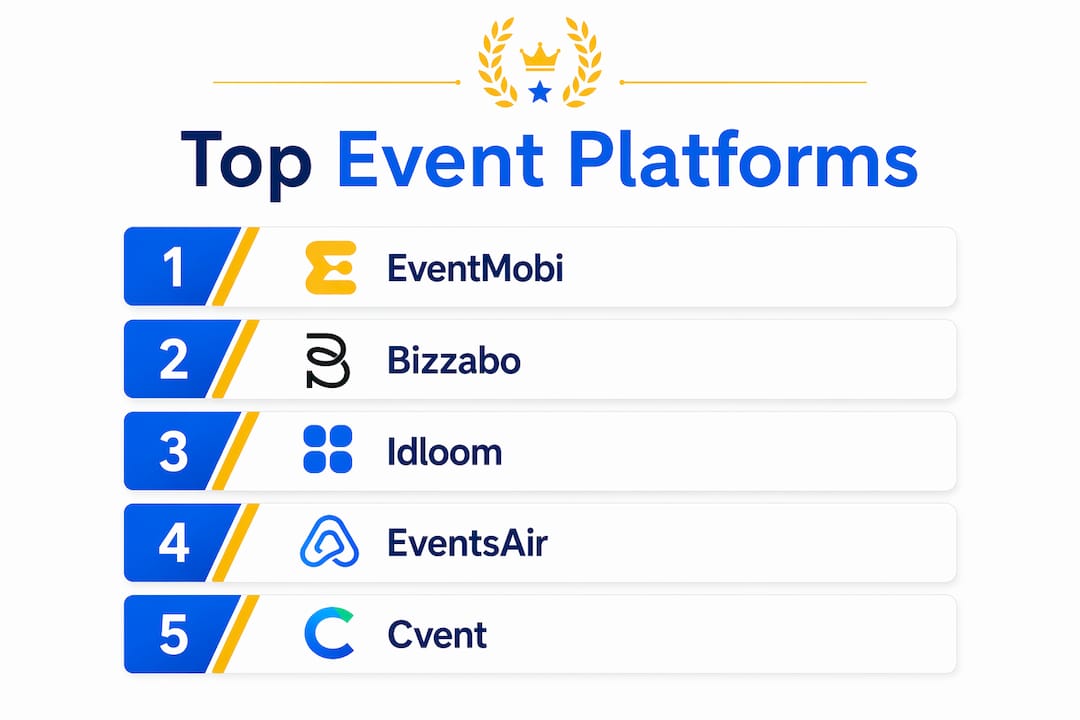
No single platform wins every category. The top event management tools each serve a distinct use case, and knowing the difference saves you from a costly mismatch.
EventMobi is built for teams that need speed. Its learning curve is measured in hours, not weeks, which matters when your event is six weeks out and your team has no time for a lengthy onboarding process. EventMobi enables proficiency in hours, unlike enterprise systems that can take weeks to configure. It covers mobile apps, engagement features, and basic analytics well.

Bizzabo targets enterprise event programs running multiple large-scale conferences annually. Its 99.99% uptime and deep integration library make it the choice for organizations that cannot afford downtime or data silos. The tradeoff is complexity. Smaller teams may find the feature depth more than they need.
idloom sits in the middle ground. It handles flexible automation, multi-currency invoicing, and registration workflows with enough configuration options to satisfy mid-market event teams without requiring IT support.
EventsAir focuses on pre-event workflow design. Its drag-and-drop builders and rules-based logic reduce administrative setup time significantly, making it a strong choice for planners who manage complex multi-session programs.
Webex Events, Cvent, and Whova round out the top-rated platforms in 2025, with Cvent dominating enterprise management, Webex Events excelling in hybrid conferences, and Whova leading in attendee engagement scores.
| Platform | Best for | Key strength | Complexity |
|---|---|---|---|
| EventMobi | Small to mid-size events | Fast onboarding, mobile app | Low |
| Bizzabo | Enterprise programs | 2,500+ integrations, 99.99% uptime | High |
| idloom | Mid-market teams | Automation, multi-currency invoicing | Medium |
| EventsAir | Multi-session conferences | Drag-and-drop workflow builders | Medium |
| Cvent | Large enterprise events | End-to-end management at scale | High |
| Whova | Engagement-focused events | Networking and attendee interaction | Low to medium |
Pro Tip: Use reusable event templates and cloning features when your team runs recurring events. What takes days the first time can take hours the second time.
What pitfalls should planners avoid when choosing event software?
Choosing the wrong platform is expensive in time, money, and team morale. These are the four mistakes that appear most often in event management software reviews.
-
Underestimating implementation time. Software that requires weeks of configuration before your first event is a liability, not an asset. Implementation delays are the most common bottleneck teams report when switching platforms. If your next event is within 60 days, prioritize platforms with fast setup over platforms with maximum features.
-
Selecting for features you will not use. Overcomplicating software with excessive features creates user friction and slows your team down. A platform with 200 features your team ignores is worse than a platform with 20 features your team uses every day. Match feature depth to your actual event complexity.
-
Ignoring scalability until it is too late. A platform that handles 200 attendees smoothly may struggle at 2,000. Ask vendors directly about capacity limits, pricing tiers at higher volumes, and how their system performs under load. This question separates honest vendors from optimistic ones.
-
Skipping vendor support evaluation. Software support quality varies dramatically. Before signing a contract, test the support channel yourself. Send a pre-sales question and measure the response time and quality. That interaction previews exactly what you will get when something breaks at 8 a.m. on event day.
The pattern across these pitfalls is the same: planners optimize for features on paper and underweight operational reality. The best software for your team is the one your team will actually use under pressure.
How to select the best event management software for your needs
A structured selection process takes less time than recovering from a bad purchase. Use this framework before committing to any platform.
Start with your event format. In-person, virtual, and hybrid events have different technical requirements. Virtual events need strong streaming and breakout room features. Hybrid events require synchronized engagement tools for both audiences. In-person events prioritize check-in speed and on-site mobile apps. Define your format first, then filter platforms accordingly.
List your non-negotiable features. Separate must-haves from nice-to-haves before you see a demo. Vendors are skilled at making every feature look essential. If you walk in without a clear list, you will walk out impressed by things you do not need.
- Define your primary event format: in-person, virtual, or hybrid
- Identify three to five must-have features based on your biggest pain points
- Set a realistic budget including setup fees, per-attendee costs, and annual licensing
- Map your existing tech stack and confirm integration compatibility
- Request a trial or pilot on a smaller event before full commitment
- Evaluate onboarding support and documentation quality
- Ask for references from organizations with similar event sizes and formats
Evaluate ease of use honestly. The best event software acts as a single source of truth connecting all your data and teams. That only works if your team uses it consistently. A platform your team avoids because it feels complicated delivers zero value regardless of its feature list.
Pilot before you commit. Run the software on a smaller internal event or a low-stakes registration before deploying it on your flagship program. This surfaces integration gaps, usability friction, and support quality in a controlled environment. Flexible pre-event setup tools let planners tailor registration and communications without external support, which is a meaningful test of true usability.
Understanding how to automate tasks within your chosen platform also determines how much time you actually recover. Automation is only as good as the person who configures it.
Key takeaways
The best event management software is a platform that matches your event format, integrates with your existing tools, and your team can operate confidently under pressure.
| Point | Details |
|---|---|
| Features must match real needs | Prioritize registration, payments, engagement, and analytics over feature volume. |
| Platform fit beats platform prestige | EventMobi suits fast-moving teams; Bizzabo suits enterprise scale; idloom suits mid-market automation. |
| Implementation speed matters | Software requiring weeks to configure creates risk for teams with tight event timelines. |
| Pilot before full deployment | Test on a smaller event to surface integration gaps and usability issues before they cost you. |
| Scalability is a day-one question | Ask vendors about capacity limits and pricing at higher volumes before signing any contract. |
Why most planners choose the wrong software first
At Optiostation, we have analyzed how event coordinators and young professionals approach software decisions, and the pattern is consistent: most teams choose based on the demo, not the deployment. A polished product walkthrough is not the same as your team using the tool at 11 p.m. the night before an event.
The framing that changed how we think about this comes from Bizzabo’s concept of event software as an operating system for events. That framing is correct. Your event platform is not a registration tool or a scheduling app. It is the connective layer between your team, your attendees, and your data. When you choose it, you are choosing your operating environment for every event you run.
What that means practically: the software should reduce decisions, not multiply them. If your team needs to consult a manual to complete a routine task, the platform is working against you. The best implementations we have seen share one trait. The software disappears into the workflow. Nobody talks about it because it just works.
Our honest advice is to resist the enterprise pitch if you are not running enterprise events. Bizzabo and Cvent are exceptional platforms for the organizations they are built for. For a team managing 10 to 15 events per year under 500 attendees, that complexity is a liability. EventMobi or idloom will serve you better, cost less, and get your team productive faster.
The final thing worth saying: managing meetings and coordination effectively is a skill that software supports but does not replace. The best platform in the world does not compensate for unclear ownership, poor communication, or a team that was never trained on the tool. Software is the second-in-command. Your team is still the Centurion.
— Optiostation
Plan your next event with Optiostation
Event management software handles the logistics. Optiostation handles the team layer that makes those logistics actually work. Task assignment, deadline tracking, and team communication are the daily operations that run underneath every event, and they need their own system. Optiostation is built for exactly that: keeping coordinators, assistants, and collaborators aligned from kickoff to wrap-up. Explore how collaboration tools boost communication across your planning team, or go deeper with our guide on building a collaboration workflow that keeps every task visible and every deadline met.
FAQ
What is the best event management software in 2026?
The best platform depends on your event scale and team size. Bizzabo leads for enterprise programs, EventMobi suits fast-moving mid-size teams, and idloom is the top choice for automated registration and invoicing workflows.
How do I choose event management software for a small team?
Prioritize fast onboarding, ease of use, and core features like registration and mobile apps. Platforms like EventMobi are designed for teams that need to become proficient quickly without lengthy configuration.
What features should event management software include?
The core features are automated registration and payments, attendee engagement tools, real-time analytics, and integrations with CRM and marketing platforms. These four capabilities cover the majority of planning and execution needs.
Are there affordable event management solutions for smaller budgets?
Yes. idloom and EventMobi both offer pricing tiers suited to smaller organizations. Evaluate per-attendee costs alongside base licensing fees, since total cost scales with event volume.
Why does implementation time matter when choosing event software?
Software that takes weeks to configure creates real risk when your event timeline is tight. Faster-to-learn platforms reduce that risk and let your team focus on execution rather than setup.
Recommended
- Best free project management software for students 2026 – Optio Station: Best Project Management App for Prioritization
- Command Log – Optio Station: Best Project Management App for Prioritization
- Schedule Management Plan Template: Boosting Productivity – Optio Station: Best Project Management App for Prioritization
- Best project management software for students in 2026 – Optio Station: Best Project Management App for Prioritization
