

SMART goals work for managers when paired with a clear metric and a standing check-in; without those two things, they tend to stall into vague intentions. Start today: pick one priority, turn it into a number you can track, and put the first check-in on the calendar. Goal-setting theory backs this approach, and we build our own work at Optiostation around the same principle: a goal only matters once someone is tracking it.
TL;DR:
- Before finalizing a goal, confirm its metric exists in a usable data source, assign one owner, and schedule an intermediate checkpoint before the deadline.
- Match reviews to the work: check operational habits weekly, process changes monthly, and broader outcomes such as retention or engagement quarterly.
- Use SMART for bounded operational goals with clear owners; lean toward FAST or OKR when goals are cross functional, ambitious, or need weekly visibility.
- Pair output targets with a process measure, because narrowly numeric goals can inhibit learning and encourage shortcuts; review how the team reached its result.
Table of Contents
- What SMART means for managers, letter by letter
- How to set SMART goals as a manager: a step-by-step checklist
- SMART goal examples for managers, grouped by outcome
- SMART goals for leadership development
- Translating SMART goals into performance indicators
- When SMART goals underperform: research-backed limits
- How to track and review SMART goals without extra overhead
- Templates and a quick cheat sheet you can copy
- Optiostation’s perspective: why we build around measurability
- How Optiostation supports managers setting and tracking goals
- FAQ
- Sources
What SMART means for managers, letter by letter
SMART stands for Specific, Measurable, Achievable, Relevant, and Time-bound, but each letter plays out differently when you are responsible for other people’s output rather than just your own.
Specific means naming the exact behavior or outcome you want, not a direction. “Improve team communication” is a wish. “Run weekly 15-minute stand-ups with a shared agenda” is a goal. Measurable means picking a number or signal you can check without a debate: a count, a rate, or a score. Achievable means the target stretches the team without requiring conditions outside their control, like headcount nobody approved. Relevant means the goal ties to something your organization or department already cares about, so you are not optimizing a metric nobody asked for. Time-bound means a deadline or review window, because an open-ended goal quietly becomes an adverb goal.
Formal guidance from the University of California’s SMART goal template lays out this same structure for performance appraisals, and it remains a reliable starting template for managers writing goals for themselves or their reports.
Different goal types call for different measurement choices:
- Counts work for discrete outputs: tickets closed, features shipped, candidates interviewed.
- Rates work for ongoing processes: on-time delivery rate, retention rate, response rate.
- Scores work for qualitative shifts: engagement survey scores, peer feedback ratings, customer satisfaction scores.
Time horizons should match the goal’s nature. Daily or weekly cadences suit operational habits like stand-up consistency or inbox response time. Monthly cadences fit process improvements, such as cutting review cycle time. Quarterly cadences suit outcomes that need a longer runway, like reducing voluntary turnover or improving a leadership competency. Setting a quarterly metric with only a weekly check-in wastes effort; setting a daily habit with a quarterly review lets it drift unnoticed for months.
How to set SMART goals as a manager: a step-by-step checklist
Most managers write goals backward: they start with a vague aspiration, then try to bolt on a metric later. Flipping the order produces goals people actually hit.
- Start with the outcome you need, stated as a sentence in plain language before you touch SMART formatting at all.
- Pick the single metric that would prove the outcome happened. If you cannot name one number or signal, the outcome is still too broad.
- Confirm where that data already lives before finalizing anything. A goal built on a metric nobody can pull on demand collapses at review time.
- Assign ownership explicitly, even for team-level goals. Someone has to be the person who reports progress.
- Set the timeframe and intermediate checkpoints, not just the final deadline. A quarterly goal with no midpoint check is a surprise waiting to happen.
- Write the SMART sentence, folding the outcome, metric, data source, and deadline into one line.
- Agree on the reporting format: a shared doc, a dashboard, a recurring agenda item.
- Set the next review date before you close the conversation, so progress review isn’t something you have to chase down later.
- Share the goal with anyone affected, so there’s no confusion about what counts as success.
A common failure point sits earlier than most managers expect: goals get finalized before anyone confirms the metric can actually be pulled from existing systems. Locking down the data source in step three, before the goal is written in its final form, avoids a quarter of frustration later.
Pro Tip: Write the metric and data source before the deadline. A goal with a date but no confirmed way to measure it is just a hope with a calendar reminder attached.
This process maps closely to the sequence in our goal setting for employees guide, which walks through the same steps with a sharper focus on individual performance conversations.
SMART goal examples for managers, grouped by outcome
Copy any of these and swap in your own numbers and deadlines. Each one pairs a SMART sentence with a note on how to measure it and how often to check.
Team performance
- “Increase sprint completion rate from 70% to 85% by the end of Q2 by addressing scope creep in planning.” Measure via sprint reports; review biweekly at retro.
- “Reduce average time-to-merge for pull requests from 3 days to 1.5 days within 60 days.” Measure via repository analytics; check weekly.
- “Raise first-call resolution rate on support tickets to 75% within one quarter.” Measure via helpdesk reporting; review monthly.
- “Cut average project delivery delay from 12 days to 5 days over the next two quarters by tightening handoff checkpoints.” Measure via project tracker timestamps; review at each milestone.
Quality and process
- “Reduce production defects reported post-release by 30% over the next quarter by adding a peer-review gate.” Measure via bug tracker counts; review monthly.
- “Cut customer complaint volume related to onboarding by half within 90 days by rewriting the onboarding checklist.” Measure via support ticket tags; review monthly.
- “Standardize the incident response process so 100% of incidents use the new runbook within 45 days.” Measure via runbook adoption log; review biweekly.
- “Decrease average invoice processing errors from 8% to 2% within one quarter.” Measure via finance audit reports; review monthly.
People and engagement
- “Hold a documented 1:1 with every direct report at least every two weeks for the entire quarter, with zero skipped sessions.” Measure via calendar log; review monthly.
- “Raise team engagement survey scores from 6.5 to 7.5 out of 10 within two quarters by acting on the top two feedback themes.” Measure via survey results; review each cycle.
- “Reduce voluntary turnover on the team from 18% to 10% annually by improving onboarding and career conversations.” Measure via HR turnover reports; review quarterly.
- “Deliver written feedback within 48 hours of every performance review cycle for 100% of direct reports this year.” Measure via review completion log; review quarterly.
Stakeholder outcomes
- “Increase internal stakeholder satisfaction score for the team’s deliverables from 7 to 8.5 out of 10 within two quarters.” Measure via stakeholder survey; review quarterly.
- “Reduce the number of escalations from partner teams from 6 per month to 2 per month within 90 days by clarifying intake criteria.” Measure via escalation log; review monthly.
- “Achieve a 90% on-time response rate to cross-functional requests within 30 days.” Measure via request tracker; review biweekly.
- “Secure sign-off from three key stakeholders on the new process document within four weeks.” Measure via sign-off tracker; review weekly until complete.
Operational delivery
- “Reduce average meeting hours per employee from 12 hours a week to 8 hours a week within 60 days.” Measure via calendar audit; review monthly.
- “Achieve 95% on-time delivery for all committed roadmap items this quarter.” Measure via project tracker; review at each sprint close.
- “Cut average onboarding time for new hires from 6 weeks to 4 weeks within two quarters by streamlining access provisioning.” Measure via HR onboarding tracker; review monthly.
- “Bring budget variance for the department down to under 5% for the fiscal year.” Measure via finance reports; review quarterly.
Each of these follows the same structure: outcome, number, timeframe, and a named place to check the number. Swap the figures for your own baseline before you commit to anything.
SMART goals for leadership development
Leadership goals are harder to measure than operational ones because the outcome is a behavior change, not a count. The fix is to attach a behavioral checklist or a feedback cycle to the goal instead of treating “become a better leader” as measurable on its own.
- Delegation: “Delegate at least two recurring tasks per month to direct reports by the end of Q1, tracked in a shared delegation log.” Coaching action: before each 1:1, ask “what is one thing only I am doing that someone else could own?”
- Feedback: “Deliver specific, behavior-based feedback to each direct report at least once every two weeks for the quarter.” Coaching action: use a simple script, “When you did X, the impact was Y. Next time, try Z.”
- Coaching cadence: “Run a structured coaching conversation, not just a status update, with each report at least once a month.” Measure via 1:1 notes tagged “coaching.”
- Cross-functional influence: “Build working relationships with three peer leaders outside my department within one quarter, measured by at least one joint initiative launched.” Coaching action: schedule one cross-team coffee chat every two weeks.
Measuring leadership growth works best through a behavioral checklist reviewed monthly, combined with a periodic 360 feedback cycle, often quarterly or twice a year, rather than relying on self-assessment alone. Managerial coaching research from Aston University found that coaching skill amplifies the effect of goal-setting on team performance, which means pairing a leadership goal with an actual coaching habit tends to outperform the goal alone.
Pro Tip: Attach a 360 feedback check or a peer review to any leadership goal that is hard to count. A number proves activity; feedback proves it changed how people experience working with you.
Translating SMART goals into performance indicators
A SMART goal becomes useful at the team level once it maps onto a key result or KPI someone already watches, instead of living as a standalone sentence in a document nobody opens.
- “Increase customer retention rate from 82% to 88% this quarter” maps directly to a renewal-rate KPI already tracked in most subscription businesses.
- “Reduce average handle time from 9 minutes to 6 minutes within 60 days” maps to a support KPI most helpdesk tools already report natively.
- “Ship two major features per quarter with less than a 5% post-release defect rate” combines a delivery KPI and a quality KPI into one sentence.
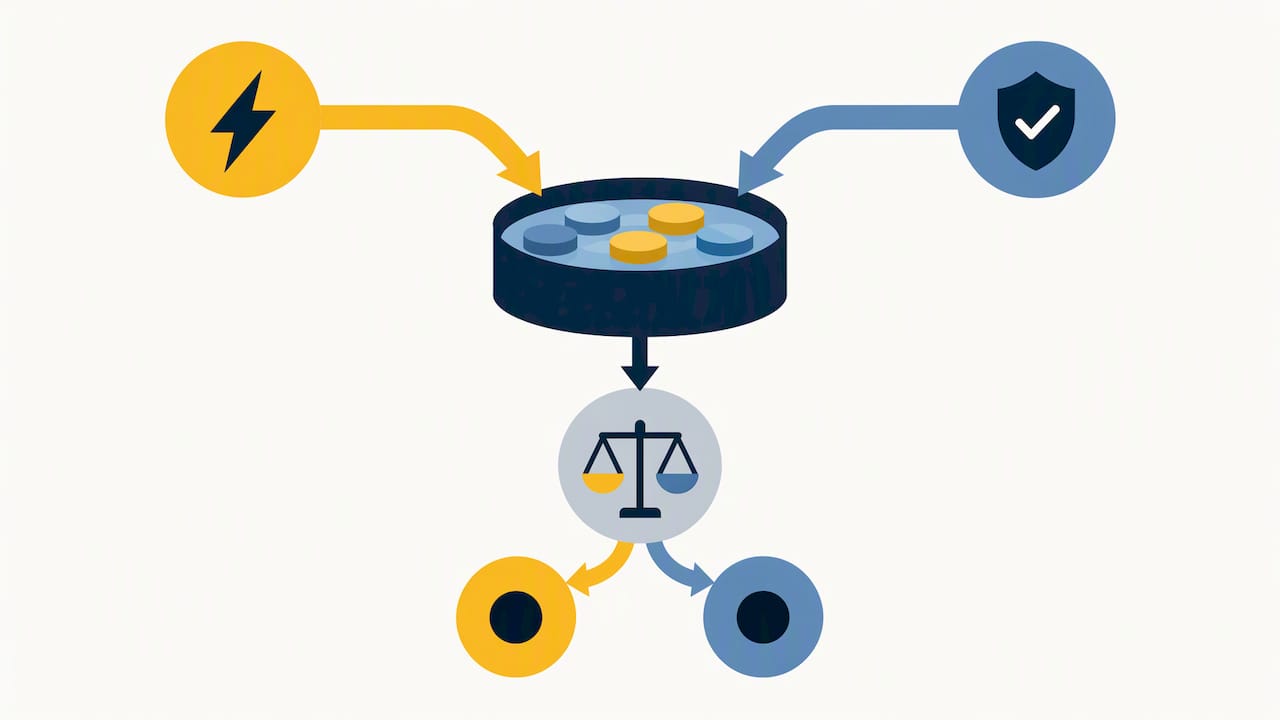
When should you reach for SMART versus a framework like OKR or FAST? MIT Sloan Management Review’s case for FAST (frequently discussed, ambitious, specific, transparent) argues that when the priority is ambition and constant visibility, a FAST or OKR structure beats a rigid SMART target that gets set once and reviewed once. A rule of thumb: use SMART when the goal is operational, bounded, and has a clear owner. Lean toward FAST or OKR thinking when the goal is stretch-oriented, cross-functional, or benefits from being discussed weekly rather than reviewed quarterly.
Cross-team conflict usually shows up when two managers set SMART goals that optimize the same resource in opposite directions, like one team maximizing release speed while another maximizes defect-free releases. Before finalizing goals, check them against adjacent teams’ goals for the same quarter, and flag any that pull on the same lever.
When SMART goals underperform: research-backed limits
SMART goals are not automatically safe just because they are specific and measurable. A widely cited paper from the Academy of Management Perspectives found that overprescribing goal setting can produce real side effects.
Goal setting is a prescription-strength medication that requires careful dosing, attention to harmful side effects, and consideration of the interaction with other medications.
The same research ties narrow, numeric goals to inhibited learning, distorted risk-taking, and a rise in unethical shortcuts when a target becomes more important than how it is reached. One formal analysis of overprescribed goal setting found these effects recur across multiple organizational studies, which is why dosing matters as much as design, see the Academy of Management Perspectives paper.
Separately, HBS Working Knowledge warns that insisting every goal be strictly “achievable” can quietly shrink ambition, since managers and employees alike will favor safe, incremental targets they know they can hit over stretch goals that risk missing. And in remote and distributed settings, research published in Frontiers in Psychology found that letting employees self-set goals, combined with an authentic leadership style, produced stronger goal commitment and attainment than directive, manager-assigned targets.
Three practical mitigations follow directly from this evidence:
- Dose goals deliberately. Not every task needs a formal SMART goal; reserve the structure for outcomes that genuinely benefit from tracking.
- Add a learning metric alongside the output metric, so people aren’t penalized for trying a new approach that temporarily slows a number down.
- Require transparency in how a target was hit, not just whether it was hit, to catch shortcuts before they become a habit.
How to track and review SMART goals without extra overhead
The most common reason SMART goals quietly die is that nobody decided, in advance, where progress would live or how often it would get looked at.
- Pick the reporting cadence before you finalize the goal, not after: weekly for operational goals, monthly for process goals, quarterly for outcome goals.
- Name one single source of truth for the metric, whether that is a dashboard, a spreadsheet, or a tracked task list, so progress never depends on someone’s memory.
- Use a short check-in agenda: what moved, what’s blocked, what’s next. Three questions are usually enough to keep a 10-minute check-in useful.
- Document progress in the same place every time, even a simple comment thread, so a new reader can see the goal’s full history without asking around.
For tooling, three categories cover most needs: a dashboard for numeric KPIs that update automatically, a lightweight checklist for habit-based goals like 1:1 cadence, and a comment thread attached directly to the goal for qualitative notes. Which category fits depends on whether the goal is a number, a habit, or a narrative outcome, and most managers end up using at least two of the three at once.
Templates and a quick cheat sheet you can copy
Individual contributor template: “By [date], [name] will [specific action] as measured by [metric], tracked in [data source], reviewed [cadence].”
Team-operational template: “By [date], the [team] will move [metric] from [baseline] to [target] by [key action], measured via [data source], reviewed [cadence].”
Before approving any goal, run it through six quick checks:
- Is the outcome stated in one sentence, not a paragraph?
- Is there exactly one number or signal that proves success?
- Can you name the data source right now, without checking?
- Is there an owner, even if it’s a shared team goal?
- Is the deadline paired with at least one earlier checkpoint?
- Would a stranger understand this goal without extra context?
| Element | Weak version | Strong version |
|---|---|---|
| Specific | Improve communication | Run weekly 15-minute stand-ups with shared notes |
| Measurable | Get better at delivery | Raise on-time delivery rate to 90% |
| Time-bound | Eventually this year | Within the next 60 days |
For deeper examples built specifically around this audience, our SMART leadership goals examples for managers page carries an expanded library you can pull from directly.
Optiostation’s perspective: why we build around measurability
We built our prioritization tools around the belief that a goal nobody is tracking is just a sentence. That’s why we lean so heavily on lightweight check-ins instead of heavy quarterly reviews, because a goal checked weekly in two minutes beats one reviewed once and forgotten. We’d rather a manager track three goals consistently than ten goals nobody revisits. Our community shapes this focus directly, as our app development incorporates user feedback rather than following a fixed roadmap. If you’re setting SMART goals this quarter, try turning one into a tracked task in a template, and see whether a brief weekly check-in changes how often it actually gets done.
— Optiostation
How Optiostation supports managers setting and tracking goals
Writing a SMART goal is the easy part. Keeping it visible through a busy quarter is where most managers lose the thread, and that’s exactly the gap our Prioritization Station is built to close. Inside the app, you can turn any SMART goal into a tracked task, color-code it by which part of your work it belongs to, and set smart reminders so check-ins happen on schedule instead of getting pushed to “next week.” Our hashtag-based search also makes it easy to pull up every goal tied to a specific project or team the moment you need a status update.

If you want more ready-to-use phrasing before you start, our time management SMART goals examples page pairs well with the templates above. When you’re ready to stop tracking goals in scattered documents, try Optio and set up your first tracked goal today.
FAQ
What are SMART goals for managers?
SMART goals for managers are specific, measurable, achievable, relevant, and time-bound targets applied to team or leadership outcomes rather than just personal tasks. They work best when paired with a named metric, a data source, and a recurring check-in, following the structure laid out in UCOP’s SMART goal guide.
How often should managers review SMART goals?
Review cadence should match the goal type: weekly for operational habits, monthly for process changes, and quarterly for broader outcomes like retention or engagement scores. Deciding the cadence before finalizing the goal prevents it from being forgotten between reviews.
Are SMART goals better than OKRs for managers?
Neither framework is universally better. MIT Sloan Management Review suggests FAST or OKR-style approaches fit better when a goal needs frequent discussion and transparency, while SMART tends to fit bounded, operational goals with a clear single owner.
Can SMART goals have downsides for managers?
Yes. Research in the Academy of Management Perspectives found that overprescribed, narrowly numeric goals can narrow focus, inhibit learning, and increase shortcut-taking, so managers should pair output metrics with a learning metric and review how a target was reached, not just whether it was hit.
How do managers measure leadership development goals?
Leadership goals are usually measured through behavioral checklists tracked monthly combined with periodic 360 feedback cycles, since a single number rarely captures a change in how someone leads. Pairing the goal with a specific coaching action, like a feedback script or a delegation log, makes the behavior change easier to track consistently.
Sources
- Goals Gone Wild: The Systematic Side Effects of Overprescribing Goal Setting (Academy of Management Perspectives)
- With goals, FAST beats SMART (MIT Sloan Management Review)
- Study showing authentic leadership × self-set goals improves goal attainment and commitment (Frontiers in Psychology)
- SMART Goals: A How to Guide (UCOP PDF)
- When goal setting goes bad (HBS Working Knowledge)
